Item Number: FT735
Arbequina Olive Tree
Adaptable to Diverse Climates and Soils
Arbequina Olive Tree – Compact & Cold-Hardy Spanish Classic
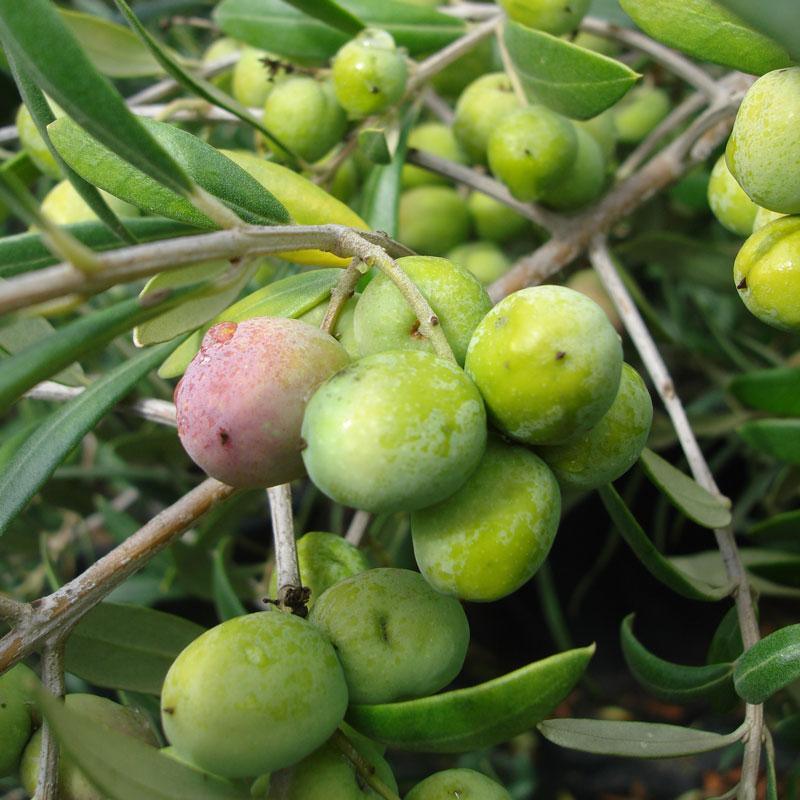
Arbequina is one of the most popular olive varieties for home growers, celebrated for its compact size, heavy production, and exceptionally smooth, buttery oil. The Arbequina Olive (Olea europaea ‘Arbequina’) produces small, brownish-purple fruit with a mild, fruity flavor that is ideal for olive oil pressing, curing, and table use. Known for its naturally high oil content and rich aroma, Arbequina is prized for producing premium, low-acidity olive oil with notes of almond, apple, and fresh herbs.
This cold-tolerant, self-fruitful olive tree thrives in full sun and well-drained soil, making it an excellent choice for a wide range of climates—including regions cooler than those traditionally associated with olives. Its naturally compact and rounded growth habit makes it perfect for patios, containers, and small gardens, while still delivering generous yields once established. Arbequina shows impressive drought tolerance, and its adaptability to various soil types makes it a strong performer in Mediterranean-style landscapes, xeriscaping, and edible gardens.
In spring, the Arbequina Olive Tree produces clusters of fragrant, creamy-white blooms that attract pollinators and give way to a reliable fall harvest. Its evergreen foliage—narrow, gray-green leaves with a subtle silvery sheen—adds ornamental beauty year-round, enhancing courtyards, walkways, and garden borders.
Highly productive, easy to grow, and visually striking, Arbequina is the perfect choice for gardeners seeking a premium olive tree that combines elegance and performance. Whether you’re crafting homemade olive oil or curing your own olives, Arbequina offers exceptional flavor and dependable yields in almost any setting.
For full care instructions, check out our Olive Tree Growing Guide.
Learn more about growing and caring for olives in the blogs and videos below.
- Country of Origin: Spain
- Zones: 8–9
- Looks: Weeping-shaped tree with shiny dark green leaves. Good resistance to frosts and highly adaptable to diverse climates and soils.
- Personality: Fruit turns black at maturation in late November, but does not mature all at once. Small fruit has a rounded top and produces a good, soft Spanish oil.
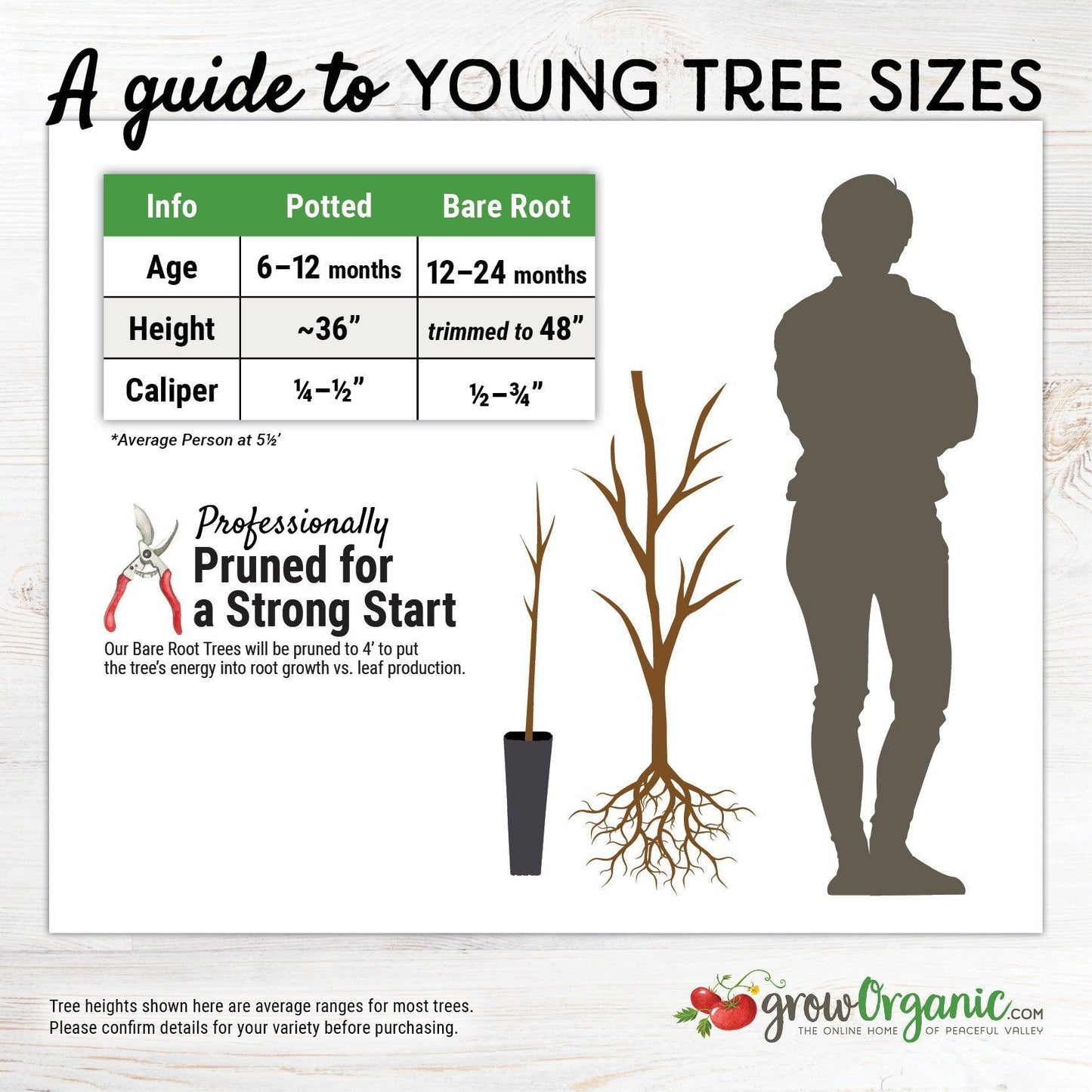
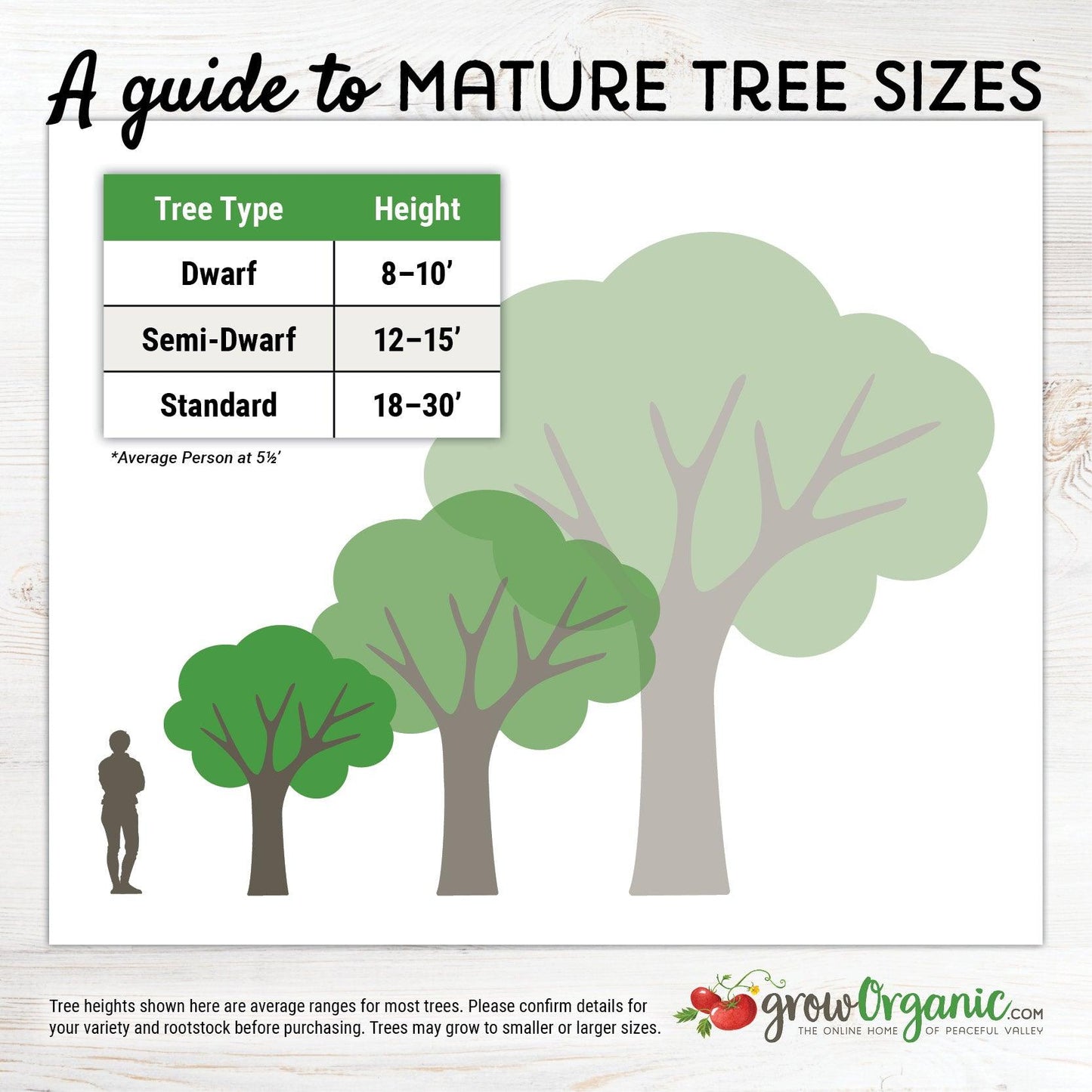
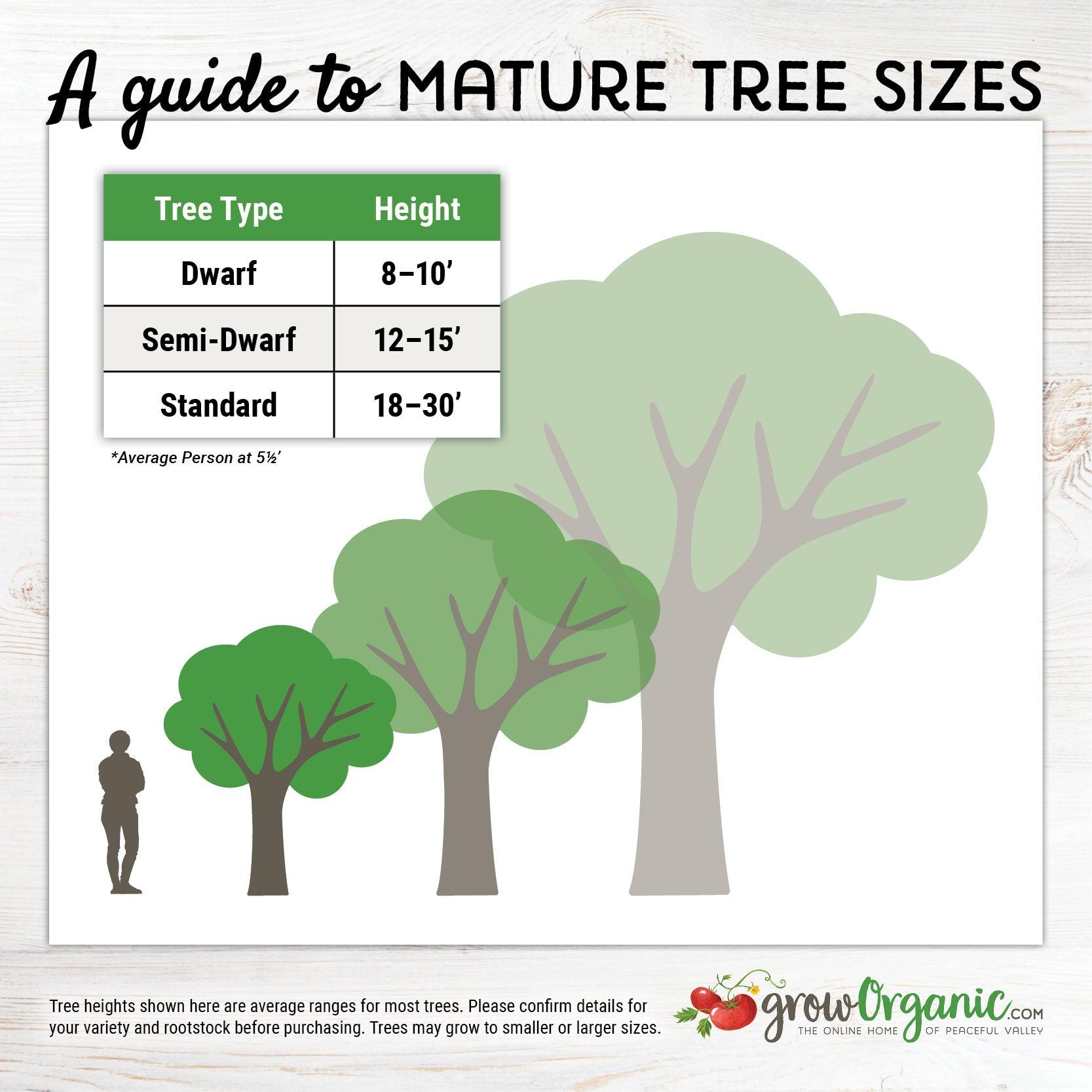
- Facts of note: High oil content, very productive, grows 12–15', and fast growing.
- Pollenizer: Self-fruitful
- Chill Hours:300 or less
Visit our Fruit Tree Central for a listing of all our fruit tree videos and articles.
Visit Tree Characteristics for a listing of all our fruit & nut tree growing characteristics.



Check Your Zone Compatibility:

Our Guarantee To You
Since 1976, we've served our customers at every stage of growing. Please contact us at any time. We are happy to support and assist you.
Shipping Information
Shipping Information
Cannot ship to the following states: FL, TX, AZ, OR, VA, AK, HI, PR, VI, GU
Shipping Weight: 4.5 lb
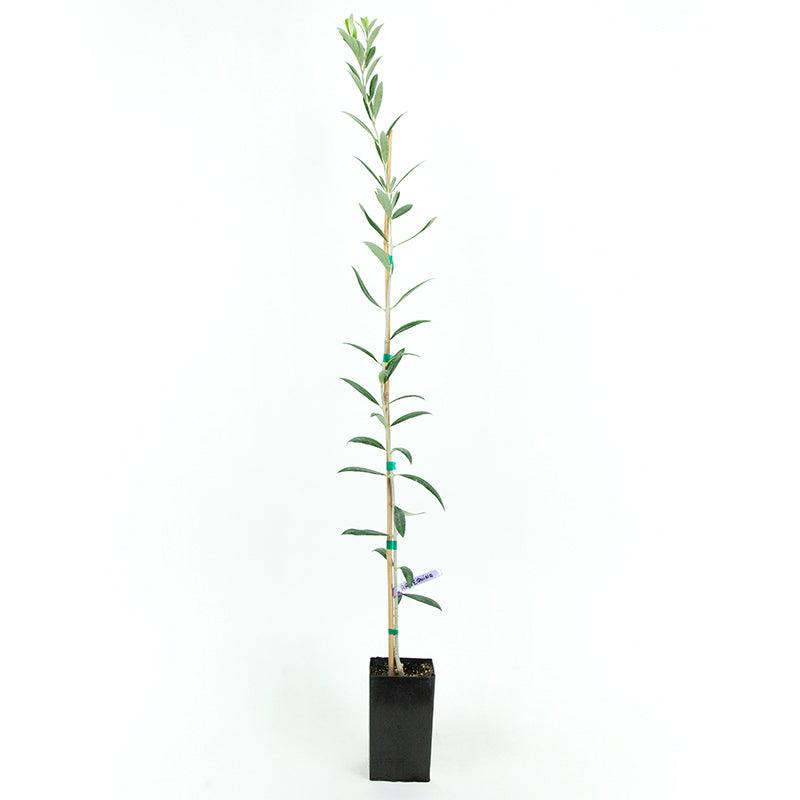
Dimensions: 35.9"L x 3.9"W x 3.9"H
Features
Features
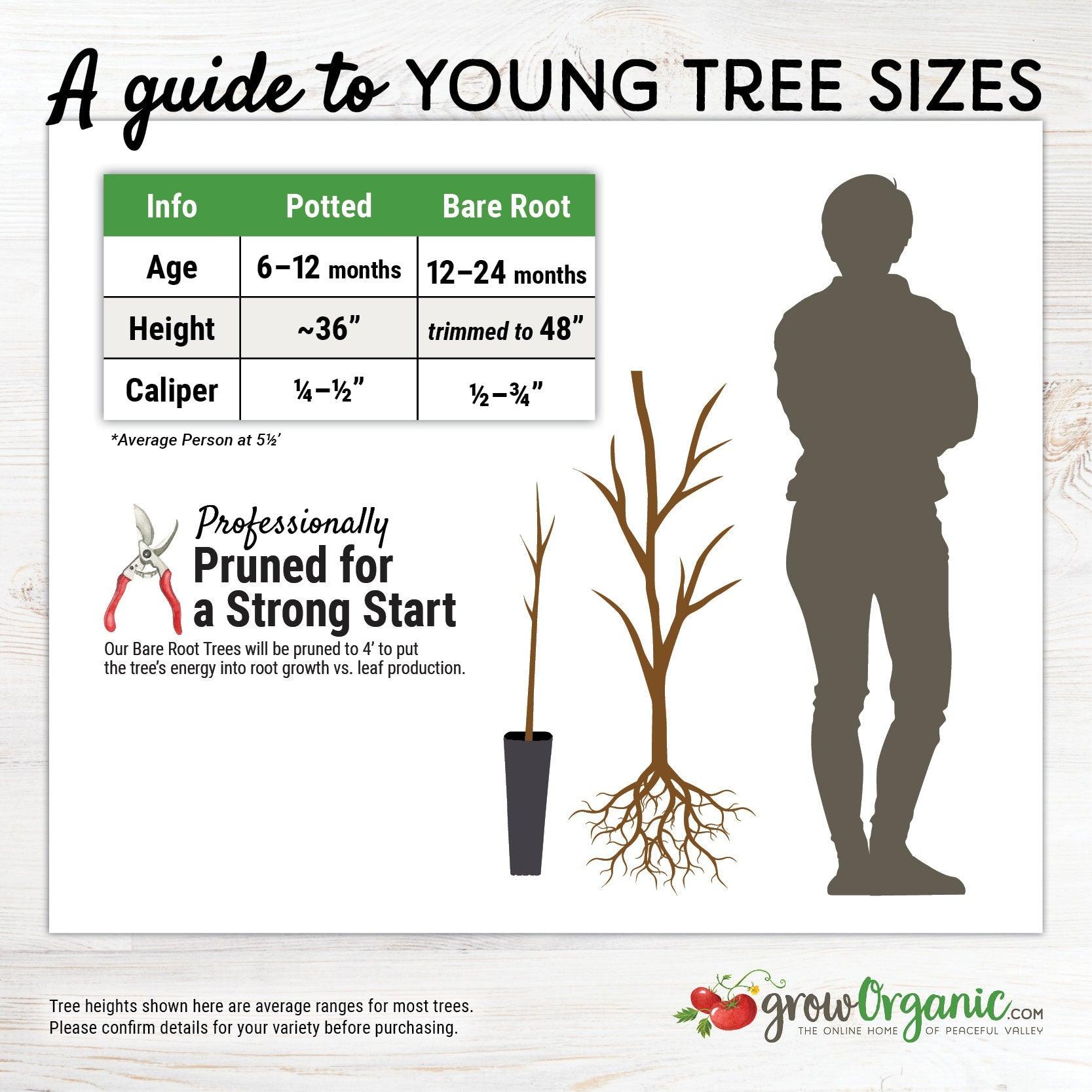
- Potted
- Self-fruitful
- Somewhat Drought Tolerant
- Suited to Warmer Climates
Characteristics
Characteristics
Planting & Care
Planting & Care
Useful Information
Useful Information
Guarantee
Guarantee
We guarantee the perishable items we sell to be in good, viable condition when we sell them. Perishable items include, but are not limited to, garlic bulbs, flower bulbs, seed potatoes, onion sets & transplants, potted or bare root trees, vegetable crowns, etc. If your perishable item arrives in substandard condition, take photographs and please contact us within 3 days of the purchase date (or delivery date) and we will provide you with a refund of the purchase price (excluding shipping costs), or a replacement. Accordingly, we urge you to open any boxes marked as ""Perishable"" immediately upon receiving them and inspect the shipment thoroughly (do not crack open heads of garlic, we do not accept claims on cracked garlic). Because some perishable items can deteriorate very quickly, we cannot accept any claims beyond the 3-day time frame as it becomes too difficult to determine if these items were delivered in substandard condition, or if they turned into such substandard condition because of having been improperly cared for or stored once delivered.