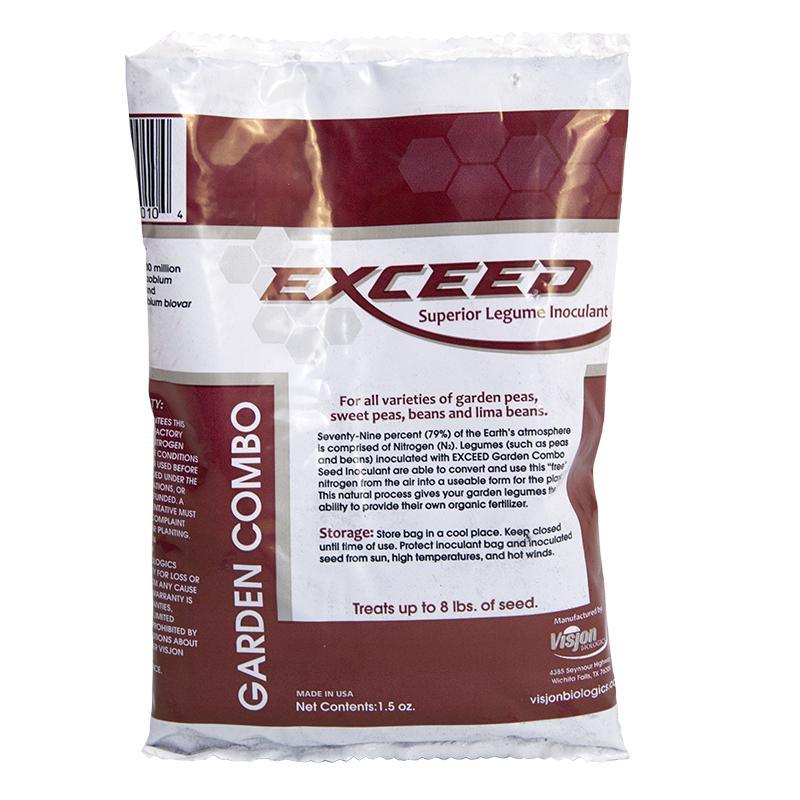
Treats up to 8 lbs. Treats Soil Builder Mix, Legume Oat Mixes, vetch (except crown vetch), fava beans, bell beans, crotolaria, garden beans, peas, black-eyed peas, soybeans, lentils, lima beans, cowpeas, lespedeza and peanut.
Also known by the brand name N-Dure.
OMRI listed.
About Inoculants
Legumes work in harmony with a group of bacteria (rhizobacteria) that live symbiotically on their roots. These bacteria do the work of taking gaseous nitrogen from the air and “fix” or concentrate it in pink root nodules which then slough off, adding nitrogen to the soil in a form plants can absorb.
Properly inoculated legumes can generate up to 300 LBs of useable protein-based nitrogen per acre. Inoculating with rhizobacteria also significantly increases top and root growth in legumes, thus increasing organic matter, soil aeration, and soil stabilization.
Rhizobacteria exist naturally in the soil, but not in sufficient amounts to maximize nitrogen fixation. Other naturally occurring bacteria compete with nitrogen-fixing rhizobacteria for a home on legume roots. It is important to inoculate (coat the seed) to ensure a high level of viable rhizobacteria when the seed germinates.
Use the correct inoculant
Many of the legumes we provide are preinoculated with the correct rhizobacteria and a protective coating. For “raw” or uninoculated legume seed, we highly recommend you purchase the appropriate inoculant. Different strains of rhizobacteria work only on specific seeds.
Use inoculant every time you plant any legume, even if you’ve inoculated that soil area before. Because the bacteria is alive, it should be used prior to the expiration date on the package. Use new inoculant when in doubt.
It’s easy!
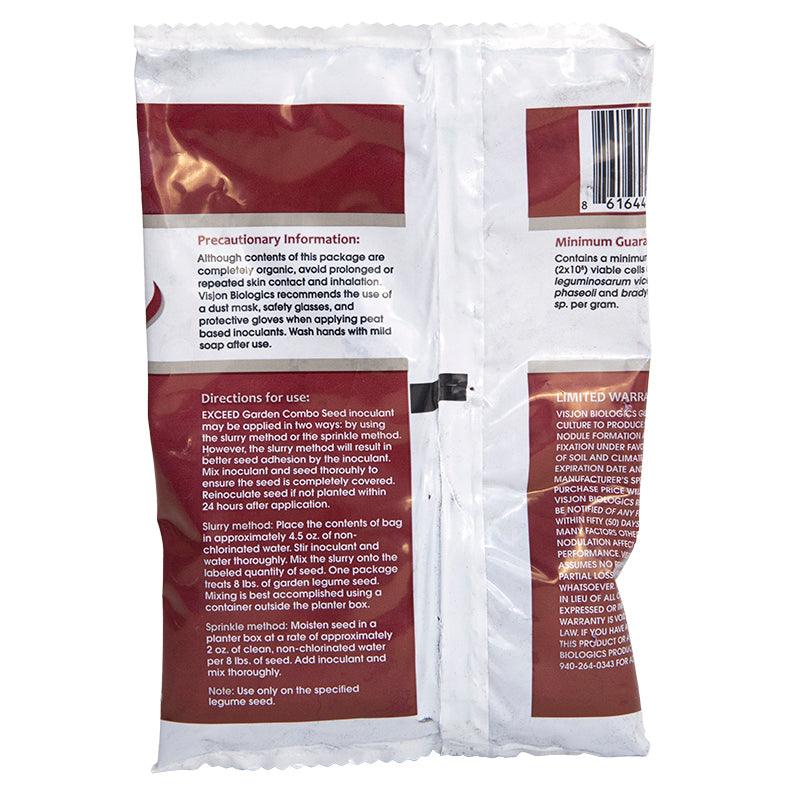
Just prior to sowing, put the seed in a bucket or barrel and moisten it a little with water so that the inoculant will stick to it. Another method is to use milk & molasses as a sticking agent (as well as to provide food for the bacteria). Sprinkle the inoculant onto the seed and mix thoroughly until the seed is well coated. The seed will turn black when properly covered. You cannot use too much inoculant. Don’t leave the inoculated seed in the sun.
Product Details
Item Model Number:
ISE350
Product Dimensions:
5.25 x 4 x 0.25 inches.
Shipping Weight:
0.25 pounds.
More Information
Product Use Instructions:
Garden Combination Mix Inoculant (Treats 8 lb) Instructions - 153kb
Product Label:
Garden Combination Mix Inoculant (Treats 8 lb) Label - 79kb
Materials Safety Data Sheet (MSDS):
Garden Combination Mix Inoculant (Treats 8 lb) MSDS - 65kb
Need Help?
Customer Service:
Warranty Info, Shipping Charts, and more.
Organic Gardening Resource Center:
Resource Center, and more.
Live Help:
1-888-784-1722
Related Content from our
|
August 10, 2012 - Charlotte from Peaceful Valley
What’s the biggest money saver in organic gardening? Cover crops. By planting a cover crop in the fall you can save big bucks on fertilizer. How big? If you have a 50-foot x 60-foot garden you can…
read more»
|
|
July 26, 2011 - Autumn from Peaceful Valley
I surround myself with Peaceful Valley co-workers from 9-5 and farmer friends after hours. With August just around the corner, all I hear about are cover crops or green manure and how wonderful they are.…
read more»
|
|
September 21, 2009 - Autumn from Peaceful Valley
by Amber TIppett, PV Store Manager & Willow Hein, FreshmanFarmer & PV employee “Cover Crop” is a general term referring to a crop grown to cover and protect the soil. The term “Green…
read more»
|
|
September 10, 2009 - Amber
PVFS Customer Question with Staff Response.Question:Hi, I am a bit overwhelmed with cover crops. I have a raised bed garden that is 5-years old and I feel it is time to plant a cover crop for this…
read more»
|
|
October 31, 2008 - Amber
There it is. The first tilled row of the GGP. At the crack of 8 am (huck it up, farmers…that’s early for us city-folk!) I was out there, tilling up my back yard. The actual tilling itself…
read more»
|
View additional resources for "Garden Combination Mix Inoculant ISE350" »