

Introduction
Raised ridges crossing a lawn can be the first sign of a mole problem. Moles tunnel underground while searching for earthworms, grubs, insects, and other food sources. They rarely eat plant roots, but their digging can lift soil and disturb plants.
If you are researching how to get rid of moles, start by identifying the animal and finding the tunnels it still uses. Trapping is considered the most reliable mole control method by several university Extension programs. A humane mole trap designed for live capture is another option where local rules allow it.

Moles or Gophers?
Knowing how to tell if you have moles or gophers prevents you from treating the wrong pest. Moles create raised surface tunnels and volcano-shaped mounds as they dig. Pocket gophers usually make fan-shaped mounds and do not create the same raised surface ridges.
See our mole identification video and gopher control video for more help. You can also compare gopher traps and repellents.
The term moles can also describe skin growths on people, but this article is only about the burrowing mammals found in yards and gardens.
Find Active Mole Tunnels First
Moles tunnel through soil throughout the year. Some runways are used once, while others become active tunnels that are traveled repeatedly.
To check mole activity, press down a short section of several ridges. Return within about 24 hours. A tunnel that has been raised or repaired is likely active.
Mole mounds are less useful for trap placement than straight, active runways. When setting traps, choose fresh work in a straight tunnel instead of a twisting feeding runway.
This step is important whether you are learning how to catch moles, how to trap moles, or how to catch a mole with a commercial trap.
How to Build a Live Mole Trap
Missouri Extension describes a simple live mole trap made from a wide-mouth quart jar or large coffee can. This homemade mole trap works as a pit placed in an active runway.
If you are wondering how to make a mole trap, you need a wide-mouth container, shovel or spade, and board large enough to block light.
To make this diy mole trap:
- Find a well-used tunnel.
- Carefully open the runway and dig a hole beneath it.
- Place the jar or can so its opening is level with the tunnel floor.
- Cave in the runway slightly on both sides.
- Cover the tunnel and container with a board to block light.
- Check the trap frequently.
That is the basic method for how to build a humane mole trap. The idea is that a traveling mole enters the disturbed runway and falls into the container.
Live trapping moles is not guaranteed to work, and relocation may be restricted by state or local wildlife laws. Before using live mole traps, check your local regulations. Missouri Extension suggests releasing a captured mole elsewhere on your own property where its digging will not be a problem.

Choosing and Setting Mole Traps
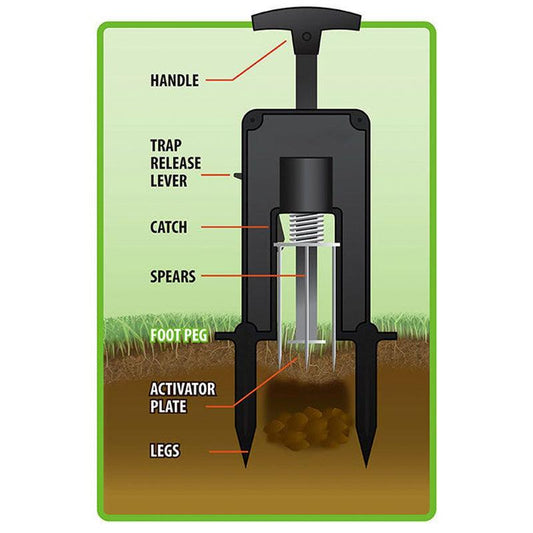
There are several types of mole trap. Extension sources commonly describe harpoon, choker-loop, and scissor-jaw designs. A scissor trap and similar commercial devices are lethal rather than live-capture tools.
If your goal is how to set up a mole trap, always follow the specific manufacturer's directions. Set the trap only in an active runway and keep children and pets away from the area.
For how to trap a mole successfully, placement matters more than simply adding more homemade mole traps. If a trap produces no result after about two days, Extension guidance recommends trying another active location.
Compare mole traps and repellents or review the Sweeney's Deadset Mole Trap when deciding on a trap for moles.
What About Mole Repellents?
A mole repellent containing castor oil may reduce damage under some conditions, but Missouri Extension warns that repellents have limitations and may not solve the problem.
For long term control, there is no proven magic home remedy. Research has not supported common ideas such as chewing gum, vibrating gadgets, human hair, or so-called mole-repellent plants.
If you need broader help with how to get rid of moles in garden areas, use the Pest Control Solution Chart and follow current product directions.
Conclusion
Learning how to remove moles begins with correct identification. Find active tunnels before choosing a control method. Commercial trapping has the strongest Extension support, while live trapping may be an option where regulations allow it.
If you choose humane traps for moles, monitor them often and check wildlife rules before moving an animal. Good identification and careful trap placement are more useful than unproven home remedies.
For related burrowing-animal problems, see our garden gopher control guide.

1 comment
I have tried that method. These moles are too smart to fall for that trap. They keep back filling in the container.