

History of Mulberries
Mulberries are native to China but have been naturalized in Europe for centuries. They were initially brought to America in the 1700s by silk entrepreneurs who needed fresh mulberry leaves to feed their silkworms. Although the silk industry never flourished, the mulberry tree remained, thriving in meadows and backyards across the country.
Growing Mulberries
Mulberries thrive in USDA zones 6–9 and prefer warm climates similar to their native habitat. The best variety for home gardens is the mulberry tree collection, which is smaller (up to 30 feet) and easier to manage than red or white varieties. These trees are resilient, drought-tolerant once established, and can yield fruit for centuries.
For gardeners in hot, dry regions, check out our Mulberry Trees Grown in Dry Western Climates guide for tips on irrigation, heat management, and preventing fruit drop.
Harvesting Mulberries
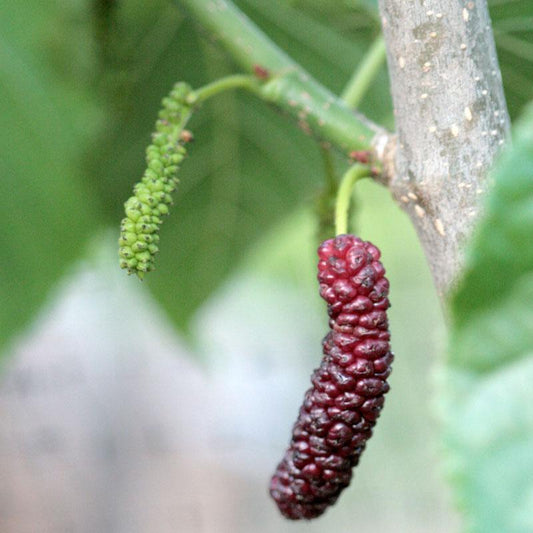
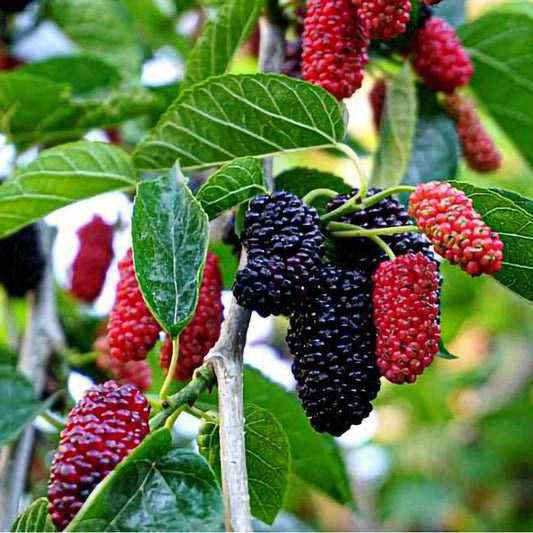
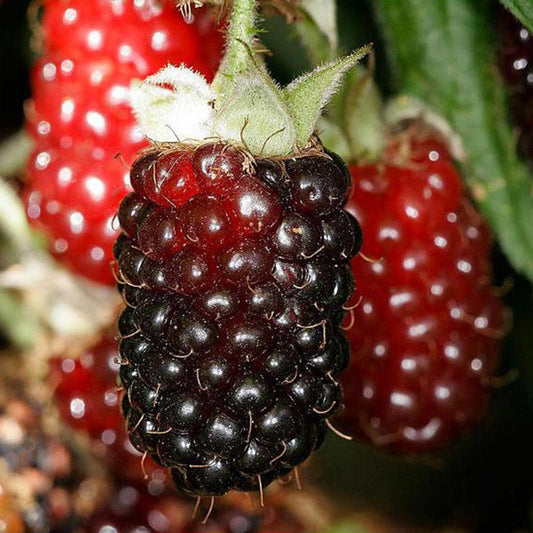
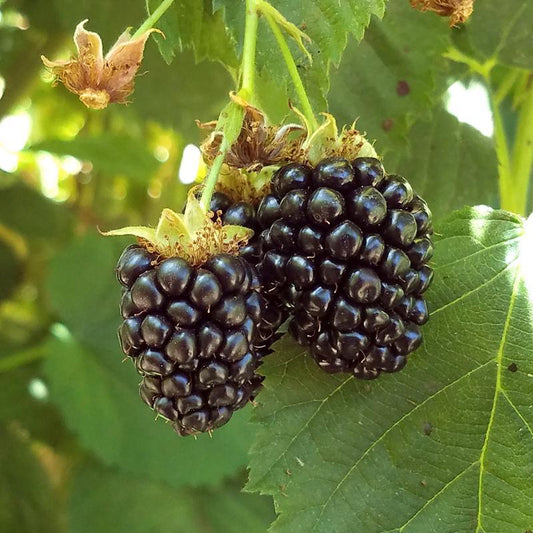
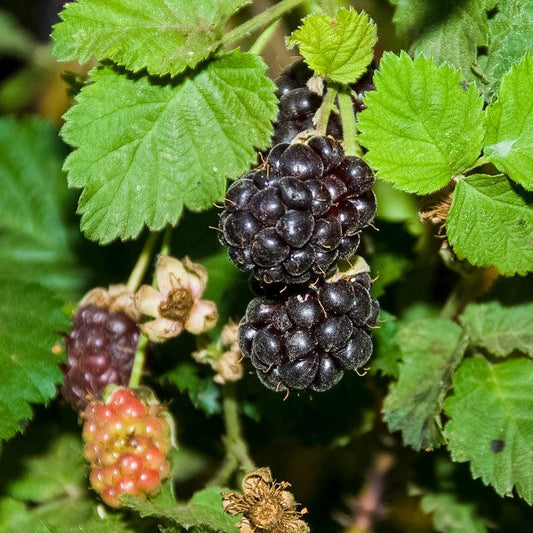
Mulberries resemble loganberries or elongated blackberries, offering a soft, sweet flavor with a slight tartness. Since the berries don’t ripen all at once, expect to harvest weekly throughout summer and early fall.

To harvest, lay a tarp under the tree and shake the branches—ripe berries will fall naturally. Use fresh mulberries immediately, as they have a short shelf life, or preserve them by freezing, drying, or turning them into jams and syrups.
Using the Harvest
- Jams & Jellies: Preserve mulberries by making homemade jam or jelly.
- Baking: Use them in pies, muffins, and cobblers.
- Mulberry Wine: A famous way to enjoy your harvest!
- Smoothies & Syrups: Blend fresh berries into a healthy drink or make syrup for pancakes.
Health Benefits of Mulberries
Mulberries aren’t just delicious—they’re packed with nutrients! These berries are rich in Vitamin C, iron, and antioxidants, which support immune health and reduce inflammation. They also contain resveratrol, a heart-healthy compound found in red wine.
How to Plant Your Mulberry Tree
- Plant in early spring or fall to allow roots to establish before extreme weather.
- Ensure the planting hole is twice as wide as the root ball.
- Water deeply after planting and apply mulch to retain moisture.
For more detailed tree care, visit our Fruit Tree Central Guide.
For a full guide to soil preparation, planting, fertilization, and ongoing care, see our complete Mulberry Growing Guide.
Final Thoughts
With so many benefits and delicious possibilities, why not plant a mulberry tree this season?





3 comments
Tammy, It is really hard to give advise on an unknown disease. I would take a sample of the diseased leaves or branch, put it in a plastic bag, and take it to a local nursery. Maybe they can help diagnose the problem.
I’m in desperate need of advice regarding my beloved mulberry tree. I purchased a house 4 years ago that had a muture mullberry tree and have enjoyed the abundant fruit. However, this year it has been an extremely wet winter/spring in Virginia and my tree is ate up with popcorn disease. I’m not sure if the unusual amount of rain has had anything to do with this fungus, but I’m looking for advice on how to treat my tree organically so that I don’t have this problem going forward. I have been picking up all of the berries that have fallen off and destroying them, but my tree is overcome with fruit that is diseased and I just am at a loss as to what to do. Can you help me with any advice?
I fell in love with Mulberries as a child in Michigan- which is zone 5. As an adult, I planted and later harvested 3 Mulberry trees in Chicago Illinois suburb- also zone 5. Article states these are for zone 6-9. Oops.
Mulberries are fantastic for pies (9 cups of berries, and heaven) and for mixed berry pies. Fresh eating (of course), on cereals- cold or hot. Wonderful flavor!