

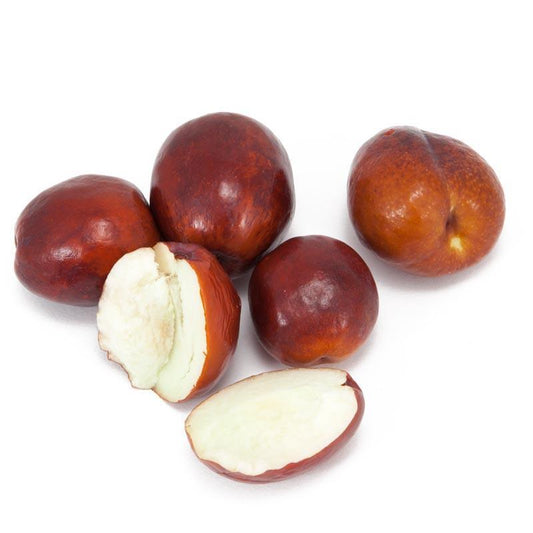
Jujube (Ziziphus jujuba), often called Chinese date, is a heat-loving deciduous fruit tree valued for crisp fresh fruit and chewy dried fruit. Established trees tolerate drought, but good establishment, full sun and thoughtful variety selection produce more reliable crops.

Choose a Jujube Variety
Compare winter hardiness, ripening season, mature size, fruit texture and intended use. Some varieties are favored for eating crisp and fresh; others develop especially good texture and sweetness when fully brown or dried. Many jujubes can set some fruit alone, but a second genetically different variety with overlapping bloom can improve fruit set in many gardens.
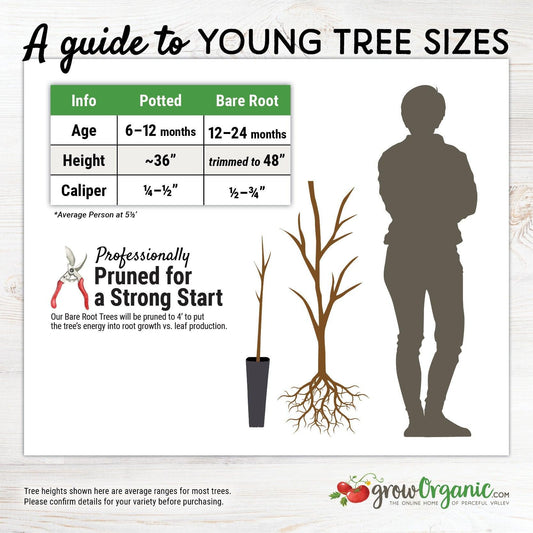
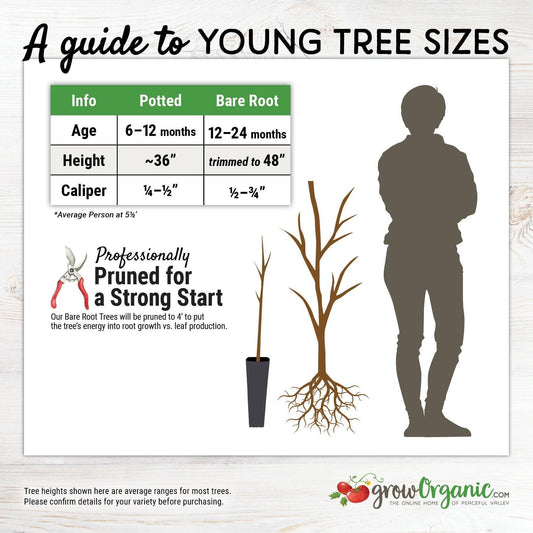
Use named, grafted nursery trees when predictable fruit quality matters. Seedlings vary genetically and may take longer to fruit.
Jujube Climate and Site
Jujubes need abundant summer heat to ripen well and tolerate cold winters once dormant, but exact hardiness varies by cultivar, rootstock, tree age and exposure. Late spring freezes can damage new growth and flowers even when dormant wood survives winter.
Choose full sun, good air drainage and soil that drains after irrigation or rain. For a detailed site evaluation, use the jujube climate and growing-zone guide.

How to Plant a Jujube Tree
- Dig a hole no deeper than the root system and wide enough to spread roots without bending them.
- Set a grafted tree with the graft union several inches above finished soil grade.
- Backfill primarily with native soil and water thoroughly to settle it.
- Apply two to three inches of mulch over the root zone while keeping mulch away from the trunk.
- Stake only if the root system cannot keep the trunk stable, and remove support after establishment.
Check the root zone frequently during the first season. Bare-root and newly planted trees must not dry out while new roots develop, but saturated soil can also cause decline.
Watering Established Jujubes
Established jujubes are drought tolerant, not drought proof. Deep irrigation during prolonged dry weather supports shoot growth, fruit sizing and tree health. Let the upper soil begin drying between irrigations and adjust frequency for soil texture, heat, wind and tree size. Avoid frequent shallow watering that keeps only the surface moist.

Fertilizing
Jujubes often grow well without heavy feeding. Excess nitrogen can produce long shoots and unwanted suckers without improving fruit quality. Use soil-test results or a demonstrated growth problem to guide fertilizer. Keep lawn fertilizer away from the root zone.
Pruning and Suckers
Prune damaged, dead and crossing wood and maintain a structure that admits light and allows harvest. Jujubes can fruit on short lateral shoots from current-season growth, so repeated severe pruning can reduce production. Remove rootstock suckers below the graft promptly; they are not the named fruiting variety.

Flowers, Pollination and Fruit Set
Small flowers appear over an extended period and attract many insects. Avoid applying insecticides to open bloom unless the label specifically permits the use and risk to pollinators has been addressed. Poor set can result from a young tree, frost, limited compatible pollen, extreme heat, water stress or excessive vegetative growth.
Pests and Problems
Jujubes are generally resilient, but problems vary by region. Inspect for scale, mites, fruit-feeding insects, rodents and diseases reported locally. Diagnose before treating, and follow every pesticide label, including crop, target, timing and preharvest interval.
When and How to Harvest
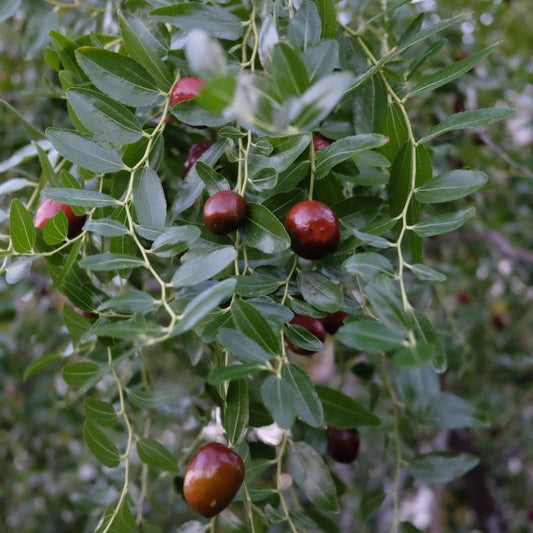
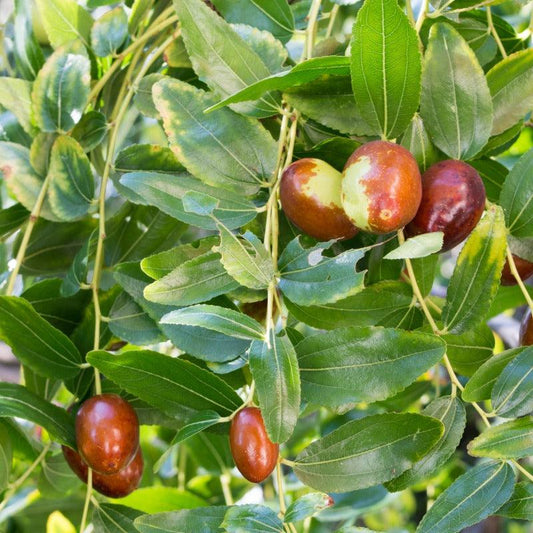
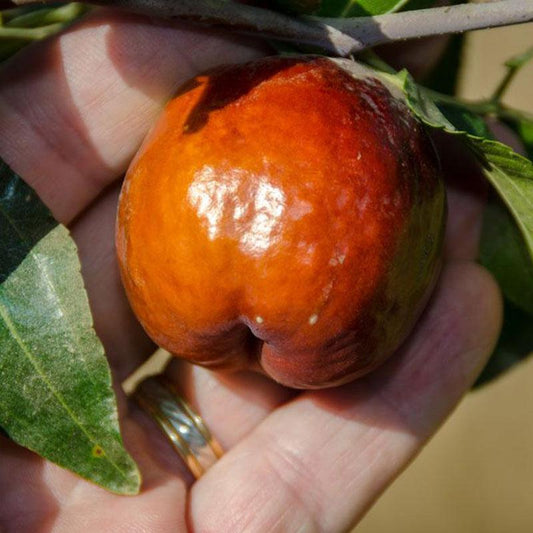
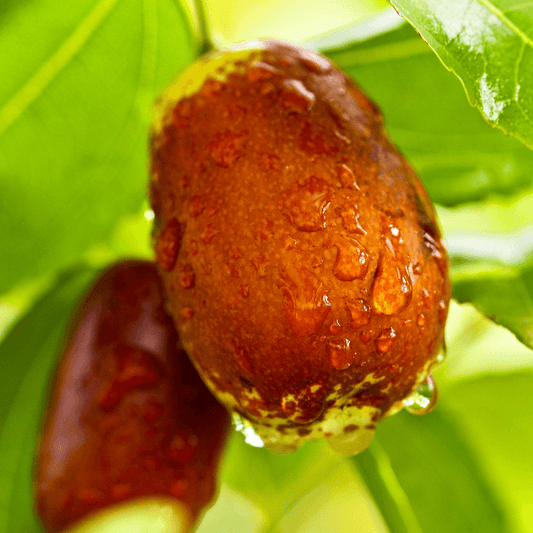
For crisp fresh eating, harvest when the fruit has developed patches of its mature brown color and releases readily while still firm. For a sweeter, softer or dried texture, allow more of the skin to brown. Ripening is often uneven, so pick in several passes. Remove damaged or fallen fruit and refrigerate fresh fruit promptly.

Using Jujube Fruit
Eat fresh fruit out of hand, slice it into salads, or cook it while still crisp. Fully mature fruit can be dried for a chewy texture, simmered, baked or used in preserves. Fruit characteristics differ by variety, so harvest stage should match the intended use.
Shop Jujube Trees
Compare named varieties in the jujube trees collection. Select for your winter lows, summer heat, harvest season, available space and preferred fruit texture.


32 comments
Colleen, I am not aware of any thornless jujubes, I know we do not carry any varieties. Might check with a local nursery or try a google search.
Are there thornless varieties of jujubes?
Thanks for the instant reply. The tree would be planted in bottom lands on a mound about a foot above the surrounding ground. Every few years during a heavy rain season the ground around the mound becomes saturated with run off that slowly flows downhill. Pomegranate trees nearby seem to do well. By spring the surface is dry and the sub-soil remains moist. The soil is actually well drained, but seasonally wet. I was planning to plant a carob tree, but they hate “wet feet”. I’m not sure how sensitive jujube trees are to seasonal moisture.
Martin, I would not recommend planting a tree in an area that floods or has that much moisture in the winter. You could plant it in a raised bed so the roots will not be in standing water.
Can jujubes grow in well drained soil that is occasionally flooded for several months in the winter/spring? The tree itself will be grown on a slight mound above the water, but the subsoil can be saturated with slow moving water. Can the tree tolerate having wet roots for several weeks or months? We have perfect place for one, but the occasional flood waters have me concerned.