

Introduction
The common olive trees Olea europaea prefer Mediterranean climates with warm summers and mild winters.
An olive tree zone 7 planting can face average annual extreme minimums of 0°F to 10°F. These winter temperatures can damage olives, so treat zone 7 olive trees as an experiment rather than a guaranteed crop.

Understanding Olive Tree Growing Zones
What zone do olive trees grow in? NC State lists common olive mainly for Zones 8–10, although some cultivars may survive in 7a or 7b. The usual growing zone for olive trees is therefore warmer than much of Zone 7.
An olive tree hardiness zone rating is only a guide. An olive tree growing zone also needs enough growing season for flowering and ripening. The best olive cultivation climate—and general climate for olive trees—combines sun, drainage, warm summers, and winters that are cool but not severely cold.
Before you plant olive trees, use your USDA zone and olive tree planting zone only as starting points. Check your growing zone, local winter records, and microclimate.
Can Olive Trees Grow in Zone 7?
Can olive trees grow in zone 7? Sometimes. An olive tree zone 7a site can approach 0°F, while an olive tree zone 7b site can approach 5°F. Such cold can seriously injure olives.
Searches for cold hardy olive tree zone 7 or cold hardy olive trees zone 7 need caution. Cold hardy olive varieties are hardy only compared with other olives. Even cold hardy olive tree varieties can freeze.
Cold tolerance varies with the olive variety, tree age, acclimation, and freeze duration. Temperatures around or below 20°F can become critical, but there is no single damage point for every tree.

What About Arbequina?
The Arbequina olive tree is relatively cold tolerant among many olive tree varieties, but its response to freezes can vary.
An arbequina olive tree zone 7 planting still needs protection. An arbequina olive tree zone label is not a promise of survival, and the arbequina olive tree growing zone depends on local conditions.
Use our guide to choosing olive trees before selecting a cultivar.
Growing Olives in North Carolina, Virginia, Tennessee, and New York
Can olive trees grow in north carolina? Some have survived in the Piedmont, but reliable yields are difficult. For best olive tree for nc, look for locally tested cultivars rather than expecting one universal winner.
Can olive trees grow in virginia, or can you grow olives in virginia? Protected sites may work, but winter injury remains possible. The same caution applies to can olive trees grow in tennessee.
Can olive trees grow in new york? Common olives are a poor outdoor fit for many New York winters. Protected container culture is a lower-risk option.
These regional differences show why olive tree growing zones should never be used alone.

Planting and Winter Care
Choose full sun, good drainage, winter-wind shelter, and avoid frost pockets. Follow our olive planting video for basic planting steps.
Mulch without covering the trunk, avoid pushing tender late-season growth, and protect young trunks and olive branches before severe cold.
Container trees can move into a bright, cool, protected area during severe weather. Containers need drainage and careful watering because their roots experience faster temperature changes than roots in the ground.
Browse available olive trees, but compare each cultivar with your local conditions before planting.
If freeze damage occurs, wait until new growth appears before deciding which branches are dead. Cutting too early can remove living wood.
Growing Olives for Fruit
How are olives grown? For fruit, the trees need sun, suitable temperatures, pollination, and enough time for fruit set and ripening.
Fruit production can fail if cold damages flower buds, even when the tree survives. This is why a Zone 7 tree may live for years but not reliably produce fruit.
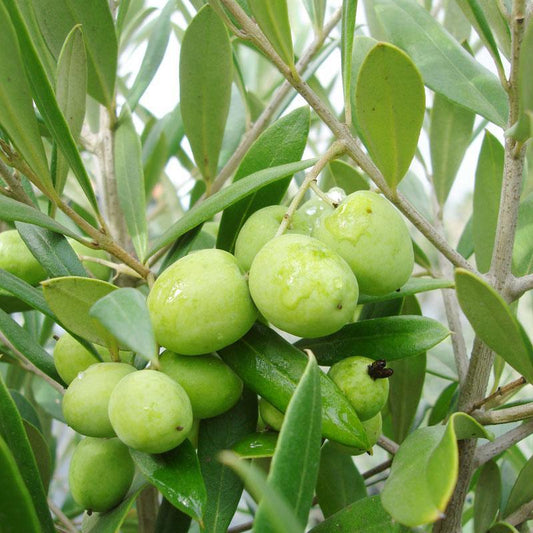
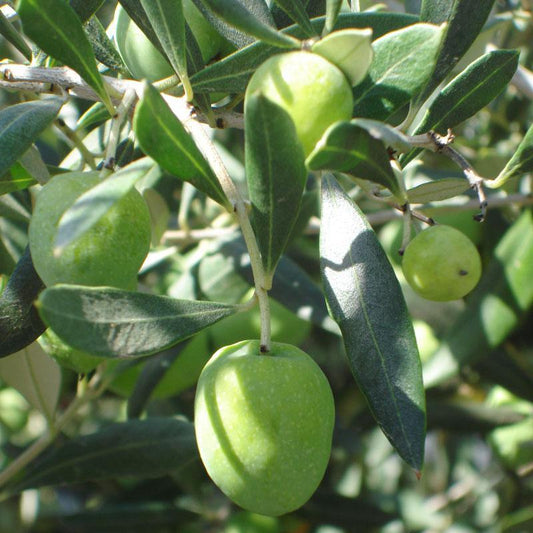
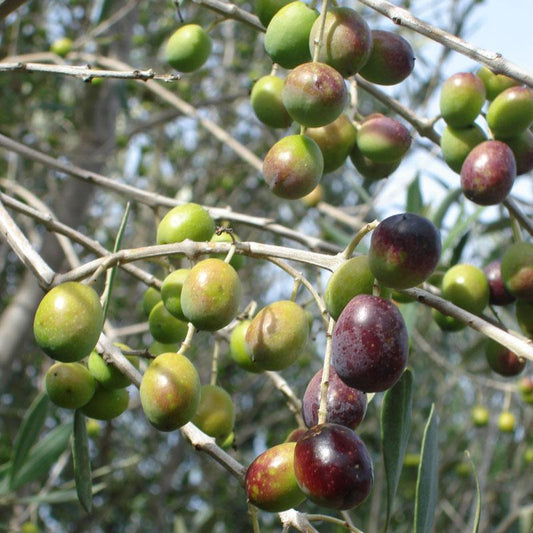
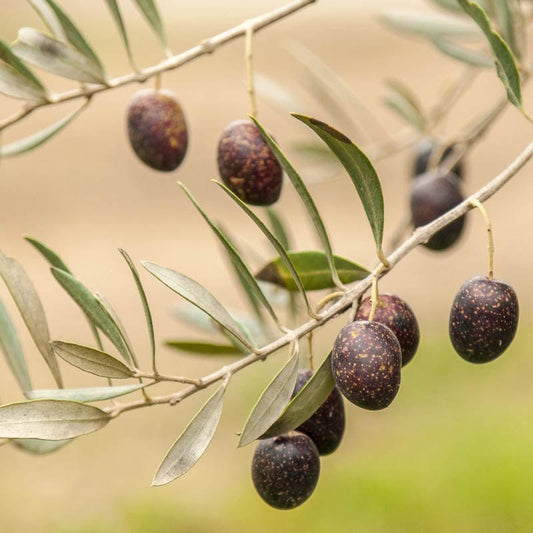
Green olives and black olives usually describe different stages of ripeness rather than different kinds of trees.
For general care, read our complete olive growing guide and detailed olive growing guide. If you harvest fruit, learn the proper steps for curing olives.
Conclusion
Where can olive trees grow in the us? In the United States, olives are most reliable where winters are mild and summers are warm and dry. Zone 7 is near or beyond the cold edge for dependable common-olive production.
Like other fruit trees, olives respond to the whole site, not one number on a map. An olive grove in Zone 7 may survive one winter yet lose branches, flowers, fruit, or whole trees during a harsher freeze. Choose cultivars carefully and plan for winter protection.



28 comments
We live a dozen or so miles north of Boston. Many years ago a small guest house sat on top of the abandoned foundation in our yard. Our plan is to build a greenhouse (10-ft x 22-ft inside dimensions) and grow a few olive trees in about a 6-ft x 4-ft plot against the back wall. Do you think this is a feasible idea?
Melanie, those trees can get to 15 feet tall and probably 8-10 feet in diameter. If you are going to move them, the winter is the least stressful time to dig them up, as long as they are not too big. You can remove the suckers anytime.
Melanie, those trees can get to 15 feet tall and probably 8-10 feet in diameter. If you are going to move them, the winter is the least stressful time to dig them up, as long as they are not too big. You can remove the suckers anytime.
Hi Suzanne,
Thank you for the wonderful videos and information. I’m learning so much! I’m in Central TX in zone 8b and bought a few Arbequinas from a local nursery. How large can I expect them to grow in optimal conditions? I planted them near the house but not super close and now I’m concerned that they might be too close if the tree gets too large. If so, would the fall be a better time to transplant the tree elsewhere in the yard? Also, from the videos I think it says to prune just the smaller suckers the first 4 years and not often. Should I do that in the summer?
Thank you!
Katy, it is really difficult to give you advise on how to control a mystery pest. Try going out at night with a flash light and see if you can spot what is eating your tree. The other thing you can try is to put out a sticky trap (yellow or blue) and see if you catch anything that way, but this only catches flying insects, not any caterpillars. Look on the underside of your leaves as well as on top.