


Item Number: SWF5922
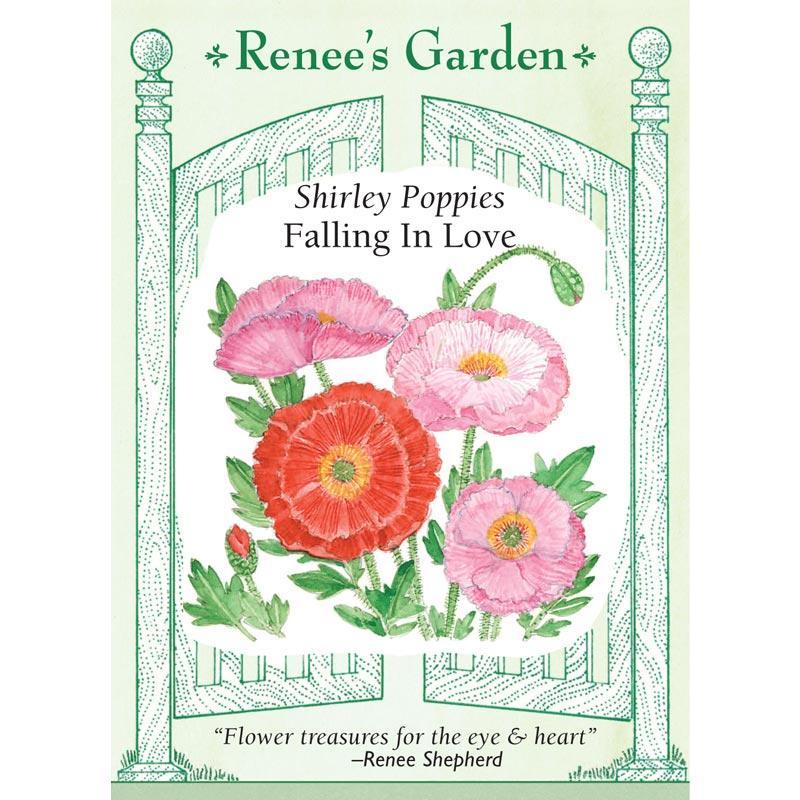
Falling in Love Shirley Poppy Flower Seeds
Valentine Shades of Single and Double Blooms

Check Your Zone Compatibility:

Our Guarantee To You
Since 1976, we've served our customers at every stage of growing. Please contact us at any time. We are happy to support and assist you.
Description
Description
Poppy (Shirley) - Falling in Love Papaver rhoeas Annual - This joyful mixture of Shirley poppies is selected for its beautiful flowers in entrancing color combinations that light up the spring garden. It includes both single and double blossoms, many with contrasting picotee edges, in a glowing array of Valentine shades including crimson, rose-red, white rimmed with rosy-red and occasional peach. The 2 - 3' tall nodding flowers will shine in your spring garden with satiny blossoms that sway gracefully above frothy foliage.
Variety Details
- Botanical name: Papaver rhoeas
- Plant type: Annual
- Crop category: Flower seed
- Flower character: Annual - This joyful mixture of Shirley poppies is selected for its beautiful flowers in entrancing color combinations that light up the spring garden.
- Recorded feature: Open-Pollinated
- Product format: Seed packet
Sowing & Growing
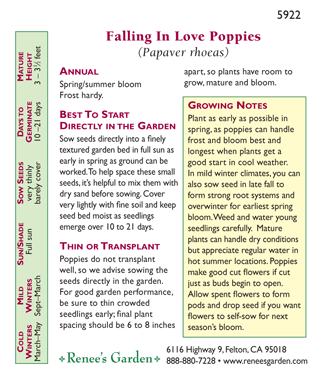
- Soil Temperature: above 50°F
- Planting Depth: barely cover
- Germination: 10-21 Days
- Height At Maturity: 3 to 3-1/2 feet
- Sun/Shade: Full Sun
- Spacing After Thinning: 6-8"
Prepare a weed-reduced seedbed for Falling in Love Shirley Poppy Flower and use the recorded planting season, depth, and light requirements. Press shallow-sown seed into good soil contact and keep the seed zone from drying during establishment. Thin or transplant only when the growth habit and spacing call for it. Leave enough room for mature width and air movement. Bloom timing and final height can shift with sowing date, climate, soil, moisture, and competition, so use listed figures as planning ranges.
Place Falling in Love Shirley Poppy Flower where its recorded height and growth habit fit the surrounding planting. Shorter companions can be positioned toward bed edges, while taller stems need room where they will not shade small seedlings too early. If cutting flowers, harvest with clean tools at the stage appropriate to the bloom form. If leaving flowers in place, observe how bloom sequence changes through the season and record which sowing date performed best at the site.
Explore related options in our Flower Seeds.
Seed Pack Shipping
Seed Pack Shipping
Qualifying seed-pack-only orders under $50 ship for a $7 flat rate via USPS. Spend $50 or more on qualifying seed packs and receive free USPS shipping. Available within the contiguous 48 states.
Shipping Information
Shipping Information
Shipping Weight: 0.01 lb
Dimensions: 4.5"L x 3.125"W x 0.1"H
Features
Features
- Attracts Bees/Butterflies
- Does Not Require Support
- Good Cut Flower
- Open-Pollinated
- Requires Summer Water
- Useful for Ornamental
Characteristics
Characteristics
Planting & Care
Planting & Care
Soil & Water:Weed and water young seedlings carefully. Mature plants can handle dry conditions but appreciate regular water in hot summer locations. Poppies make good cut flowers if brought indoors just as buds begin to open.
Planting & Growing:Plant as early as possible in spring, as poppies can handle frost and bloom best and longest when plants get a good start in cool weather. Sow seeds directly into a finely textured seedbed in full sun as early in spring as ground can be worked. In mild winter climates, poppies can also be sown in fall. To help space the fine seeds, mix with dry sand before sowing. Scatter seeds thinly and cover lightly with fine soil. Keep seedbed moist as seedlings emerge over 10-21 days. Thin early if seedlings are crowded; final spacing should be 6-8" apart.
Useful Information
Useful Information
Guarantee
Guarantee
- Choosing a selection results in a full page refresh.
- Opens in a new window.