Raising domesticated silkworms can be a small educational or craft project, but it requires a dependable supply of clean mulberry leaves and daily care. This guide focuses on leaf planning and responsible captive husbandry. Before obtaining eggs or live insects, check current state and local rules and the seller’s shipping requirements. Never release domesticated silkworms or moths outdoors.
Why Mulberry Leaves Matter
Domesticated silkworms (Bombyx mori) are closely associated with mulberry and depend on human care. Mulberry is their standard food, and a growing larva’s appetite increases sharply in later stages. Start with a small batch that your tree can support through the final feeding period.
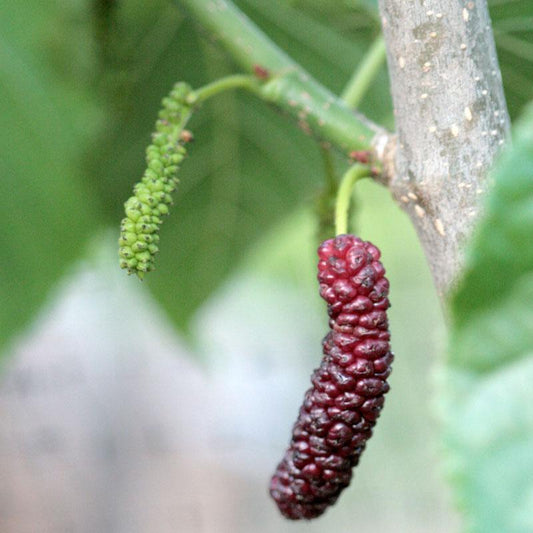
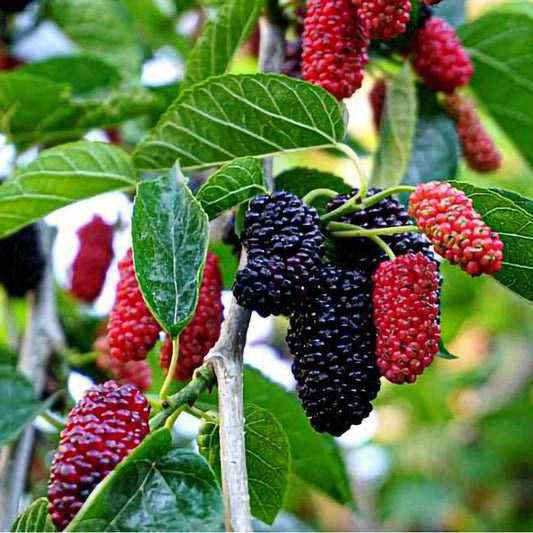
Many mulberry species and hybrids may provide usable foliage. The practical choice is a healthy, accessible tree that produces enough clean leaves. For tree establishment and routine care, see how to grow mulberry trees.
Use Only Clean, Appropriate Leaves
- Harvest fresh, dry leaves from a correctly identified mulberry tree.
- Use tender leaves for very young larvae and larger mature leaves as they grow.
- Do not feed wilted, moldy, roadside-contaminated, or chemically contaminated foliage.
- If any pesticide has been applied to the tree, follow the product label, including all restrictions and intervals. When suitability for feeding insects is uncertain, do not use those leaves.
- Wash hands before handling larvae or feed. If leaves are rinsed, dry their surfaces before placing them in the tray.
Plan the Leaf Supply Before Eggs Hatch
Estimate conservatively. Early larvae consume little, while later larvae can quickly outgrow a small tree’s supply. Do not strip whole branches or remove so much foliage that the tree cannot photosynthesize normally. Rotate harvest areas and allow regrowth.
If the tree is young, recently planted, heat-stressed, or carrying a heavy fruit crop, keep the silkworm batch especially small. Never begin a batch assuming that replacement leaves will be easy to find; leaves from an unknown or treated tree may not be safe.
Simple Captive Setup
- Use shallow, easy-to-clean trays with breathable covers.
- Keep trays indoors in a stable area away from direct sun, drafts, pets, cooking fumes, and household sprays.
- Avoid crowding. Add tray space as larvae grow.
- Remove old leaves and frass regularly, and replace liners before damp waste accumulates.
- Provide good ventilation without placing larvae in a strong air current.
Temperature and humidity needs can vary by strain and life stage, so follow the breeder’s care instructions. A clean, stable environment is more useful than chasing a single universal number.
Feeding Through the Larval Stages
Offer small pieces of tender leaf to hatchlings so they can reach fresh edges easily. Increase leaf size and tray space as the larvae grow. Later-stage larvae can take whole leaves and require much more food. Replace food often enough that it remains fresh, but avoid piling damp leaves in poorly ventilated trays.
Silkworms stop eating during molts. Do not disturb larvae that are still and holding their heads raised; resume normal feeding when activity returns. Near the end of the larval period, mature larvae stop eating and begin searching for a place to spin.
Cocooning and the Adult Stage
Provide clean, dry structures such as divided cardboard or suitable twig frameworks when larvae begin to wander. Keep the area ventilated and avoid handling while cocoons are being formed.
If moths are allowed to emerge, the continuous filament is broken, but the cocoons can still be used for observation or some crafts. Traditional silk reeling prevents adult emergence. Decide how the project will handle cocoons before beginning, especially when children or students are involved, and explain that choice clearly.
Responsible Project Checklist
- Confirm current rules before ordering or transporting eggs or live insects.
- Use a reputable source that provides strain-specific care instructions.
- Never release larvae, pupae, moths, or eggs outdoors.
- Start with fewer larvae than the available leaf supply appears able to feed.
- Keep all feed free of pesticide exposure and other contamination.
- Have a plan for the entire life cycle before the eggs hatch.
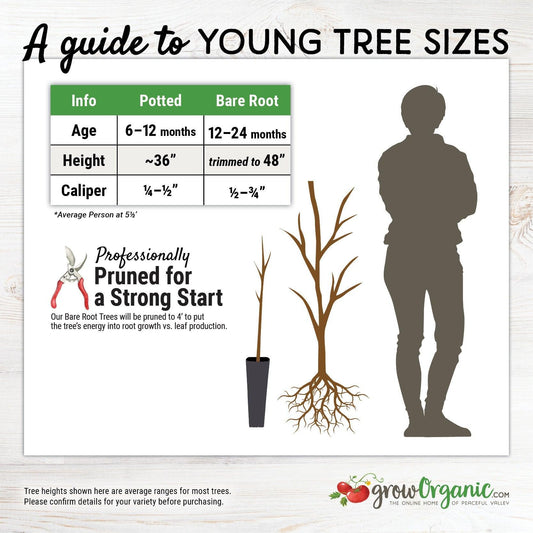
Browse mulberry trees for a future leaf source, remembering that a newly planted tree needs time to establish before it can support repeated leaf harvest.