

This guide focuses specifically on planting shallot bulbs. For care through harvest and storage, use the complete shallot growing guide.
When to Plant Shallots
Plant in fall where winters are suitable for overwintering shallots. In very cold regions or where winter soil stays excessively wet, spring planting may be more reliable. Local extension guidance and the variety’s instructions should take priority over a universal date.
Prepare a Well-Drained Bed
Choose full sun and soil that drains readily. Loosen compacted soil and use a soil test to guide amendments. Avoid automatically adding phosphorus or heavy fertilizer when soil levels are already adequate.
Separate and Inspect the Bulbs
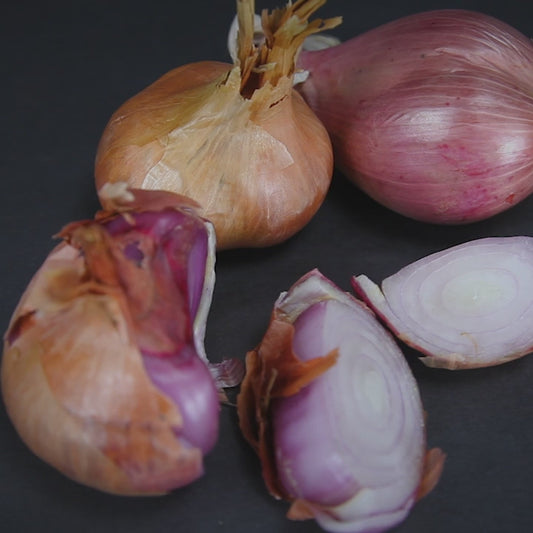
Gently separate planting bulbs if they arrive in clusters. Keep the papery wrapper intact when possible. Do not plant bulbs that are soft, moldy, badly damaged, or decaying.
Planting Orientation and Depth
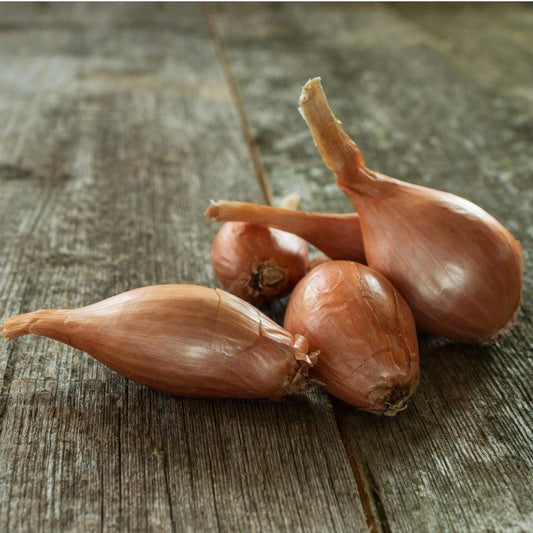
- Place each bulb root end down and pointed end up.
- Set it so the tip is near the soil surface, following the supplier’s depth directions and adjusting for erosion or frost heaving.
- Firm the soil gently without compacting it.
Spacing Shallot Bulbs
Allow roughly 6–8 inches between bulbs and about 10–12 inches between rows unless the variety or production system calls for another layout. Shallots multiply into clusters, so crowding can restrict bulb development and airflow.
First Watering and Mulch
Water after planting to settle soil around the roots, then irrigate according to soil moisture and weather. Shallots need moisture but are vulnerable in saturated soil. In cold climates, a loose mulch can moderate temperature and frost heaving; in wet climates, avoid creating a dense layer that holds water against emerging plants.
After Planting
Label varieties, keep weeds small, and check for heaving or drainage problems. Once growth is established, move to the pillar guide for feeding, irrigation, harvest, curing, and storage.
Planting Resources
Shallot Planting Resources
Continue with the complete shallot cultivation guide.





16 comments
I already received my bulbs in the fall but did not have time to plant them yet. I plan to plant them in the spring. Can they be kept, potted, in a cool basement for the time being? Would they benefit from a grow light? Thank you in advance.
Kit, you might want to wait until the spring to plant your shallots. We will most likely not have them available in the spring, so you can purchase them now and store in a cool dry location until you are ready to plant in the spring. If you don’t want to wait, you can put down a very thick layer of mulch to protect them from freezing. Another idea is to put them in large pots or grow bags and bring those inside during the winter.
I’m in Michigan zone 5, can I plant shallots in the fall, or do I need to wait until spring? Will you have Shallots available in the spring for purchase?
Kit
Maria, shallots do tend to bolt or put out flower stalks. Especially when the weather changes dramatically from cold to warm. It signals the plant to start making the flowers. Just clip them off, not much more that you can do.
My shallots are bolting, this is my first year growing them, I found an article that advice to cut the flower stalks, let’s see what happen, I can say I followed the instructions step by step, they are in the same raised bed with my garlic and my garlic looks beautiful.