
Short Day Onions vs Long Day Onions: The Real Reason Bulbs Don’t Form
If your onions grow plenty of leaves but never form proper bulbs, the issue is usually not watering or fertilizer. The real problem is choosing the wrong type of onion. Understanding short day vs long day onions is the key to getting full-sized bulbs.
Onions depend on day length, not just soil or care. If the timing is off, the plant will grow leaves but not develop strong onion bulbs.
If you are starting out, review this guide on to understand the basics of healthy onion growth.

Why Day Length Controls Bulb Formation
Different type onions form bulbs only when daylight reaches a certain number of hours.
- Short day onions begin forming bulbs at 10 to 12 hours of light
- Long day onions need 14 to 16 hours of daylight
This is why long day vs short day onions matters so much. If you plant the wrong type, your plants may look healthy but never increase in bulb size.
Short Day Onions vs Long Day Onions
Short Day Onions
Short day onion varieties are best for southern regions.
- Bulb early in the growing season
- Often planted in fall or winter
- Known for a mild sweet flavor, common in yellow or red onion types
You will find these as short day onion seeds, short day onion seed, short day onion sets, and short day onion starts at garden centers.
These short day onion plants are ideal where winters are mild and days are shorter.
Long Day Onions
Long day onions are suited for northern climates.
- Require long summer days to bulb
- Planted in early spring
- Often produce larger bulbs with better storage
These include long day onion seeds, long day onion sets, and established long day onion plants.
If planted in the wrong region, even strong plants will not form proper bulbs.
Intermediate Day Onions
Some gardeners grow intermediate day onions, which fall between short and long types.
- Adapt to mid-range climates
- Help bridge the gap in certain regions

Why Bulbs Don’t Form
When comparing short day onions vs long day, bulb failure usually comes down to mismatch.
Common issues include:
- Growing onion short day types in northern regions
- Planting long day varieties in southern climates
- Poor soil instead of well drained soils and fertile soils
- Overcrowding in beds instead of spacing in raised beds
Even though onions are easy to grow, they are also heavy feeders, and proper conditions matter.
Growing Conditions for Better Bulbs
To help onions form properly:
- Use loose, well-drained soil
- Add compost to improve soil fertility
- Maintain consistent moisture
- Choose the correct onion type for your region
For reliable options, explore this collection of organic onion seeds.
For detailed planting tips, see this onion growing guide.

Recommended Onion Options
Choosing the right variety improves success, bulb development, and overall high yield.
-
Walla Walla Onion Seeds (Organic)
- A sweet, open pollinated option among reliable long day onion varieties, well suited for northern regions where long summer days support proper bulb formation
-
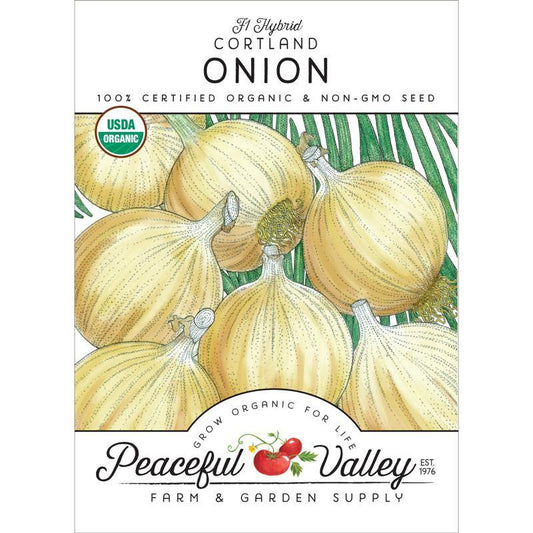
Cortland Onion Seeds (Organic)
- A dependable storage onion and one of the stronger long day onions varieties, known for producing consistent, well-formed bulbs
-
Evergreen Bunching Onion Seeds (Organic)
- A reliable bunching onion that does not rely on bulbing, making it useful if short day onion bulbs fail to form due to incorrect timing or conditions
Understanding the difference between short day varieties and long day types helps ensure your onions grow and bulb properly in your region.
Conclusion
The difference between short day onions vs long day onions is the main reason bulbs fail to form. Onions respond to daylight, not just care. When the correct type is planted, whether from short day varieties or long day onion varieties, plants produce proper bulbs instead of only leaves.
By matching onion type to your region and maintaining good growing conditions, you can grow onions that plants produce consistent, healthy harvests with properly sized bulbs.