


Item Number: SNV1010
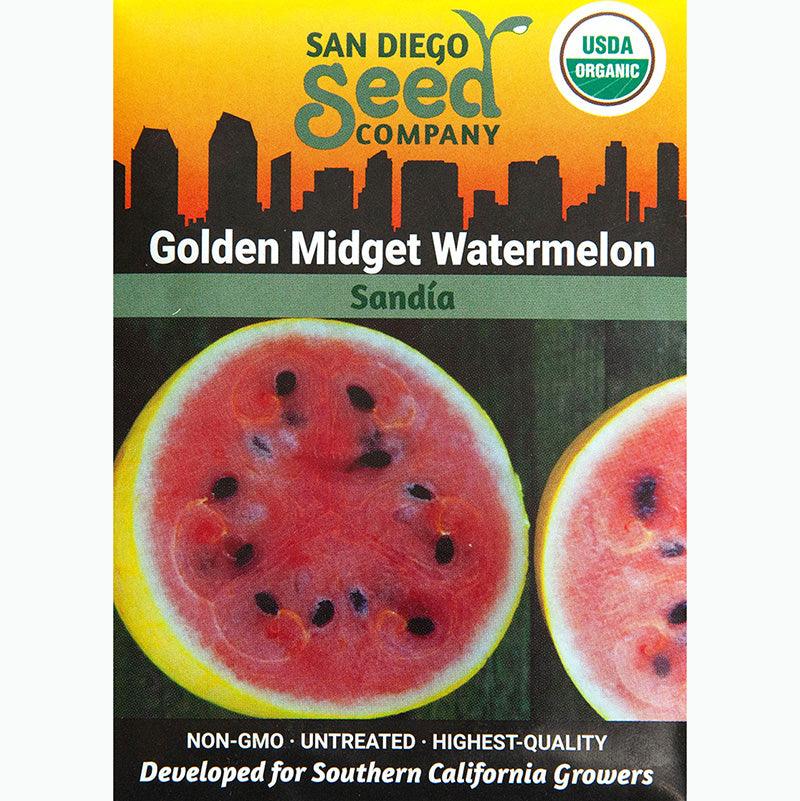
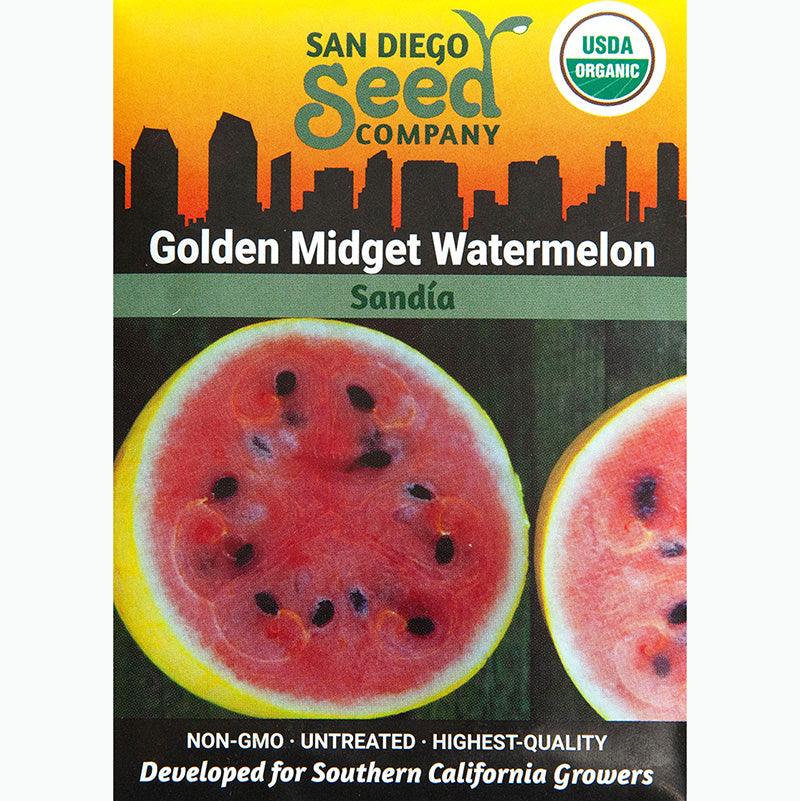
Golden Midget Watermelon Seeds (Organic)
Space-Savvy Sweetness



Check Your Zone Compatibility:

Our Guarantee To You
Since 1976, we've served our customers at every stage of growing. Please contact us at any time. We are happy to support and assist you.
Description
Description
The Golden Midget Watermelon, a cultivar originating from Japan, presents a unique and charming addition to gardens, particularly for those with limited space. As a smaller-sized watermelon variety, it is well-suited for container gardening or smaller garden plots, catering to urban or space-constrained growers. This petite watermelon plant exhibits a compact growth habit, with vines reaching approximately 3-4 feet in length, making it well suited for smaller gardens or even large containers. The foliage is lush and dark green, complementing the diminutive fruits that reach about 3-5 pounds in weight.
Variety Details
- Plant type: Tender Annual
- Growth habit: Vining
- Crop category: Melon
- Kitchen profile: The taste of the Golden Midget Watermelon is cherished for its sweetness and refreshing juiciness.
- Recorded feature: Open-Pollinated
- Product format: Seed packet
Sowing & Growing
- Germination temperature: Planting from seed requires warm soil temperatures, ideally around 70-90°F (21-32°C), ensuring proper germination and growth.
- Light: Full Sun
- Planting season: Spring or Summer
- Starting location: Direct Sow or Start Indoors & Transplant
- Recorded soil pH: 5.6 - 6.0 or 6.1 - 6.5
Plan Golden Midget Watermelon for a warm, full-sun period with enough time for vines and fruit to develop. Sow after soil has warmed or transplant carefully once frost risk has passed. Give vines the recorded room, check moisture at root depth, and avoid repeatedly wetting foliage. As maturity approaches, use the documented color, aroma, rind, stem, or texture cues rather than calendar days alone. Handle harvested fruit carefully and store only when the crop type and maturity stage support it.
Before sowing Golden Midget Watermelon, review the packet alongside the current product details and note any range in temperature, germination, or maturity. Ranges reflect biological and seasonal variation rather than a fixed promise. Label each planting with its date and location, then compare emergence, growth, and harvest with local weather. This record is useful for succession plantings and for deciding whether the crop fits better into an earlier or later seasonal window.
Explore related options in our Watermelon Seeds.
Seed Pack Shipping
Seed Pack Shipping
Qualifying seed-pack-only orders under $50 ship for a $7 flat rate via USPS. Spend $50 or more on qualifying seed packs and receive free USPS shipping. Available within the contiguous 48 states.
Shipping Information
Shipping Information
Shipping Weight: 0.02 lb
Dimensions: 4.5"L x 3.25"W x 0.1"H
Features
Features
- Grow on a Trellis
- Heirloom
- Open-Pollinated
Characteristics
Characteristics
Planting & Care
Planting & Care
Soil & Water: Watermelon prefers light, loamy, fertile, deep, well-draining soil with a pH of 5.5-6.5. Add plenty of organic matter. Water plants amply until setting out, then water more sparingly. Mulch to prevent weed competition.
Planting & Growing: Start seeds indoors 2-3 weeks before the last frost or sow seeds directly after frost. Set out 3-4 transplants per hill, selecting the strongest two when vines are 1'-2' long. Watermelons are large vining plants that can take over an extensive garden space. They can be trellised, but use slings to support the developing fruit.
Harvesting & Storage: Harvest melons when the tendril closest to the stem turns dry and brown and the stem becomes brittle. Eat fresh, freeze flesh in a honey-based syrup, or pickle the rind.
Useful Information
Useful Information
Guarantee
Guarantee

- Choosing a selection results in a full page refresh.
- Opens in a new window.