Remineralizing garden soil means adding a mineral amendment to address a documented soil condition or nutrient need. It differs from routine fertilizing: fertilizers are selected primarily for plant nutrients, while mineral amendments may supply particular elements or influence soil properties.
Rock dust and other mineral products are not universal cures for poor soil. Their value depends on the source material, particle size, soil pH, existing nutrient levels, crop, weathering rate, and application rate. Begin with a soil test and use the current product label.
Fertilizing and Remineralizing Serve Different Purposes
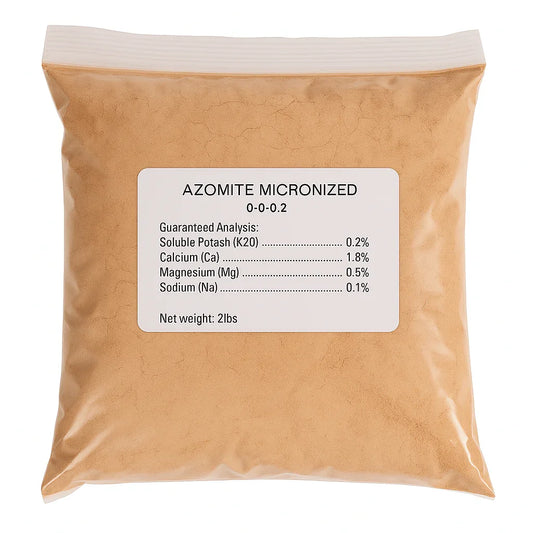
A fertilizer label states a guaranteed analysis for nutrients such as nitrogen, available phosphate, and soluble potash. A mineral amendment may contain calcium, magnesium, sulfur, potassium, iron, silica, or trace elements, but total mineral content does not necessarily equal immediate plant availability.
Some soils already contain abundant mineral reserves. Adding a broad-spectrum rock powder without evidence of need may offer little benefit and can complicate nutrient management.
Start with Soil-Test Results
Interpret pH, organic matter, major nutrients, and—in a complete analysis—secondary nutrients, micronutrients, and cation exchange capacity together.
- Soil pH: Lime, sulfur, and related materials should be selected for the measured condition and crop.
- Phosphorus and potassium: Both can accumulate, so do not add them automatically when levels are sufficient or high.
- Calcium and magnesium: Consider their levels, soil texture, and pH before choosing lime, gypsum, or another source.
- Micronutrients: Plants need small amounts, and excessive applications can be harmful. Correct a documented deficiency with an appropriate labeled product.
Common Mineral Amendment Categories
| Category | Potential use | Important limitation |
|---|---|---|
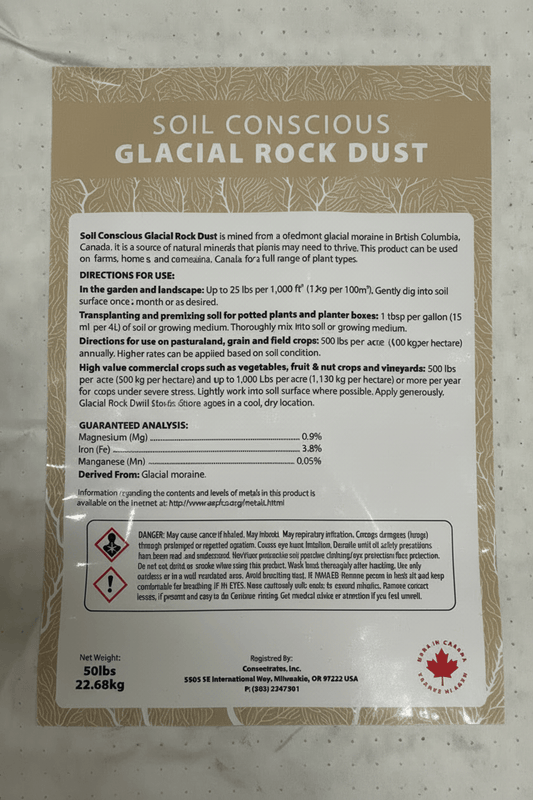
| Basalt or glacial rock dust | Slow-weathering source of assorted minerals | Composition and release vary; not a substitute for diagnosis |
| Greensand or langbeinite | Products selected for particular mineral analyses | Compare the guaranteed analysis with the soil-test need |
| Gypsum | Source of calcium and sulfur in suitable situations | Does not generally raise soil pH and is not needed in every clay soil |
| Limestone | Raises pH while supplying calcium and sometimes magnesium | Can push pH or magnesium too high without test guidance |
| Elemental sulfur | May lower soil pH over time | Rate depends on starting pH, soil texture, and product directions |
Combine Minerals with Broader Soil Care
Mineral amendments cannot replace organic matter management, appropriate irrigation, drainage, reduced compaction, or crop rotation. Compost and cover crops can contribute organic matter and support soil structure, while mineral products address different needs.
A Responsible Application Process
- Take a representative soil sample.
- Choose a product whose label and guaranteed analysis match the measured need.
- Measure the treatment area and calculate the labeled amount.
- Apply and incorporate the material as directed.
- Allow time for slow-reacting amendments before retesting.
- Keep records so changes can be evaluated.
Remineralization can be useful when it is specific, measured, and test-driven. It should not be presented as a guaranteed way to increase yield, prevent disease, improve flavor, or create drought resistance.
Download the Peaceful Valley Soil Testing Fertility Chart.
Related Fertilizer Guidance
This page supports Rock Dust for Gardens: Benefits, Limits & How to Use. Use that pillar for the complete decision process, then confirm the application with the current product label.