

Are you ready to grow big garlic?
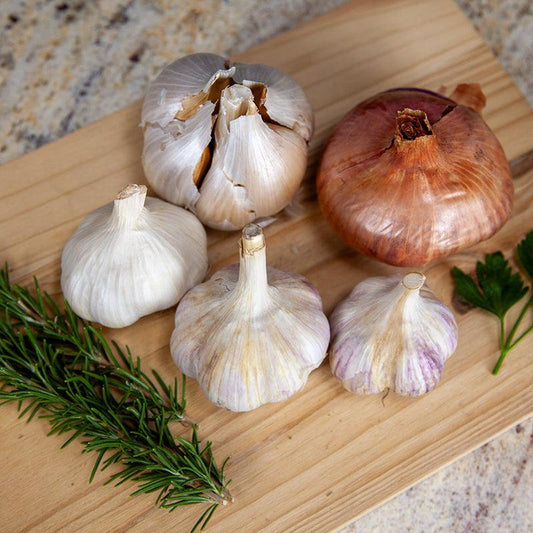
Ready for a different flavor in your kitchen and a fun allium to harvest? Try planting elephant garlic this fall. This big guy is technically in the leek family, but you’d never know by the look or the taste. How big is it? Think a baseball or a softball. The head of elephant garlic has five to seven cloves, any one of which can be larger than a small HEAD of regular garlic.
Kids love harvesting this giant of the garlic patch, and it keeps well too, with a milder flavor than real garlic. The bulb of elephant garlic is not the only outsize part of the plant -- you'll get foliage about four-feet tall too! No hardneck-garlic-style-scapes with this leek, but globe-shaped flowers on straight stems. Cut off the flowers to conserve the plant's energy for the developing, underground bulb.

Check out our Garlic Resource Center for even more information about garlic and the varieties we offer. Or, use our Garlic Selector Tool for a customized garlic list matched to your climate, gardening style, and flavor preferences.
Why Choose Elephant Garlic for Your Garden?
Elephant garlic is a fantastic choice for your garden due to its large elephant garlic bulbs, which are much bigger than regular garlic. When planting elephant garlic, you'll notice it produces multiple separate cloves, offering a milder garlic flavor compared to true garlic.
This fall planted garlic also sends up impressive flower stalks, adding aesthetic value to your garden. With proper elephant garlic care, you can easily grow elephant garlic and enjoy its versatile culinary uses.
Brief History
Elephant garlic, despite its name, is more closely related to leeks than to true garlic. Originating in Central Asia, it has been cultivated for centuries due to its impressive size and mild garlic flavor.
When planting elephant garlic, you'll notice that the elephant garlic bulb is much larger than regular garlic, consisting of multiple individual cloves. To grow elephant garlic successfully, it requires full sun and good air circulation, which helps the young plants develop into healthy bulbs.
Elephant garlic prefers well-drained soil and careful removal of remaining roots to thrive. The large bulbs and mild flavor, along with the edible Elephant garlic scapes, make it a popular choice for gardeners and chefs alike.

Distinct Characteristics
Elephant garlic, scientifically known as Allium ampeloprasum var. ampeloprasum, stands out for its notably large bulbs and cloves. These bulbs, much larger than those of regular garlic, thrive when planted in well-drained soil and under direct sunlight.
Planting them a few inches deep in a dark spot with good sunlight during the growing season ensures optimal development. This distinct variety of Allium ampeloprasum showcases its unique size and flavor, making it a favored choice among gardeners and culinary enthusiasts alike.

Cooking with elephant garlic
Think of this as a flavorful vegetable. It has more moisture than the softneck and hardneck garlics, and can be cooked differently. Elephant garlic brings its own version of the leek/garlic/onion/shallot flavor to the table.
Try it cooked whole with a roast (chicken or beef), saute it along with other vegetables, scramble it in eggs-and-stuff, slice it raw into salads, and add to shish kebabs on the barbecue. Prepare your usual recipes, but substitute elephant garlic where you would typically use onions or shallots -- and see how you like the difference.
Delicious Recipes
Discover the delightful flavors of elephant garlic with these simple recipes. Start by roasting whole elephant garlic bulbs: preheat your oven to 400°F (200°C), slice off the top of each bulb to expose the cloves, drizzle with olive oil, wrap in foil, and bake for 30-40 minutes until soft. Squeeze out the creamy roasted garlic to spread on bread or mix into mashed potatoes for a rich, savory twist.
Another easy option is elephant garlic butter: blend softened butter with finely minced roasted elephant garlic, salt, and herbs like parsley or thyme for a flavorful spread or seasoning for grilled meats and vegetables. These step-by-step instructions ensure delicious results that highlight the mild and aromatic qualities of elephant garlic in your cooking.

Growing elephant garlic
Watch our video about planting garlic and you'll see just how easy it is to add elephant garlic to your repertoire. Want to keep going down the leek road? Find out more about leeks in our short video on growing leeks and shallots. Grow elephant garlic and experiment with a unique plant in your garden, and unique flavors in your kitchen.
Please check out our handy Garlic Growing Guide as an additional resource and learn about caring for your garlic over the winter.
Identifying Potential Problems
When growing and harvesting elephant garlic, watch out for potential issues that can affect your crop. Ensure garlic cloves are planted with enough room to develop into a large bulb, preferably in a raised bed with well-draining soil.
Protect young plants from damage, especially as foliage begins to emerge in early spring. If foliage turns yellow prematurely, it may indicate wet or overly moist conditions, which can hinder growth.
To prevent this, plant in a sunny spot with good air circulation and avoid excessive organic matter that retains water. Harvest when foliage is ready to be harvested and the bulbs are fully mature, storing them in a cool, dry spot for optimal preservation.
Solutions for Common Growing Issues
Address common growing issues of elephant garlic with practical solutions. If foliage turns yellow prematurely, ensure the plants are not sitting in waterlogged soil by improving drainage or planting in raised beds. Protect young plants from damage and encourage healthy growth by planting in a sunny location with good air circulation.
Regularly check for pests and diseases such as fungal infections, treating with appropriate organic solutions if necessary. Provide adequate spacing between plants to prevent overcrowding and promote bulb development. By implementing these solutions, you can cultivate robust elephant garlic plants that thrive throughout the growing season.
Preventative Measures
To troubleshoot common issues with growing elephant garlic, adopt proactive preventative measures. Start by ensuring the planting area has well-drained soil to avoid waterlogging, which can cause yellowing foliage. Plant elephant garlic in a sunny spot with good air circulation to deter fungal diseases and encourage healthy growth.
Monitor for pests like onion flies and treat promptly with organic solutions if detected. Regularly inspect plants for signs of stress or nutrient deficiencies, adjusting fertilizer levels as needed to support robust bulb development. By taking these preventative measures, you can maintain thriving elephant garlic crops throughout the growing season.

Resources & Further Reading
Ready to learn more about growing, harvesting, and enjoying elephant garlic? These helpful guides provide expert advice on everything from understanding its unique characteristics to harvesting and comparing it with traditional garlic varieties:
- When to Harvest Elephant Garlic: Early vs. Late Harvesting – Learn how to identify the ideal harvest window and understand how timing can affect bulb size, flavor, and storage quality.
- Elephant Garlic vs. Regular Garlic: Complete Gardening Guide – Compare elephant garlic with traditional garlic varieties, including differences in appearance, flavor, growing habits, and culinary uses.
- What Is Elephant Garlic? Facts Every Gardener Should Know – Discover the origins, characteristics, growing requirements, and unique benefits of this impressive allium.
These resources can help you grow larger, healthier bulbs, improve your harvest results, and get the most out of elephant garlic in both the garden and the kitchen.
Conclusion
Elephant garlic is a rewarding and unique addition to any home garden. With its impressive bulb size, mild flavor, and easy-growing nature, it offers both visual appeal and culinary versatility. Although it's technically a member of the leek family, its garlic-like taste and giant cloves make it a favorite among gardeners looking for something a little different.
By planting in well-drained soil, providing plenty of sunlight, and following proper care practices throughout the growing season, you can enjoy a successful harvest of large, flavorful bulbs. Whether you're roasting whole cloves, adding them to your favorite recipes, or simply enjoying the novelty of growing a giant allium, elephant garlic delivers plenty of benefits in the garden and the kitchen.
Give elephant garlic a place in your fall planting plans and discover why this remarkable plant continues to earn a spot in gardens around the world.



2 comments
Asmat, we are currently sold out of elephant garlic for the year. You can check back on our website next year for pricing and shipping. If you go to the elephant garlic product page, you can click the box “Notify me when available” and we will email you when they are available to order again.
Respected I’m interested in Elephant Garlic farming and I want to buy seed from you. I want to know about price and delivery details. Thanks