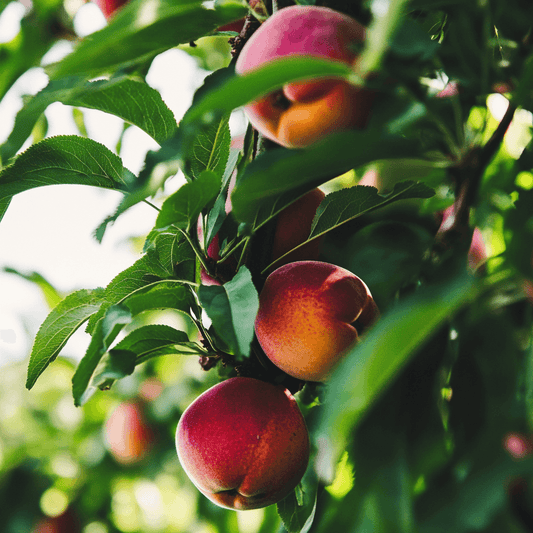
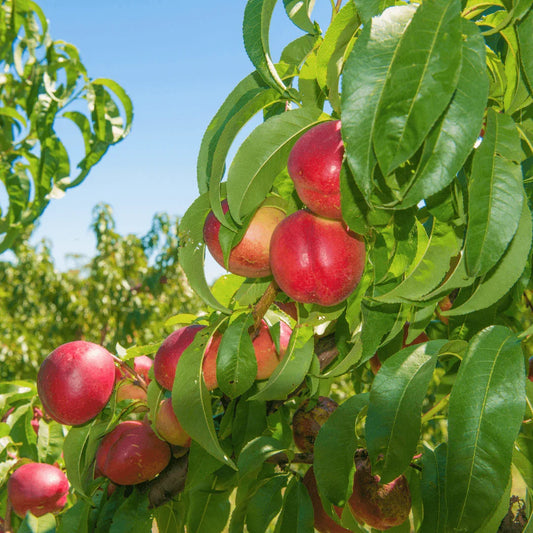
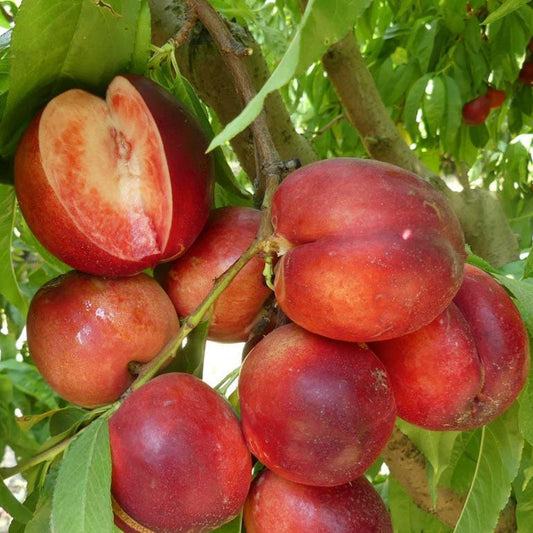
A nectarine’s red blush is attractive, but it is not a dependable test of ripeness. This guide focuses only on deciding whether one fruit is ready to pick, ready to eat, or still needs time. For the full picking workflow, see harvesting and post-harvest handling.

First Check the Background Color
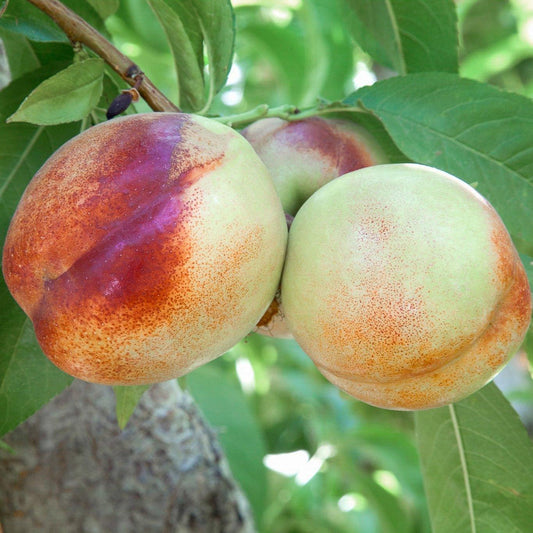
Ignore the red overcolor and look at the lighter ground color. On many yellow-fleshed cultivars it changes from green toward cream or yellow as the fruit matures. White-fleshed cultivars can remain pale, so compare several fruit on the same tree and learn the normal color for the named variety.

Use Gentle Pressure
A nectarine for immediate eating should yield slightly near the stem end when pressed very gently with the pad of a finger. Do not squeeze the sides; pressure marks become bruises. A hard fruit may be immature or simply firm-mature, while a very soft or leaking fruit is overripe.

Smell and Taste a Sample
Ripe fruit often develops a recognizable aroma near the stem. Aroma varies by cultivar and temperature, so use it with color and feel. When a tree is approaching harvest, taste one representative fruit. Developed sweetness, acidity, and aroma are more informative than appearance alone.

Test How It Releases
Support the fruit and lift with a slight twist. A mature nectarine generally releases without force. If it clings tightly and the background remains green, leave it and check again. Harvest in several passes because sun exposure and canopy position create uneven timing.
Picked Too Firm?
A mature but firm nectarine can soften at room temperature. Place it in a single layer away from direct sun and check daily. A paper bag can concentrate naturally produced ethylene and speed softening, but it also traps moisture, so inspect the fruit frequently. Fruit picked substantially immature may soften without developing the same flavor as tree-mature fruit.

Ready-to-Eat Checklist
- Ground color fits the cultivar and is no longer distinctly green.
- The stem end yields slightly without feeling mushy.
- The fruit has a characteristic aroma.
- A sample tastes developed rather than starchy.
- Tree fruit releases with a gentle lift and twist.
Once fruit reaches eating ripeness, follow our nectarine storage guide. For tree selection and care, visit the main growing guide or shop nectarine trees.