Short summers in the Rockies and Interior West ask gardeners to manage intense sun and quick temperature swings at the same time. Begin with root-zone moisture, overnight crop recovery, forecast hazards and the number of usable days before frost. Lower Front Range and intermountain valleys may hold more heat than mountain valleys, while Great Basin and high-desert sites often face limited water, wind and salinity. Use the checks below to decide whether to water, protect, plant, harvest or rest a bed.
Use these related guides when you are ready to work through each part of the seasonal plan: Mulch, Organic Matter, and Living Roots Under High-Desert Sun, Fast-Maturing Crops and Succession Planting for Short Interior-West Summers, Interior-West Irrigation Under Wind, Low Humidity, and High UV, Hail, Grasshoppers, Mites, and Weather Stress in Interior-West Organic Gardens, and Interior-West Harvest Turnover and Soil Cover Before the Next Freeze.
Regional condition checklist
- Transition: Has root-zone moisture and crop stress recovery overnight changed enough to open or close work?
- Transition: Has heat advisory, humidity or monsoon forecast changed enough to open or close work?
- Transition: Has remaining days to first frost versus crop maturity changed enough to open or close work?
- Transition: Has harvest completion and open-bed window changed enough to open or close work?
- Transition: Has smoke, storm or irrigation restriction changed enough to open or close work?
- Transition: Has forecast heat, overnight recovery and measured root-zone moisture changed enough to open or close work?
- Soil: Probe active-root depth and identify crusting, saturation, compaction, erosion or exposed surface before disturbing it.
- Water: Verify source, pressure, emitters, wetting and runoff instead of inheriting the previous season’s controller setting.
- Weather: Account for extreme heat, drought, humidity, storm damage, smoke, hail, salinity, mites and premature frost. Regional hazards: Late snow, early freeze, hail, wind, drought, wildfire smoke, intense sun, flash runoff and freeze-thaw.
- Biology: Confirm live evidence and new damage from grasshoppers, flea beetles and cutworms, spider mites, rodents and wildlife, storage pests before intervening.
- Food production: Compare establishment plus maturity with the site’s heat, frost, light and water runway.
- Perennials: Check young-root moisture, trunks, ties, supports and cultivar-specific hardiness or chill constraints.
- Safety: Follow current official heat, storm, smoke, flood, freeze, pesticide, fire and access guidance.
Why one regional calendar fails
Short and variable frost-free windows, late snow and early hard freezes are common; valleys can be colder than slopes. USDA zones describe minimum-temperature risk but not season length, hail or warm-season maturity.
High UV, low humidity, strong wind and large day-night temperature ranges; lower valleys can be hot while high elevations retain cold nights. Low and variable precipitation, snowpack-dependent supply and summer irrigation demand; convective storms can bring hail and runoff without recharging the root zone evenly.
| Segment | Seasonal operating emphasis | Local constraint | Decision rule |
|---|---|---|---|
| Lower Front Range and intermountain valleys | Lower valleys have more heat but still face wind and early frost | Alkaline, calcareous, saline or sodic soils; coarse or rocky profiles; low organic matter; compacted new-development soil; locally heavy clay and slow drainage. | Recheck local soil, exposure, forecast and crop response before acting. |
| Mountain valleys and high elevations | High elevations require fast crops and season extension | Limited supply, wind loss, high evapotranspiration and freeze-damaged irrigation equipment; salts can accumulate; snowpack outlook and local restrictions matter. | Recheck local soil, exposure, forecast and crop response before acting. |
| Great Basin | Great Basin sites prioritize water and salinity | Elevation reduces temperature, compresses maturity windows and increases UV, wind and frost exposure; aspect and cold-air drainage can matter as much as absolute elevation. | Recheck local soil, exposure, forecast and crop response before acting. |
| High desert and plateau | High deserts combine intense sun, cold nights and sparse rainfall | Late snow, early freeze, hail, wind, drought, wildfire smoke, intense sun, flash runoff and freeze-thaw. | Recheck local soil, exposure, forecast and crop response before acting. |
Treat these rows as starting hypotheses. A sheltered heat island, cold-air drain, slope aspect, coastal or lake influence, urban surface or elevation shift can reverse the expected pattern over a short distance. USDA hardiness information describes average extreme minimum temperature; it is not a planting date, a frost guarantee or a heat forecast.
Condition-based action timeline
| Trigger | Priority action | Verification | Handoff |
|---|---|---|---|
| Root-zone moisture and crop stress recovery overnight | Observe the transition using root-zone moisture and crop stress recovery overnight and heat advisory, humidity or monsoon forecast | Observe the result at root, crop and site scale; continue only when the next gate passes. | Record the observation that should trigger the next step. |
| Heat advisory, humidity or monsoon forecast | Stabilize soil: Keep soil shaded and rooted where the water budget permits, use postharvest cover or residue, minimize disturbance and prevent bare-soil heating or erosion | Observe the result at root, crop and site scale; continue only when the next gate passes. | Record the observation that should trigger the next step. |
| Remaining days to first frost versus crop maturity | Correct water movement: Zone drip by crop and soil, reduce evaporation, inspect emitters, adapt to humidity or wind, and preserve infiltration for intense summer storms | Observe the result at root, crop and site scale; continue only when the next gate passes. | Record the observation that should trigger the next step. |
| Harvest completion and open-bed window | Sequence food production: Choose heat-adapted or fast-maturing crops by subregion, schedule succession from local frost/heat realities, and rest beds when water or plant stress makes production inefficient | Observe the result at root, crop and site scale; continue only when the next gate passes. | Record the observation that should trigger the next step. |
| Smoke, storm or irrigation restriction | Protect biodiversity: Scout frequently for mites, whiteflies, caterpillars, disease and weather injury; maintain airflow and habitat while using thresholds and label-first controls | Observe the result at root, crop and site scale; continue only when the next gate passes. | Record the observation that should trigger the next step. |
| Forecast heat, overnight recovery and measured root-zone moisture | Finish perennial/infrastructure work: Protect roots and trunks, manage shade and supports, harvest without overpruning, and begin fall soil/planting work before the seasonal transition arrives | Observe the result at root, crop and site scale; continue only when the next gate passes. | Record the observation that should trigger the next step. |
Sequence the whole garden
- Step 1: Observe the transition using root-zone moisture and crop stress recovery overnight and heat advisory, humidity or monsoon forecast
- Step 2: Stabilize soil: Keep soil shaded and rooted where the water budget permits, use postharvest cover or residue, minimize disturbance and prevent bare-soil heating or erosion
- Step 3: Correct water movement: Zone drip by crop and soil, reduce evaporation, inspect emitters, adapt to humidity or wind, and preserve infiltration for intense summer storms
- Step 4: Sequence food production: Choose heat-adapted or fast-maturing crops by subregion, schedule succession from local frost/heat realities, and rest beds when water or plant stress makes production inefficient
- Step 5: Protect biodiversity: Scout frequently for mites, whiteflies, caterpillars, disease and weather injury; maintain airflow and habitat while using thresholds and label-first controls
- Step 6: Finish perennial/infrastructure work: Protect roots and trunks, manage shade and supports, harvest without overpruning, and begin fall soil/planting work before the seasonal transition arrives
Run the sequence in order. A later task should not be used to conceal an earlier failure: fertilizer cannot repair drainage, a pesticide cannot repair heat or water stress, and a planting date cannot replace a soil-temperature or frost-runway decision. After a major weather event, repeat the affected gate rather than restarting every input.
Stabilize soil and nutrient cycling
Keep soil shaded and rooted where the water budget permits, use postharvest cover or residue, minimize disturbance and prevent bare-soil heating or erosion. Regional emphasis: efficient irrigation, mulch, wind/hail protection, succession crops with realistic maturity, IPM, and immediate cover after early harvests.
Alkaline, calcareous, saline or sodic soils; coarse or rocky profiles; low organic matter; compacted new-development soil; locally heavy clay and slow drainage. Correct a physical or chemical constraint only after appropriate testing and bed history support the diagnosis. Mature compost and fertilizers can add salts or excess nutrients; use soil-, crop-, label- and site-specific evidence rather than a fixed rate.
Correct water movement before changing volume
Zone drip by crop and soil, reduce evaporation, inspect emitters, adapt to humidity or wind, and preserve infiltration for intense summer storms. Regional constraint: Limited supply, wind loss, high evapotranspiration and freeze-damaged irrigation equipment; salts can accumulate; snowpack outlook and local restrictions matter.
Limited supply, wind loss, high evapotranspiration and freeze-damaged irrigation equipment; salts can accumulate; snowpack outlook and local restrictions matter. Inspect during and after a measured application. A controller is a reminder, not proof that the active root volume received water or that runoff and deep loss were avoided.
Restart or close food production from runway
Choose heat-adapted or fast-maturing crops by subregion, schedule succession from local frost/heat realities, and rest beds when water or plant stress makes production inefficient.
Count through germination or transplant recovery, growth and the useful harvest stage. Add a buffer for the named regional hazards. Catalog maturity and hardiness descriptions are qualified estimates, so use local records and a small trial when uncertainty is material. A deliberate rest under protected soil is a valid production decision when water, heat, frost or labor closes the crop window.
Use identification and thresholds for biodiversity
Scout frequently for mites, whiteflies, caterpillars, disease and weather injury; maintain airflow and habitat while using thresholds and label-first controls. Priority pressures: grasshoppers, flea beetles and cutworms, spider mites, rodents and wildlife, storage pests.
Separate pest injury from weather, roots, salts, compaction and irrigation failure. Preserve functional beneficial habitat where water, sanitation and safety allow. If a pesticide is justified, the current label and applicable law control the crop, target, rate, protective equipment, timing, reentry, harvest and environmental restrictions. No intervention guarantees prevention or harvest.
Finish perennial and infrastructure work at the right stress level
Protect roots and trunks, manage shade and supports, harvest without overpruning, and begin fall soil/planting work before the seasonal transition arrives.
Verify cultivar hardiness, chill, dormancy, shipping window and destination restrictions individually. Keep mulch off trunks and crowns, inspect supports for constriction and avoid major stress-inducing pruning when the plant or forecast argues for waiting. Safety work and confirmed damaged material require their own qualified decision.
Connect regenerative practice to an observable outcome
| Practice | Intended outcome | How to observe it | Tradeoff |
|---|---|---|---|
| Keep soil covered | More continuous soil cover | Use a marked comparison point, dated photograph, measured moisture/infiltration or crop record. | Record water, labor, imported material, plastic and termination cost. |
| Maintain living roots where water and temperature permit | Lower avoidable water loss | Use a marked comparison point, dated photograph, measured moisture/infiltration or crop record. | Record water, labor, imported material, plastic and termination cost. |
| Use soil-test-based nutrient cycling | More resilient nutrient cycling | Use a marked comparison point, dated photograph, measured moisture/infiltration or crop record. | Record water, labor, imported material, plastic and termination cost. |
| Hydrozone irrigation | Greater beneficial-organism support | Use a marked comparison point, dated photograph, measured moisture/infiltration or crop record. | Record water, labor, imported material, plastic and termination cost. |
| Retain functional beneficial habitat | More continuous soil cover | Use a marked comparison point, dated photograph, measured moisture/infiltration or crop record. | Record water, labor, imported material, plastic and termination cost. |
| Maintain covered soil | Lower avoidable water loss | Use a marked comparison point, dated photograph, measured moisture/infiltration or crop record. | Record water, labor, imported material, plastic and termination cost. |
These outcomes are expected mechanisms, not guarantees. A practice is not automatically low-input or regenerative if it requires water the site cannot supply, imported material with an unresolved quality problem, or repeated replacement of plastic. Keep the practice only when field evidence and the full resource cost support it.
Make the most of the remaining summer
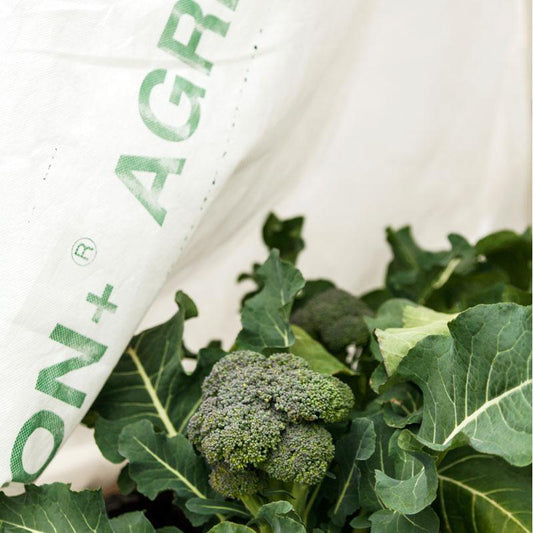
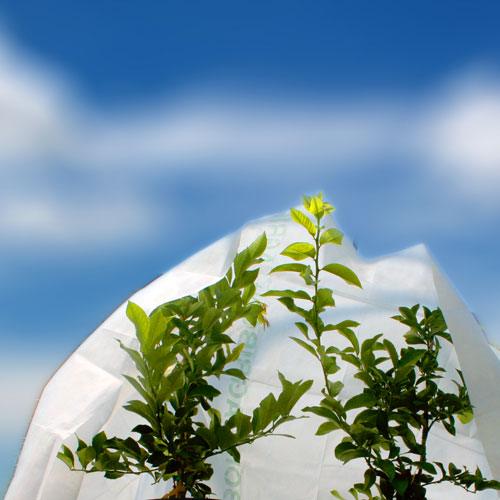
Plan temporary protection around the hazard it must modify. Shade cloth can reduce incoming solar radiation, but it also changes photosynthesis, airflow and the temperature below the structure. Compare shade percentage with the crop’s light needs, hold the material above the canopy when appropriate, anchor it for local wind and check the protected area during the hottest part of the day. Remove or adjust it when the hazard passes. Shade cannot compensate for a dry root zone.
Treat a summer storm as both a crop event and a water-distribution test. Hail may damage foliage while intense rain runs off without soaking the full root zone. After the site is safe, check protected and exposed plants, inspect erosion and outlets, and probe the soil rather than assuming the rain replaced irrigation. Repair washed mulch, blocked emitters or unstable supports before the next watering. If wildfire smoke, lightning, flash flooding or extreme heat makes outdoor work unsafe, follow current official guidance and postpone nonessential garden tasks.
Use overnight recovery as a practical heat-stress check. A crop that looks tired late in the day but stands normally by morning may be responding to temporary heat and radiation; a crop that remains wilted deserves a root-zone, emitter and salt check. Compare sheltered and exposed plants before adding shade. If shade is used, monitor light, airflow and temperature beneath it so relief from radiation does not create weak growth or trapped heat.
Protect the remaining harvest window as carefully as the crop. After hail or another disruptive event, count viable growing points and the days needed to reach the desired harvest. A young leafy crop may still fit where a long-season fruiting crop will not. If recovery, replanting and harvest no longer fit before frost, shift effort to sanitation, protected soil and preparation for the next season.
Local decision examples
After a hot, high-UV day: Probe the active root zone and compare plants at dusk and again the next morning. Plants that recover overnight with adequate root moisture may need temporary radiation reduction or wind protection rather than more water. If they remain wilted, inspect emitters, roots and salts before changing the schedule.
After hail in a short-season garden: Wait until conditions are safe, then inspect growing points, stems and the remaining frost-free runway. Keep plants with viable growing points when recovery can still produce a useful harvest; replant only with a crop and harvest stage that fit the remaining window. Protect damaged soil immediately if production no longer makes sense.
For step-by-step help, see 7 Tips for Summer Gardening in July and How to Protect Plants from Frost - Low Tunnels. Choose a method only after confirming that it fits your soil, weather, crop stage and available seasonal window.
Continue the regional cycle
Continue planning for this region with fall guidance, winter guidance, and spring guidance.
Compare this season’s assumptions with Southwest guidance, cold-climate guidance, and Oregon guidance. Transfer only reasoning that fits local soil, exposure, forecast, water and crop response.
Choose a collection only after the decision
When observations show that equipment or materials could help, compare Irrigation & Watering, Organic Pest Control, Year Round Cover Crop Mixes and Frost Protection. Verify the selected item’s live availability, instructions, destination eligibility and fit for the measured site. A product should support a diagnosed need; it cannot replace suitable soil moisture, safe conditions, sanitation or waiting when those are the correct response.
Close the seasonal loop
Keep one field record for soil condition, water delivery, crop runway, pest evidence, perennial status, repairs and the next transition trigger. Use repeat photographs and comparable sampling points. Record exceptions such as a disconnected zone, skipped planting or delayed cultivation so another gardener does not restore an obsolete schedule.
Move to the next seasonal plan when local observations—not a statewide calendar—show that the receiving soil, crop and weather sequence has changed. Different segments of this region can make that handoff weeks apart. Where subregional conditions, unusual soil or water issues, cultivar needs, or label requirements are uncertain, check local Extension guidance and current product labels before acting.
Plan for rain and dry gaps
Low and variable precipitation, snowpack-dependent supply and summer irrigation demand; convective storms can bring hail and runoff without recharging the root zone evenly. Measure whether precipitation reaches the active root zone and where excess water exits. Keep irrigation decisions separate from stormwater routing, and never direct concentrated flow toward structures, paths or unstable slopes.
Diagnose the soil constraint
Alkaline, calcareous, saline or sodic soils; coarse or rocky profiles; low organic matter; compacted new-development soil; locally heavy clay and slow drainage. Name whether the problem is physical, chemical or biological, then choose the test that can answer it. Avoid using compost, fertilizer, tillage or leaching as a generic repair for a condition they have not diagnosed.
Audit water from source to root
Limited supply, wind loss, high evapotranspiration and freeze-damaged irrigation equipment; salts can accumulate; snowpack outlook and local restrictions matter. Inspect source, filter, pressure, emitters, wetting and outlet during a measured event. Correct distribution or drainage before changing total volume, and record any legal restriction or water-quality limitation.
Use elevation as a decision variable
Elevation reduces temperature, compresses maturity windows and increases UV, wind and frost exposure; aspect and cold-air drainage can matter as much as absolute elevation. Track elevation, aspect and cold-air position with the crop record. Count the full establishment-to-harvest sequence and change crop, stage or protection when the local window cannot support it.
Prepare for regional hazards
Late snow, early freeze, hail, wind, drought, wildfire smoke, intense sun, flash runoff and freeze-thaw. Follow official guidance before garden work. Define which roots, structures and water failures deserve safe triage, which beds can rest and which nonessential tasks should wait until the event passes.
Scout the named biological pressures
Grasshoppers, flea beetles, cutworms, mites, rodents and wildlife; storage pests; frost, hail and salt injury can be mistaken for disease. Inspect live organisms, fresh injury, root conditions and the bed pattern. Write a crop-specific threshold, preserve beneficial organisms and use a pesticide only when the current label and applicable law support it.
Test the regenerative mechanism
Maintain covered soil, build organic matter slowly from tested inputs, use short-season living roots, capture snow and runoff, reduce wind exposure, irrigate efficiently and rotate limited bed space. Select one observable outcome—such as covered area, infiltration, runoff, crop recovery or input reduction—and compare it at marked points. Include establishment water, labor, imported material and termination in the result.