


Item Number: SWF5495
‘Hungarian Breadseed Poppy’ Heirloom Kitchen Herb Seeds
Ruffly Flower, Dried Pods Plus Edible Seed

Check Your Zone Compatibility:

Our Guarantee To You
Since 1976, we've served our customers at every stage of growing. Please contact us at any time. We are happy to support and assist you.
Description
Description
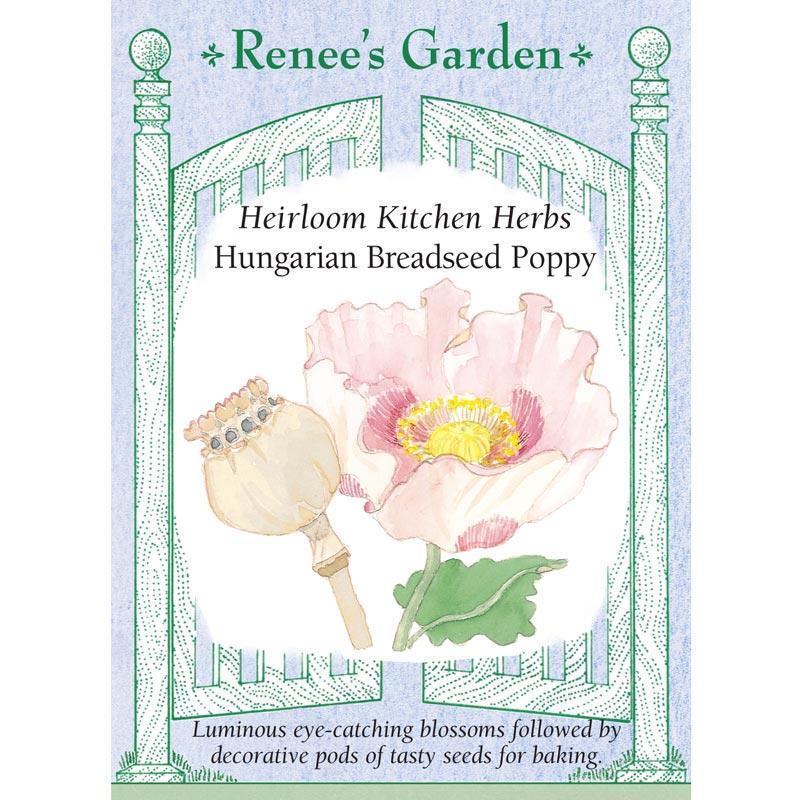
Baking with poppy seeds is a centuries old tradition, and easy to grow, cold-tolerant poppies are a joy in the spring garden. This large podded Eastern European heirloom strain has luminous, ethereal white or pale lavender petals with contrasting dark center blotches and blue-green toothed leaves. The eye-catching flowers are followed by urn-shaped decorative pods full of tasty seeds delicious for cooking and baking. Homegrown poppy seed is wonderfully fresh, sweet and nutty tasting--you'll love it! Approximately 1,000 seeds per pack.
Variety Details
- Plant type: Annual
- Growth habit: Bush
- Crop category: Herb
- Kitchen profile: Baking with poppy seeds is a centuries old tradition, and easy to grow, cold-tolerant poppies are a joy in the spring garden.
- Recorded feature: Does Not Require Support
- Product format: Seed packet
Sowing & Growing
- Light: Full Sun
- Planting season: Fall or Spring or Winter
- Starting location: Direct Sow
- Recorded soil pH: 6.6 - 7.0
Match ‘Hungarian Breadseed Poppy’ Heirloom Kitchen Herb to the light, soil, and temperature information recorded for the species. Some herbs are direct sown, while others benefit from a protected start or species-specific pretreatment, so retain the packet for reference. Keep seed media from drying during establishment without leaving it saturated. Once plants are growing, harvest modestly so foliage remains for continued development. Assign perennial herbs a long-term location, and consider containers for species with a spreading habit.
Before sowing ‘Hungarian Breadseed Poppy’ Heirloom Kitchen Herb, review the packet alongside the current product details and note any range in temperature, germination, or maturity. Ranges reflect biological and seasonal variation rather than a fixed promise. Label each planting with its date and location, then compare emergence, growth, and harvest with local weather. This record is useful for succession plantings and for deciding whether the crop fits better into an earlier or later seasonal window.
Explore related options in our Herb Seeds.
Seed Pack Shipping
Seed Pack Shipping
Qualifying seed-pack-only orders under $50 ship for a $7 flat rate via USPS. Spend $50 or more on qualifying seed packs and receive free USPS shipping. Available within the contiguous 48 states.
Shipping Information
Shipping Information
Shipping Weight: 0.01 lb
Dimensions: 4.5"L x 3.125"W x 0.1"H
Features
Features
- Attracts Bees/Butterflies
- Does Not Require Support
- Good for Drying
- Heirloom
- Requires Summer Water
- Suited to Cold Climates
- Useful for Ornamental
Characteristics
Characteristics
Planting & Care
Planting & Care
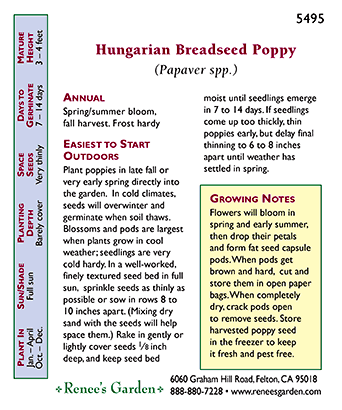
Planting: Plant poppies in late fall or very early spring directly into the garden. In cold climates, seeds will overwinter and germinate when soil thaws. Blossoms and pods are largest when plants grow in cool weather; seedlings are very cold hard. In a well-worked, finely textured seedbed in full sun, sprinkle seeds as thinly as possible or sow in rows 8 - 10" apart. Mixing dry sand with the seeds will help space them. Rake in gently or lightly cover seeds 1/4" deep and keep seedbed moist until seedlings emerge in 7 - 14 days. If seedlings come up too thick, thin poppies early, but delay final thinning to 6 - 8" apart until weather has settled in spring.
Growing: Flowers will bloom in spring and early summer, then drop their petals and form fat seed capsule pods. When pods get brown and hard, cut and store them in open paper bags. When completely dry, crack pods open to remove seeds. Store harvested poppy seed in the freezer to keep it fresh and pest free.
Useful Information
Useful Information
Guarantee
Guarantee
- Choosing a selection results in a full page refresh.
- Opens in a new window.