

Why Grow a Pomegranate Tree?
Growing pomegranate trees is one of the most rewarding experiences for home gardeners. Known for their jewel-like seeds and rich history, pomegranate trees (Punica granatum) add beauty, flavor, and color to any landscape. With the right care—from choosing a healthy variety to understanding your growing season—you can enjoy a thriving tree that produces fruit year after year.
Whether you’re new to gardening or have already grown pomegranate before, this complete guide will walk you through everything you need to know about how to grow a pomegranate tree successfully—from planting to harvest.

Why Grow a Pomegranate Tree?
Pomegranate trees are prized for their vibrant orange red flowers, glossy green leaves, and delicious fruit. They are drought tolerant, cold hardy, and thrive in regions with long, hot summers and mild winters. Once established, these trees are low-maintenance and adaptable to many soil types, including clay soil, as long as it’s well-drained soil.
They’re also highly ornamental. You can prune your pomegranate as a tree, espalier, shrub, hedge, or container plant. Learn more pruning styles in Prune Your Pomegranate as a Tree, Espalier, Shrub, Hedge, or Container.
With the right approach, a pomegranate tree can live over 100 years and reach up to 15 feet tall, producing abundant fruit every fall.
Choosing the Right Pomegranate Variety
When planting a pomegranate tree, selecting a variety that suits your growing zone ensures healthy growth and good fruit yield. Check your area’s pomegranate growing zone using the What Is My Growing Zone tool.
Top Pomegranate Tree Varieties by Zone
At GrowOrganic.com, you’ll find several top-performing varieties for zones 7–10:
- Parfianka – Sweet-tart flavor, perfect for eating fresh or juicing.
- Kashmir – Cold-hardy with ornamental red fruit.
- Wonderful – Classic large, sweet fruits ideal for juicing.
- Eversweet – Non-staining and very sweet, even when unripe.
- Sweet – Mild, pink-aril fruits with a delicate taste.
- Ambrosia – Large, flavorful fruits on a vigorous tree.
Each of these pomegranate trees thrives in full sun, well-drained soil, and benefits from deep, infrequent watering.

Understanding the Ideal Growing Conditions
Climate and Temperature Needs
Pomegranates thrive in warm, arid climates and can tolerate brief cold spells. They grow best in USDA zones 7–10, where winters are mild and summers are long and hot. Always wait until frost has passed before planting your tree outdoors to protect the root ball from damage.
Although cold hardy, young trees need protection from frost until established. If temperatures drop below 40°F, move container-grown trees into a greenhouse or sheltered area.
Soil Preparation and Drainage
How to grow a pomegranate tree begins with preparing the right planting site. Choose well-drained soil with a pH between 5.5 and 7.0. Avoid soggy or compacted areas where roots may rot. While pomegranates tolerate clay soil, improving drainage with organic compost or sand helps roots spread easily.
If your soil drains poorly, plant your tree in a raised bed or a large nursery pot with drainage holes. This setup allows excess water to escape and helps retain moisture evenly without waterlogging the roots.
Sunlight Requirements
Pomegranates need at least six hours of direct sunlight daily for healthy fruit production. Sunlight ensures that the fruits ripen fully and develop their signature sweetness. Avoid shaded spots, as lack of light can cause poor flowering and smaller fruits.

How to Plant a Pomegranate Tree
Step 1: Timing and Preparation
Wait until frost has passed and soil temperatures have warmed to at least 60°F. If you’re not ready to plant, store your bare-root pomegranate in a cool area (around 38–45°F) to keep it dormant.
Step 2: Selecting the Site
Choose a planting site that receives full sun and has good air circulation. Pomegranates dislike constantly wet or windy locations. Allow about 15–20 feet of space between trees to prevent overcrowding.
Step 3: Planting
- Dig the Hole – Make it twice as wide as the root ball and just as deep.
- Set the Tree – Place it so the crown sits slightly above the soil line.
- Backfill and Firm – Use the original soil, gently firming it to remove air pockets.
- Water Well – Saturate the soil after planting to help roots settle.
If you live in a gopher-prone area, place your tree inside a wire gopher basket before planting.
Step 4: Mulching and Watering
Add organic mulch around the base of the tree, keeping it 4–6 inches away from the trunk. Mulch helps retain moisture, suppress weeds, and regulate soil temperature.
Use soaker hoses to deliver water directly to the roots while keeping leaves dry—this reduces disease risk and ensures deep hydration.

Watering and Fertilizing
During establishment, water deeply every 7–10 days. Once mature, pomegranate trees are drought tolerant and prefer infrequent but thorough watering. Avoid overwatering, which can lead to root rot or reduced fruit production.
Fertilize lightly in late winter or early spring with a balanced organic amendment. Avoid over-fertilizing, as this promotes leafy growth at the expense of fruit.
Pruning and Ongoing Care
Pruning improves airflow, sunlight exposure, and overall productivity. Train your tree into a single or multi-trunk form depending on space and design. Learn how to shape and maintain your tree from How to Grow Pomegranate (Video).
Remove suckers and dead branches annually. If your tree experiences frost damage, don’t worry—pomegranates often send up new shoots that can replace lost growth.
Pest and Disease Management
Common pests include leaf-footed bugs and whiteflies. Encourage beneficial insects like ladybugs or lacewings to keep them under control. Regular pruning and good airflow help ensure good plant health.
Diseases such as heart rot or leaf spot can appear in overly moist conditions. Always provide well-drained soil, avoid overwatering, and remove affected leaves promptly. For natural remedies, visit Grow Organic's pest control collection.

Growing Season, Flowering, and Harvest
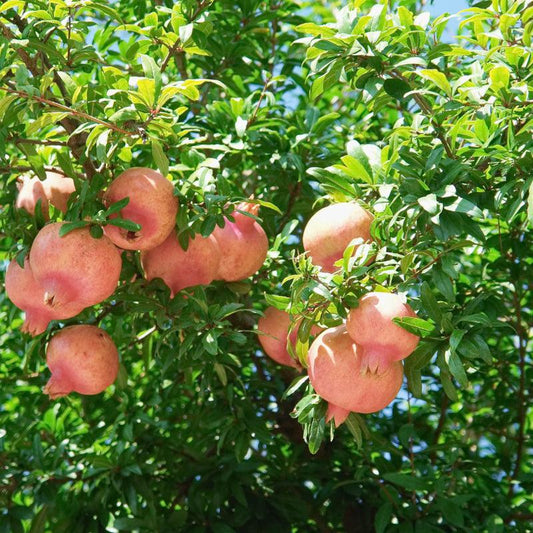
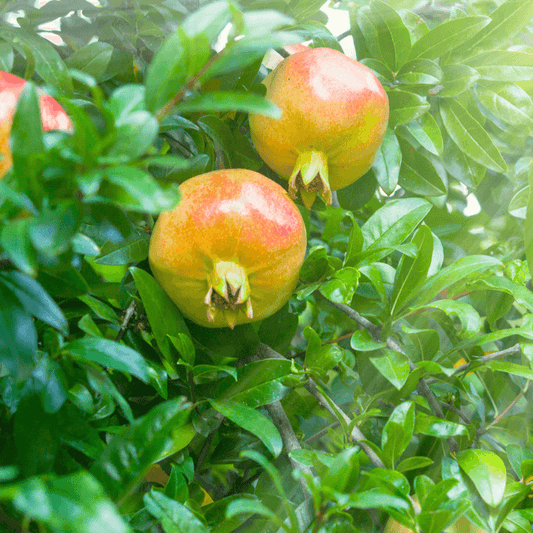
Pomegranates bloom in late spring with brilliant orange red flowers. Fruit develops over summer and ripens in fall, typically between September and November.
During the growing season, ensure consistent watering—especially as fruits swell. A ripe fruit feels heavy, has a deep color, and produces a metallic sound when tapped. Use pruning shears to harvest; pulling by hand can damage branches.
Fresh fruits store for several weeks in a cool place, or up to three months in the refrigerator. For longer storage, remove the arils and freeze them. Visit Pomegranates.org for creative ways to enjoy your harvest.
Final Thoughts
Learning how to grow pomegranate successfully comes down to matching the right variety with your growing zone, choosing a sunny planting site, and maintaining well-drained soil. With consistent care, pruning, and attention to watering, your pomegranate trees will produce fruit abundantly for decades.
Explore high-quality pomegranate trees for sale at Grow Organic and start growing your own supply of this timeless, symbolic fruit.
43 comments
Frances, Looks like you are probably in zone 7. There are a few pomegranates that are listed in zone 7. What kind do you have? How old is your tree/bush? It really only would need to get covered when it is young, unless you have one that is not rated for your zone.
We live north of Amarillo, TX but I don’t know what zone that is. But we sometimes get pretty harsh winters. Last winter our bush almost died, but we kept watering it in the Spring and it came back. This year it is beautiful. Should we cover it when we know it is going to freeze? My husband has covered it with foam sheet then plastic tarp. I don’t think it needs that much protection. My sister has a beautiful pomegranate bush (lives by El Paso) and she never covers hers and it produces lots of big fruit. Is it really necessary to cover?
Eberhart, pomegranates can be pruned during the winter when they are dormant. You can prune the suckers on the ground level and you can thin out crossing branches. You may want to prune your tree in a couple of steps so you will still get fruit the following year, but up to you. You can refer to this guide, http://ucce.ucdavis.edu/files/datastore/391-575.pdf, or you may want to consult a local arborist.
There is a pomegranate tree in our backyard about 12 feet tall. Grows lot of fruit but the fruit is not easy to harvest unless I climb on the roof. Not save, I am too old for that. How can I cut the tree back into a shorter bush to manage the harvest from ground level. Please help. The tree is said to be 14 years old.
Maria, I am not sure about growing in a tropical zone. It would be best to consult someone in your local area, like a nursery. Pomegranates are rated to zones 8-10, so they like it hot, but I am not so sure about your high humidity. I would think those trees need a dormant period as well, and they are not getting it with lows of 68.