

Meyer lemons are naturally compact citrus trees that adapt well to containers. They can spend warm weather outdoors and move into a protected, brightly lit space before cold weather. Indoor conditions can keep a tree alive and attractive, but flowering and fruiting depend on adequate light, sound watering, nutrition, and a gradual seasonal transition.
Choose a container that drains freely
Start with a pot only moderately wider than the root ball. An oversized container stays wet longer, while an undersized one dries quickly and restricts roots. The pot must have unobstructed drainage holes; use a saucer indoors, but do not leave the root ball standing in collected water.
Terracotta allows faster moisture loss and is heavy enough to steady a top-heavy tree. Plastic is lighter and holds moisture longer. If the tree will move seasonally, consider the filled weight and use a rolling plant stand. Browse planting containers and tree and forestry pots.

Use a porous container mix
Use a fresh, high-quality potting mix that drains well while retaining some moisture. Garden soil is too dense for most containers and can limit oxygen around the roots. A commercial citrus mix is convenient; a general potting mix can be amended with coarse perlite or similar material when additional drainage is needed. Learn how acidity affects nutrient availability in Understanding Soil pH.
Plant at the original depth
- Water the tree before transplanting if the root ball is dry.
- Remove the nursery pot and gently loosen only tightly circling outer roots.
- Set the root crown at the same level it grew in the nursery container. Keep any graft union above the potting mix.
- Backfill without burying the trunk, leaving room below the rim for watering.
- Water slowly until excess drains from the bottom, then empty the saucer.
Avoid fertilizing immediately after repotting. Wait for active new growth and follow the fertilizer label.

Give the tree as much useful light as possible
Place indoor citrus at the brightest available window, usually a south- or southwest-facing exposure. Flowering and fruit retention are less reliable when light is limited. A suitable grow light can supplement short winter days; adjust its distance and operating time according to the fixture manufacturer rather than relying on one universal schedule. Explore grow lights and review citrus sunlight and acclimation guidance.
Outdoor summer conditions usually provide stronger light. Move the tree outside only after frost risk has passed, beginning in bright shade and increasing sun gradually over a week or two. Reverse the transition before bringing it indoors so the change in light and temperature is less abrupt.
Water according to the pot, not the calendar
Check the mix below the surface with a finger or moisture meter. Water thoroughly when the upper layer has begun to dry, allowing water to drain from the pot. Do not keep the mix continuously saturated, but do not let the entire root ball become severely dry. Pot size, material, temperature, wind, foliage, and season can change the interval substantially.
Occasionally water deeply enough for drainage to help move accumulated salts out of the root zone. Empty saucers promptly. See available soil-moisture meters.
Feed during active growth
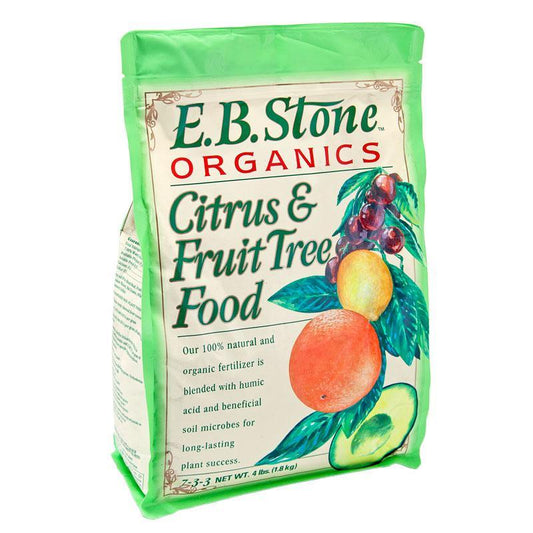
Container citrus needs a complete fertilizer that supplies nitrogen and micronutrients. Follow a product labeled for container citrus or acid-loving plants, including its rate, frequency, and seasonal directions. More is not better: excess fertilizer can injure roots and cause salt buildup. Reduce or pause feeding when cool temperatures and low light slow growth. Browse fertilizers for acid-loving plants.
Manage winter conditions indoors
- Keep the tree away from heating vents, cold drafts, and abrupt temperature changes.
- Recheck soil moisture frequently; indoor pots may dry more slowly than outdoor pots.
- Use a humidifier if household air is extremely dry. Misting briefly wets leaves but does not reliably raise room humidity.
- Wash or wipe dusty foliage so leaves can receive available light.
- Inspect leaf undersides and stems for scale, spider mites, whiteflies, or aphids before bringing the tree inside.
Pollination and fruit expectations
Meyer lemons are self-fertile, so one tree can produce fruit. Outdoor insects and air movement normally transfer pollen. Indoors, gently moving flowering branches or brushing blossoms with a clean, soft artist’s brush can assist pollen transfer. It cannot compensate for inadequate light or other stressful conditions.
Flowers and small fruit commonly drop when a container tree is adjusting to new conditions or carrying more fruit than it can support. Fruit may require many months to mature. Judge ripeness by developed color, fragrance, and flavor rather than a fixed calendar.

Prune lightly and repot when roots require it
Meyer lemons need little routine pruning. Remove dead, damaged, crossing, or awkward branches and any vigorous shoot originating below the graft. Avoid severe pruning, which removes productive canopy and can stimulate excessive shoots.
Repot when roots circle densely, water runs through immediately, growth declines despite appropriate care, or the potting mix has broken down. Move up one container size or root-prune carefully and refresh the mix when maintaining the same pot. Timing depends on growth; it is not automatically required every year.
Diagnose symptoms before treating
Yellow leaves, leaf drop, poor growth, or lack of fruit can result from several different causes, including low light, root-zone saturation, drought, nutrient imbalance, salts, pests, or a recent move. Check conditions and identify any pest before applying a treatment. If a pesticide is needed, use only a product labeled for the pest, crop, and application site, and follow every label direction.
For broader citrus guidance, read How to Grow Citrus Trees. You can also explore citrus trees and small-space gardening options.


69 comments
What is the proper ratio of nutrients in a fertilizer for a potted Meyer Lemon and Key Lime tree? Thanks!
our Meyer Lemon tree is about 30 years old…it is in a large shop vac that we can move around inside and to outside…but we are in 80’s and it is getting too much for us to deal with. we are in one 7b, the ground seldom freezes here. We know it is very root bound, I thought it had dies but we see new leaves coming out of the trunk ( we had cut what looked like dead branches off…when thumb nail scrapped appeared to be dead.) We would like to try planting outside and can place in a small orchard, so would have less wind…could build a frame around it and fill with straw in winter, what are its chances of surviving…or is there another way to be able to plant outside. We did buy a new plant, suspect it will be several years before it has any fruit, plan to keep it inside for as long as we have left to live.
Judy, you really don’t need to thin out the blossoms. The tree will drop off blooms that it is not able to support.
My Improved Meyer Lemon tree is in just starting its 4th year in a rather large pot. Doing very well after a shakey start, just picked my first lemons from last years bloom. I’m concerned about this years bloom. There are hundreds. In groups of 10 to 30 blossoms. The tree is probably 3 ft. by 3 ft. and has good new growth along with the profusion of blooms. Should I edit the blooms?
Hi, can you give your lemon tree enough nutrients with just nettle tea?