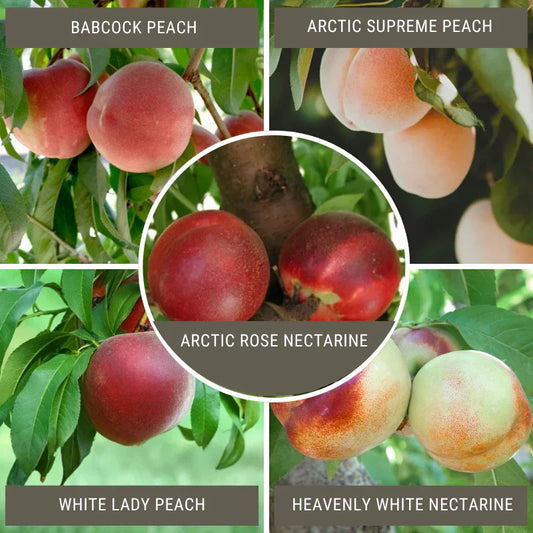
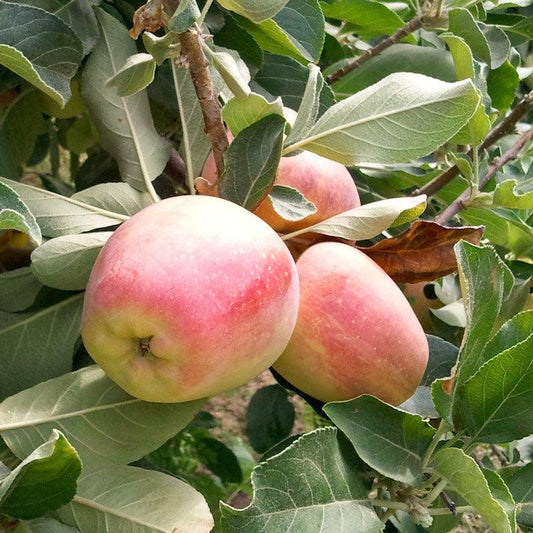
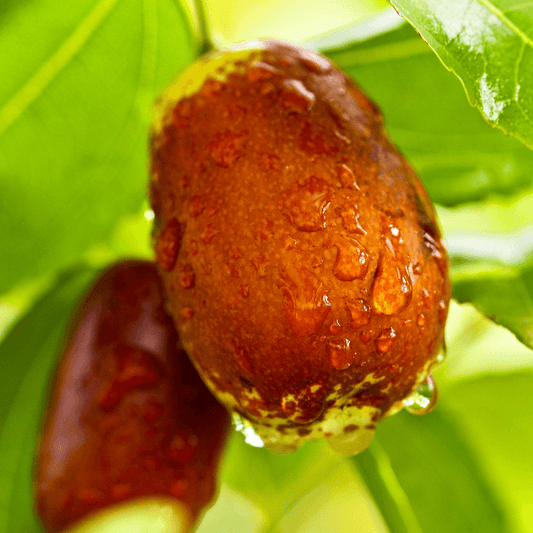
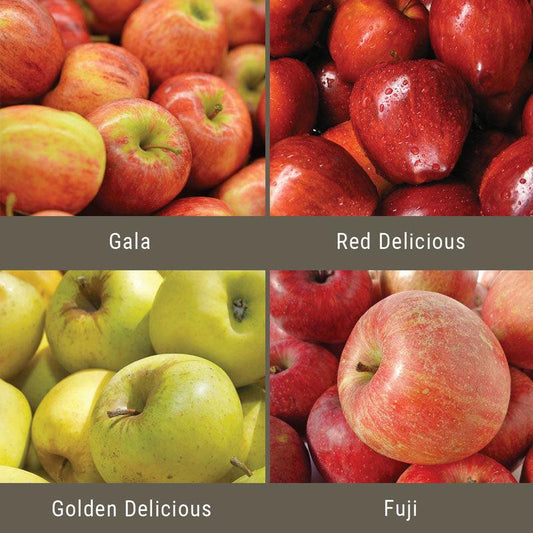
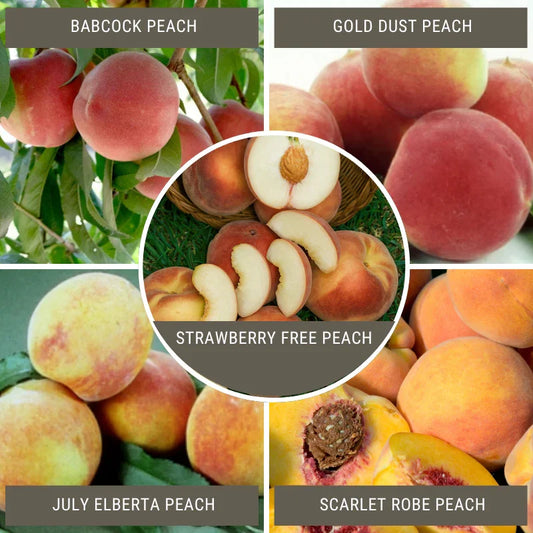
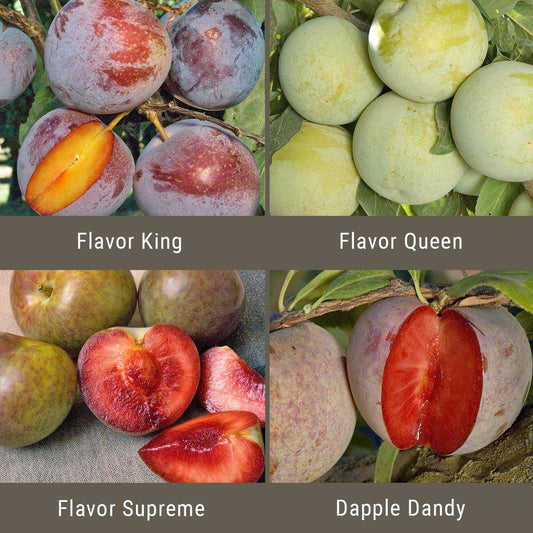
A grafted fruit tree combines two plant parts. The scion forms the fruiting portion and determines the named variety. The rootstock supplies the roots and lower trunk and can influence how the finished tree grows.
This page explains how to evaluate rootstock when selecting a tree. For the rootstock and characteristics of a tree currently offered by Grow Organic, use that tree’s product page as the source of truth. Available combinations can change.
What Rootstock Can Influence
Depending on the exact rootstock–scion combination and growing conditions, rootstock may influence:
- Relative vigor and potential mature size
- Anchorage and whether permanent support may be needed
- Adaptation to particular soil conditions
- Response to certain pests or diseases
- How quickly a tree establishes or begins bearing
These are influences, not guarantees. Irrigation, soil, climate, pruning, crop load, and the scion variety also affect performance.
“Dwarf,” “Semi-Dwarf,” and “Standard” Need Context
Size labels are useful starting points, but they do not describe an exact finished height in every garden. The same rootstock can perform differently with another scion or under different conditions. Training and pruning also influence the maintained canopy size.
Before choosing a tree for limited space, review its current product page for the documented rootstock, estimated size or vigor, support needs, and spacing. Do not assume every tree called dwarf is suitable for a container or will remain small without management.
Match the Rootstock to the Site
Consider the factors that will not be easy to change after planting:
- Drainage: Observe how long water remains after irrigation or rain.
- Soil: Note texture, depth, compaction, salinity concerns, and known soil-borne problems.
- Climate: Confirm hardiness, heat, and chill-hour needs for the complete tree.
- Space: Allow for the documented vigor, training system, access, and nearby structures.
- Support: Determine whether the selected rootstock or training system requires staking or trellising.
A rootstock described as tolerant or resistant to a particular problem is not immune, and that trait should not replace good site preparation or pest and disease monitoring.
Rootstock Does Not Determine the Fruit Variety
The scion determines whether the tree produces a particular apple, pear, peach, plum, or other named fruit. Growth arising from below the graft union belongs to the rootstock and will not produce the intended variety. Remove rootstock suckers when they appear, after confirming their point of origin.
Rootstock and Multi-Graft Trees
A multi-graft tree places several scion varieties on one root system. The shared rootstock affects the tree as a whole, while the scions may still differ in vigor, bloom, and fruiting behavior. See How to Plant & Care for Multi-Graft Fruit Trees and How to Balance Vigor in Multi-Grafted Trees.
How to Compare Trees
- Start with fruit type, climate, chill hours, and pollination needs.
- Review the exact rootstock listed on each current product page.
- Compare documented vigor, site adaptation, support needs, and spacing.
- Choose the complete tree—not the rootstock in isolation—for your site and management goals.
Explore current choices in the bare root tree collection or use the bare root tree selection guide. To learn how a scion is physically joined to rootstock, continue to Grafting Rootstock.