This page answers one question: is your garlic ready to harvest? Once the answer is yes, follow our separate garlic harvesting technique guide.
Do Not Use the Calendar Alone
Garlic harvest dates vary with variety, climate, planting time, winter temperatures, spring weather, and soil conditions. Most crops mature in summer, but the plant and bulb provide better evidence than a fixed date.
Five Signs Garlic Is Approaching Harvest
- Lower leaves are browning: the oldest leaves naturally decline first as bulbs mature.
- Several upper leaves remain green: each living leaf contributes a wrapper layer around the bulb, so waiting until the entire plant is brown can reduce protection.
- The bulb has filled out: soil may crack or lift slightly around mature bulbs, although this is not reliable in every soil.
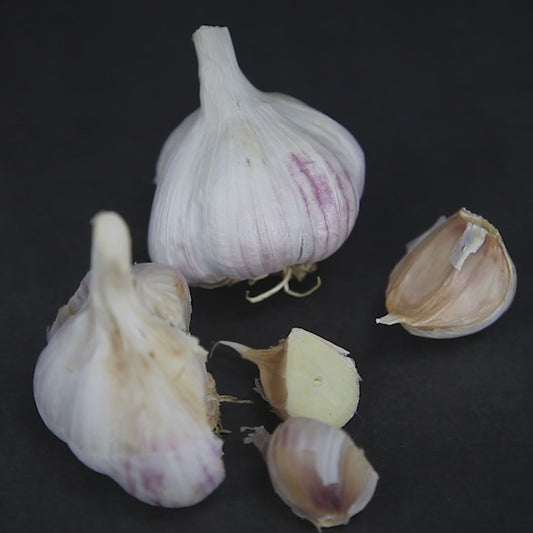
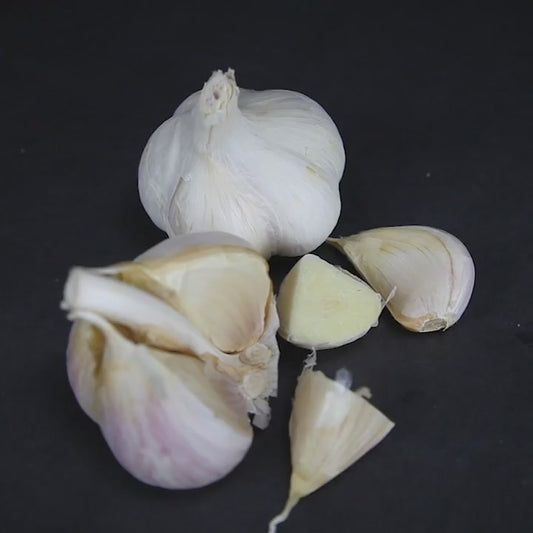
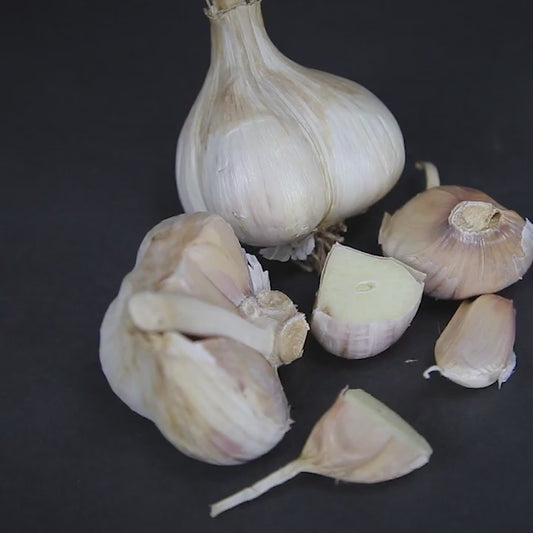
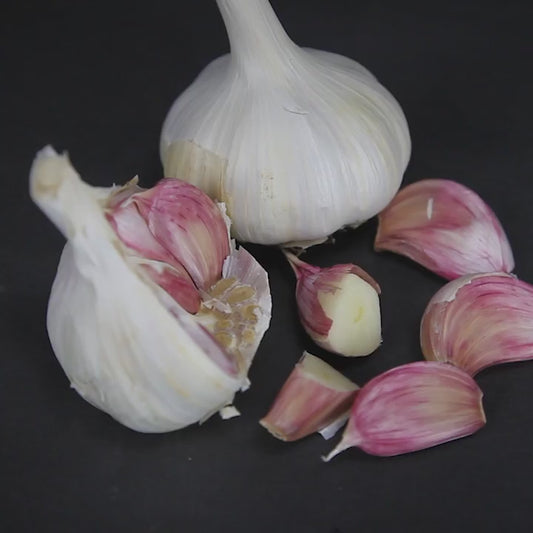
- Cloves are distinct: a test bulb should show developed cloves beneath intact wrappers rather than one smooth, immature round.
- Wrappers are still sound: bulbs left too long may split, expose cloves, or lose protective skins.
Lift a Test Bulb
When the foliage suggests maturity, choose a representative plant. Loosen the soil several inches away with a fork or spade and lift the bulb without pulling on the stem. Brush away enough soil to inspect its size, clove definition, neck, and wrapper condition.
If the bulb is still small and poorly divided, allow the remaining crop more time and recheck. If cloves are distinct and wrappers are intact, plan the main harvest. If wrappers are already splitting, harvest promptly and prioritize exposed or damaged bulbs for earlier use.
Hardneck and Softneck Differences
Hardneck garlic often produces scapes before bulb maturity and may show distinct clove definition around a central stalk. Softneck maturity can be less visually dramatic. In both types, use leaf decline plus a test bulb instead of treating scape harvest—or a date on the calendar—as proof that bulbs are ready.
What If Leaves Yellow Too Early?
Premature yellowing across young plants can reflect excess or insufficient moisture, root damage, nutrient imbalance, disease, pests, or weather stress. Do not assume stressed plants are mature. Inspect roots and bulbs and consult the garlic disease and pest guide.
Harvest-Day Conditions
If possible, choose a dry period and let heavy soil drain before lifting. Stop routine irrigation as maturity approaches so bulbs are not harvested from saturated ground. Prepare a shaded, well-ventilated curing area before digging.
Next Steps
- How to lift garlic without damaging bulbs
- How to cure garlic after harvest
- How to store cured garlic bulbs
Garlic Harvest-Readiness Resources
Continue with the garlic harvest, curing, storage, and preservation pillar.