
A dwarf mulberry tree in a pot is one of the easiest ways for a home gardener to grow loads of sweet fruit in a small space. Mulberries are easy to grow, naturally vigorous, forgiving, and quick to bear. In containers, Mulberry trees remain compact, you can easily prune them, and you can harvest them without a ladder.
With the right type of plant, a good potting mix, and regular watering, your potted mulberry can produce fruit in small spaces.
Best Mulberry Varieties for Pots
You can keep many types of mulberry small with good pruning. However, starting with compact genetics makes it easier. This is especially true for a dwarf mulberry tree in a container. Look for:
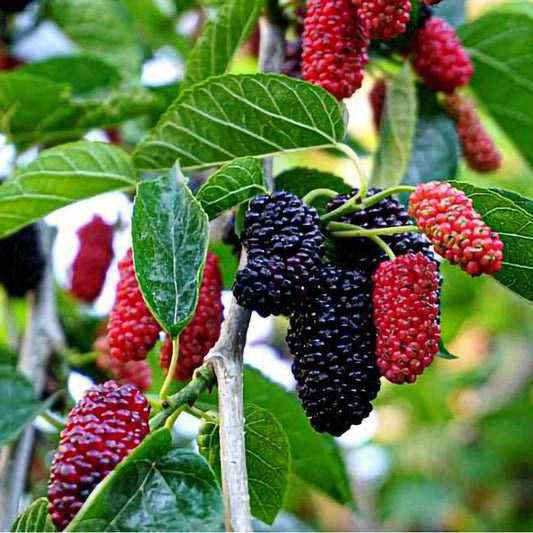
- Persian – Morus nigra (‘Black Beauty’ types) has a legendary flavor. It grows slowly, which is great for small containers.
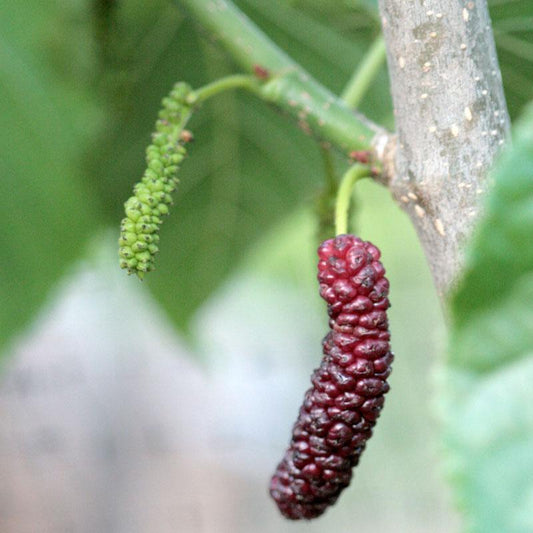
- Pakistan - Long, showy berries. Not truly dwarf, but it trains beautifully into a 6–8 ft tree in a 25–30 gallon pot.
- Dwarf Everbearing - Naturally compact, highly productive, and perfect for patios, balconies, and small courtyards.
- Shangri-La - Vigorous with large leaves and excellent fruit. Responds well to size control in pots.
Choosing the Right Pot: Size, Shape & Material
Your container controls both how large your mulberry can get and how forgiving your watering schedule will be.
Recommended pot sizes:
- Starter (First Season): 15–20 gallon pot for a well-branched young tree.
- Long-term (Years 2–5): Use 20–30 gallons for true dwarf fruit trees. Use 30–40 gallons for semi-dwarfs that are 6–8 ft tall.
Shape: Broad “tub-style” containers encourage lateral roots and give better stability.
Materials:
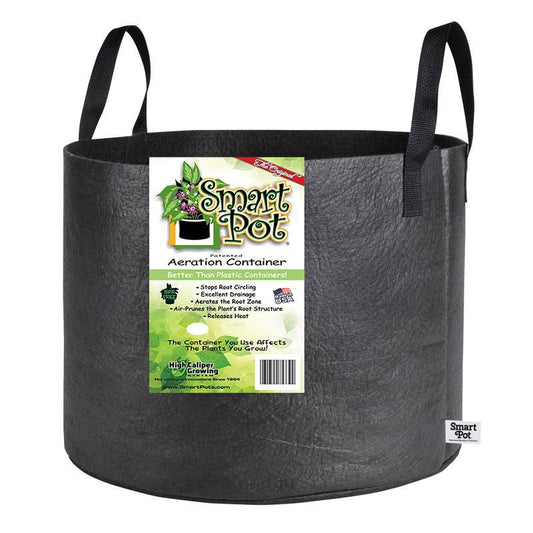
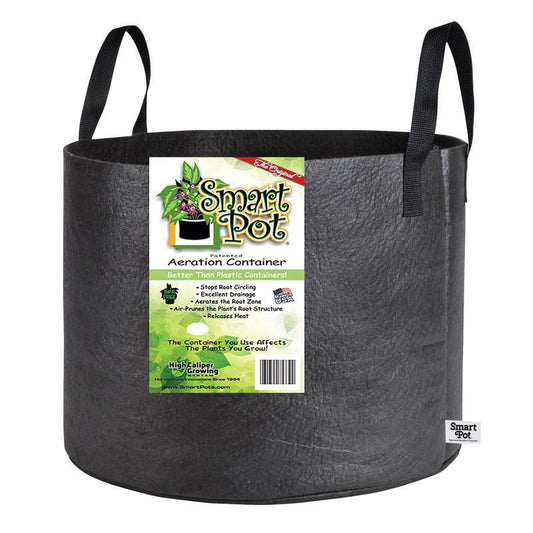
- Fabric pots: Great airflow, help prevent root circling. Top-dress yearly to feed the soil food web.
- Quality resin/plastic: Retain moisture and stay light enough to move.
- Wood half barrels: Excellent insulation and moisture buffering. Use pot feet to improve drainage and prevent rot.
If you plan to move the tree seasonally, set it on a rolling caddy and always make sure drainage holes stay clear.
The Best Soil for Potted Mulberry Trees
A healthy root system needs air, good drainage, and organic matter. For the best soil for potted mulberry trees:
- Structure: ~40% composted bark or coco fiber, ~40% peat or coir, ~20% perlite or pumice
- pH: Slightly acidic to neutral (6.0–7.0).
- Texture: Rich in organic matter, but not heavy or dense. Avoid straight garden soil in containers.
Planting Day: Step-by-Step
- Pre-moisten the mix - Hydrate your potting mix so it’s evenly damp, not dripping.
- Set planting height - Place the tree so the root flare (where trunk widens) is level with the finished soil surface.
- Backfill and firm - Fill around the root ball, gently tamping to remove air pockets.
- Water deeply - Keep watering until you see steady drainage from the bottom.
- Mulch - Add 2–3" of bark or wood chips, keeping mulch a couple of inches away from the trunk.
- Stake only if needed - Stake in windy spots and remove once the trunk stiffens.
That’s your clean start. Now it’s all about consistent care.
Container Mulberry Care:
Watering - Think deep soaks, not tiny sips.
- A 20–25 gallon pot often needs 2–4 gallons per watering, adjusted for weather and drainage.
- Use the finger test: water when the top 1–2" of mix is dry and the pot feels lighter.
- During heat waves, check daily—wind can dry a pot as fast as full sun.
Feeding
- Spring: Apply a light dose of slow-release organic fertilizer and a 1" compost top-dress.
- Early summer: If growth looks pale or fruit set is weak, add a monthly liquid feed (fish/seaweed emulsion or compost tea).
- Late summer: Reduce feeding so the tree doesn’t push tender new growth before cold weather.
Mulch
Maintain 2–3" of mulch on top of the soil. It:
- Conserves moisture
- Buffers root temperatures
- Helps support the soil food web in your container
Bird-Proof Harvesting on Small Mulberry Trees
Birds love mulberries. If you don’t protect your crop, they’ll gladly help themselves to your berries.
- Net early: Drape wildlife-safe netting before the berries begin to color. Anchor it at the pot rim so birds don’t get tangled.
- Shake-and-sheet harvest: Spread a clean sheet or food-grade tarp under the tree and gently shake branches. Ripe berries fall; underripe ones stay put.
- Cluster bagging: Use mesh produce bags or organza bags to protect premium clusters.
- Pick often: Harvest daily or every other day during peak season.
A dwarf mulberry tree pruned to around 6 ft, well-netted, is easy to manage and neighbor-friendly.
Conclusion
A mulberry tree in a pot is a small-space powerhouse.
- Choose a compact or dwarf mulberry tree variety.
- Use a rich, well-draining potting mix that supports the soil food web.
- Water deeply and regularly instead of giving frequent shallow sips.
- Keep the canopy at 6–8 feet by pruning mulberry in containers a little and often.
- Net the tree before the fruit colors to stay ahead of birds.
- Refresh roots every few years with repotting or root pruning.
For the home gardener, success with mulberry trees in pots is more about good habits. Get the basics right, and your dwarf mulberry will reward you with bowl after bowl of easy-to-pick fruit.