


Item Number: SNV7092
Osha Seeds
Rocky Mountain perennial for cool, mulched beds

Check Your Zone Compatibility:

Our Guarantee To You
Since 1976, we've served our customers at every stage of growing. Please contact us at any time. We are happy to support and assist you.
Description
Description
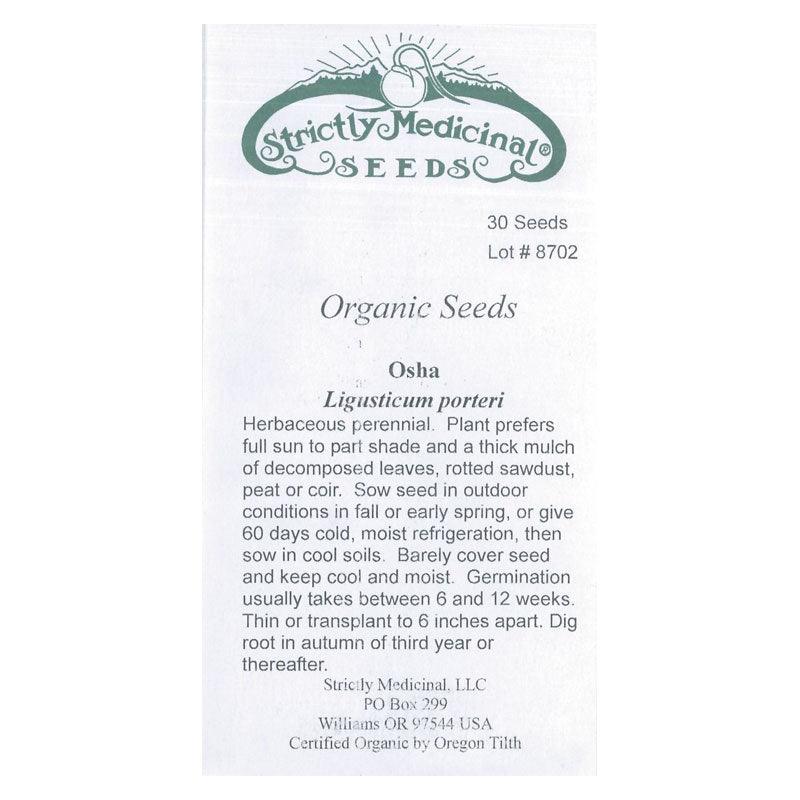
Osha ( Ligusticum porteri ) is a long-lived herbaceous perennial native to the Rocky Mountains. It produces deeply divided foliage and white flower umbels and is hardy in approximately USDA Zones 4–8. Sow outdoors in cool soil, ideally in fall for spring germination. Plant seed about 1/4 inch deep, tamp the soil, and add a thin layer of organic mulch such as rotted sawdust, peat, or coir. Osha prefers full sun to part shade and soil rich in forest-derived organic matter.
Variety Details
- Botanical name: Ligusticum porteri
- Plant type: Perennial
- Growth habit: Upright
- Crop category: Vegetable
- Recorded feature: Does Not Require Support
- Product format: Seed packet
Sowing & Growing
- Planting depth: 1/4 inch, plus a thin organic mulch
- Light: Full Sun/Part Sun
- Planting season: Fall
- Starting location: Direct Sow
Use the product-specific sowing figures for Osha as the starting point, then adjust timing to local soil temperature and frost conditions. Prepare the bed before planting, preserve the recorded spacing, and evaluate moisture at root depth instead of following a universal calendar. Watch development as the stated maturity window approaches and harvest at the size, texture, or color preferred for the crop. Label the row with the sowing date so actual performance can inform future plantings.
Cold, moist conditions are important for germination, and seed may take more than one seasonal cycle to emerge.
Because young plants develop slowly, mark the bed clearly and avoid disturbing it.
Before sowing Osha, review the packet alongside the current product details and note any range in temperature, germination, or maturity. Ranges reflect biological and seasonal variation rather than a fixed promise. Label each planting with its date and location, then compare emergence, growth, and harvest with local weather. This record is useful for succession plantings and for deciding whether the crop fits better into an earlier or later seasonal window.
Explore related options in our Herb Seeds collection.
These statements have not been evaluated by the Food and Drug Administration. This product is not intended to diagnose, treat, cure, or prevent any disease.
Seed Pack Shipping
Seed Pack Shipping
Qualifying seed-pack-only orders under $50 ship for a $7 flat rate via USPS. Spend $50 or more on qualifying seed packs and receive free USPS shipping. Available within the contiguous 48 states.
Shipping Information
Shipping Information
Shipping Weight: 0.01 lb
Dimensions: 5.0"L x 2.625"W x 0.1"H
Features
Features
- Does Not Require Support
- Good for Drying
- Native
Characteristics
Characteristics
Planting & Care
Planting & Care
Site & soil: Choose full sun to part shade and soil rich in forest-derived organic matter. Maintain a deep mulch after seedlings establish.
Planting & growing: Sow outdoors in cool soil, preferably in fall. Plant 1/4 inch deep, tamp, and add a thin layer of rotted sawdust, peat, or coir. Cold, moist conditions are important, and emergence may take more than one seasonal cycle.
Spacing & care: Thin seedlings to about 6 inches apart. Keep the bed well weeded, clearly marked, and evenly moist while young plants establish.
Useful Information
Useful Information
Guarantee
Guarantee

- Choosing a selection results in a full page refresh.
- Opens in a new window.