


Item Number: SNV2011
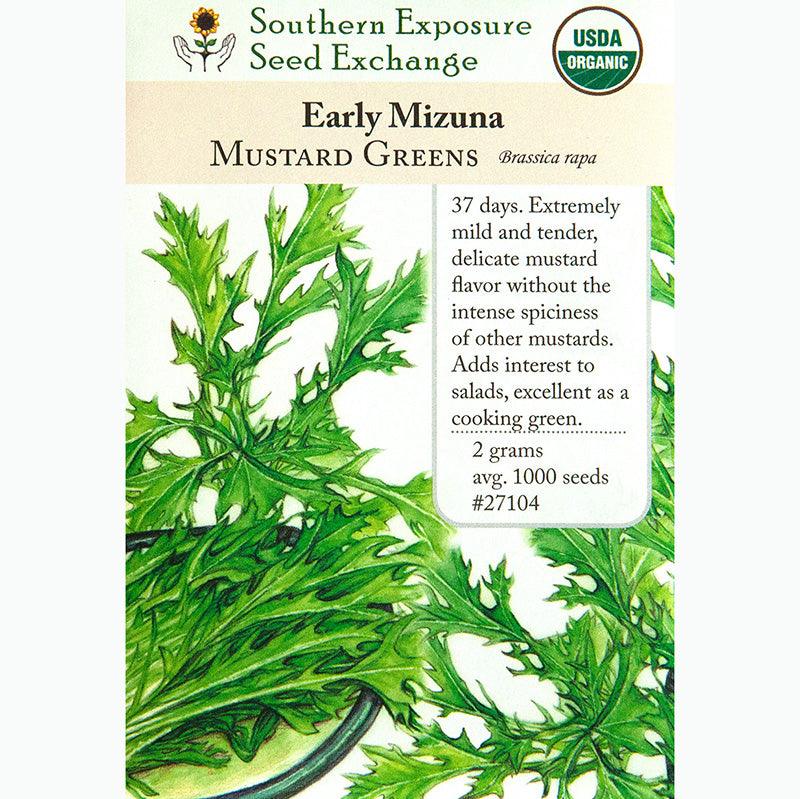
Early Mizuna Mustard Seeds (Organic)
Zingy Mizuna Mix



Check Your Zone Compatibility:

Our Guarantee To You
Since 1976, we've served our customers at every stage of growing. Please contact us at any time. We are happy to support and assist you.
Description
Description
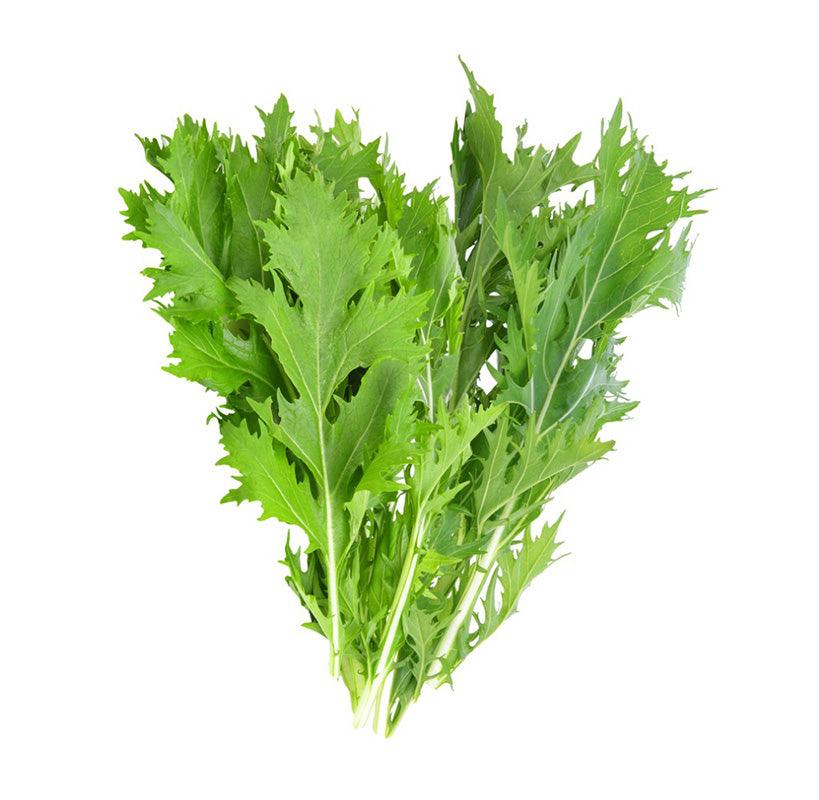
Early Mizuna Mustard, a Japanese heirloom, is celebrated for its mild yet peppery flavor and delicate, feathery leaves. Originating from Asia, this mustard variety is a subspecies of Brassica rapa, renowned for its use in both culinary and ornamental settings. The plant's aesthetic appeal lies in its slender, serrated leaves forming a rosette-like structure. These vibrant green leaves showcase a mild mustard flavor, providing a slight spice to dishes without overpowering the palate. When young, the leaves offer a crisp texture and mild peppery taste, perfect for salads, stir-fries, and garnishes.
Variety Details
- Plant type: Hardy Annual
- Growth habit: Herbaceous
- Crop category: Cabbage
- Kitchen profile: Early Mizuna Mustard, a Japanese heirloom, is known for its mild yet peppery flavor and delicate, feathery leaves.
- Recorded feature: Open-Pollinated
- Product format: Seed packet
Sowing & Growing
- Maturity: Regular watering and adequate spacing aid in healthy growth, allowing the plant to reach maturity in about 40 to 50 days.
- Light: Full Sun
- Planting season: Fall or Spring
- Starting location: Direct Sow
- Recorded soil pH: 6.1 - 6.5 or 6.6 - 7.0 or 7.1 - 7.5
Schedule Early Mizuna Mustard for the cool-season planting window appropriate to your climate. Start seed in a protected setting or direct sow when the product record allows, then thin or transplant so each plant has room to develop. Check moisture at root depth and adjust irrigation to weather and soil rather than a universal schedule. As maturity approaches, inspect head, stem, or leaf development according to the crop type and harvest at the preferred size and firmness.
Before sowing Early Mizuna Mustard, review the packet alongside the current product details and note any range in temperature, germination, or maturity. Ranges reflect biological and seasonal variation rather than a fixed promise. Label each planting with its date and location, then compare emergence, growth, and harvest with local weather. This record is useful for succession plantings and for deciding whether the crop fits better into an earlier or later seasonal window.
Explore related options in our Greens Seeds.
Seed Pack Shipping
Seed Pack Shipping
Qualifying seed-pack-only orders under $50 ship for a $7 flat rate via USPS. Spend $50 or more on qualifying seed packs and receive free USPS shipping. Available within the contiguous 48 states.
Shipping Information
Shipping Information
Shipping Weight: 0.01 lb
Dimensions: 4.5"L x 3.125"W x 0.1"H
Features
Features
- Open-Pollinated
Characteristics
Characteristics
Planting & Care
Planting & Care
Soil & Water: Mustard greens prefers rich, fertile soil with a pH of 6.0-7.5 and plenty of added organic matter. The plants need regular, even moisture to avoid bitterness.
Planting & Growing: Start seeds indoors and transplant out after the last frost, or sow seeds directly a few weeks before the last frost. Use this as a cool-season, end-of-summer crop too, sowing seeds well before the first frost of the fall. Mustard is very cold tolerant.
Harvesting & Storage: Begin harvesting individual leaves after the center rosette has begun to develop. You can begin harvesting at 6" by picking outside leaves. Mustard greens are slow to bolt and are winter hardy.
Useful Information
Useful Information
Guarantee
Guarantee


- Choosing a selection results in a full page refresh.
- Opens in a new window.