


Item Number: SWF5365
‘Pepperbox Poppy’ Heirloom Herb Seeds
Blue-Black Edible Seed Harvest






Check Your Zone Compatibility:

Our Guarantee To You
Since 1976, we've served our customers at every stage of growing. Please contact us at any time. We are happy to support and assist you.
Description
Description
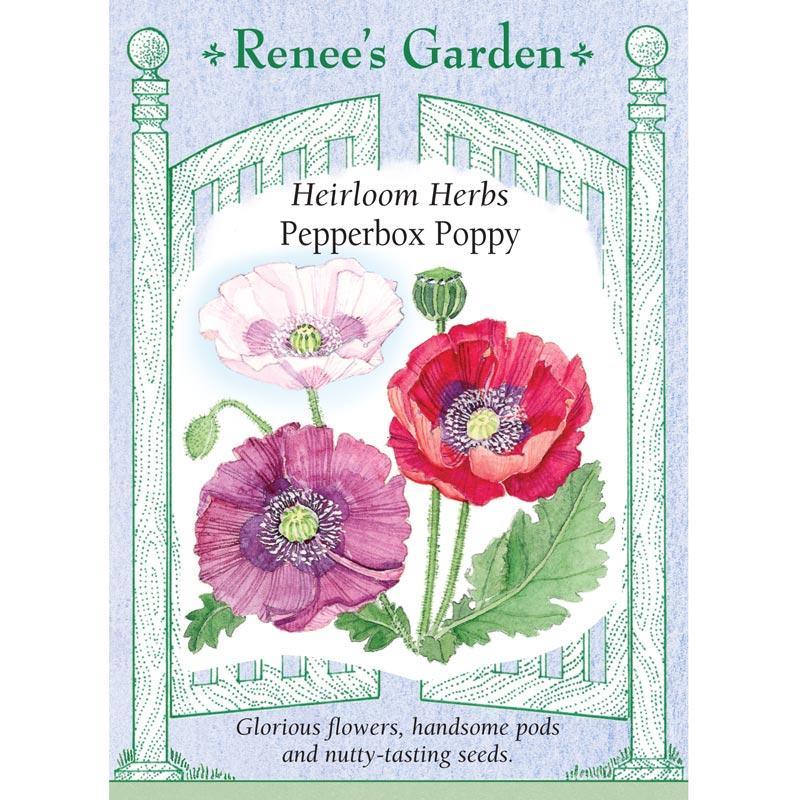
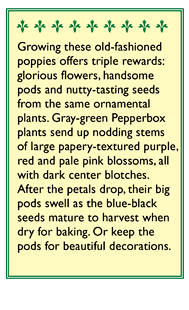
Pepperbox Poppy seeds are a rewarding choice for gardeners seeking beauty, function, and culinary utility in a single plant. Growing these old-fashioned poppies offers triple rewards: glorious flowers, handsome pods, and nutty-tasting seeds from the same ornamental plants. Once the petals drop, their big seed pods swell as blue-black seeds mature inside. These seeds can be harvested when dry and used in baking, or the pods can be saved for long-lasting, decorative arrangements. Easy to grow in full sun and well-drained soil, Pepperbox Poppies are best direct sown in early spring or fall.
Variety Details
- Botanical name: Papaver somniferum
- Plant type: Annual
- Growth habit: Upright
- Crop category: Pepper
- Kitchen profile: Pepperbox Poppy seeds are a rewarding choice for gardeners seeking beauty, function, and culinary utility in a single plant.
- Recorded feature: Does Not Require Support
- Product format: Seed packet
Sowing & Growing
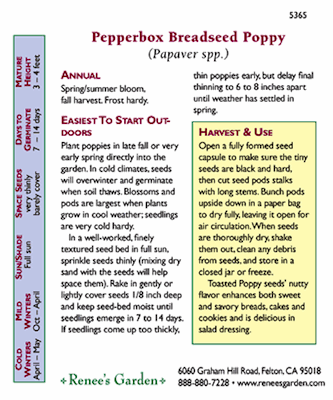
- Germination temperature: Soil Temperature: 55–65°F Planting Depth: 1/8" Germination: 7–14 Days Height At Maturity: 36"–48" Days To Maturity: 75–85…
- Maturity: Soil Temperature: 55–65°F Planting Depth: 1/8" Germination: 7–14 Days Height At Maturity: 36"–48" Days To Maturity: 75–85…
- Light: Full Sun
- Planting season: Fall or Spring
- Starting location: Direct Sow
Start ‘Pepperbox Poppy’ Heirloom Herb with enough lead time for seedlings to develop before warm outdoor conditions arrive. Use a well-drained seed-starting medium, provide strong light after emergence, and transplant only after frost risk has passed. Check soil moisture at root depth and water according to conditions rather than a fixed calendar. Preserve the recorded spacing so foliage can develop and air can move through the planting. Harvest stage can influence color, texture, and heat.
Explore related options in our full collection of flower seeds.
Seed Pack Shipping
Seed Pack Shipping
Qualifying seed-pack-only orders under $50 ship for a $7 flat rate via USPS. Spend $50 or more on qualifying seed packs and receive free USPS shipping. Available within the contiguous 48 states.
Shipping Information
Shipping Information
Shipping Weight: 0.01 lb
Dimensions: 4.5"L x 3.125"W x 0.1"H
Features
Features
- Attracts Bees/Butterflies
- Does Not Require Support
- Good for Drying
- Heirloom
- Requires Summer Water
- Suited to Cold Climates
- Useful for Ornamental
Characteristics
Characteristics
Planting & Care
Planting & Care
Planting: Plant poppies in late fall or very early spring directly into the garden. In cold climates, seeds will overwinter and germinate when soil thaws. Blossoms and pods are largest when plants grow in cool weather; seedlings are very cold hardy. In a well-worked, finely textured seedbed in full sun, sprinkle seeds thinly. Mixing the seeds with dry sand will help space them. Rake in gently or lightly cover seeds 1/8" deep and keep seedbed moist until seedlings emerge in 7 - 14 days. If seedlings come up too thick, thin poppies early, but delay final thinning to 6 - 8" apart until weather has settled in spring.
Growing: Open a fully formed seed capsule to make sure the tiny seeds are black and hard, then cut seed pod stalks with long stems. When seeds are thoroughly dry, shake them out, clean any debris from seeds, and store in a closed jar or freeze. Toasted Poppy seeds' nutty flavor enhances both sweet and savory breads, cakes and cookies and is delicious in salad dressing.
Useful Information
Useful Information
Guarantee
Guarantee

Peaceful Valley Farm & Garden Supply brand vegetable seeds are guaranteed to germinate. Once the seeds have sprouted, please understand that Peaceful Valley cannot be held responsible for the many uncontrollable growing and climatic conditions that must be met to ensure the success of your crop(s).
- Choosing a selection results in a full page refresh.
- Opens in a new window.