


Item Number: SNV5980
‘Ishtar’ Middle Eastern Zucchini Seeds
Prized in Persian and Lebanese Cuisine

Check Your Zone Compatibility:

Our Guarantee To You
Since 1976, we've served our customers at every stage of growing. Please contact us at any time. We are happy to support and assist you.
Description
Description
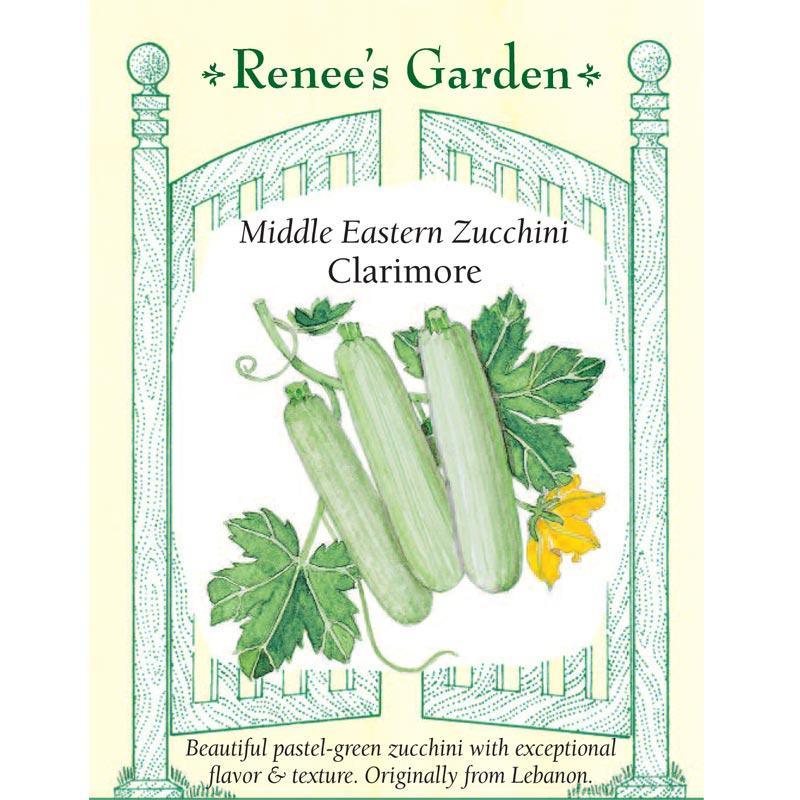
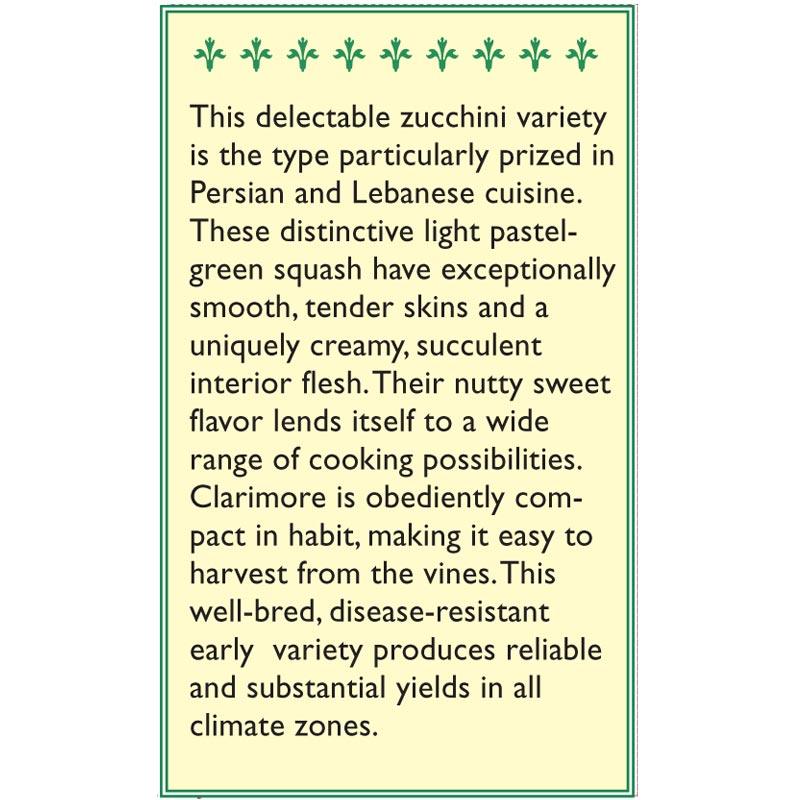
Prized in Persian and Lebanese Cuisine Mid-East Clarimore Zucchini is a standout variety prized in Persian and Lebanese cuisine for its notable flavor and culinary versatility. These light pastel green fruits have remarkably smooth, tender skins and a creamy, succulent interior flesh. Their nutty-sweet flavor makes them ideal for sautéing, grilling, stuffing, or adding to traditional stews. Clarimore is compact in growth, making harvests easy and frequent even in smaller garden spaces. This well-bred, early-producing summer squash thrives in full sun and well-drained soil.
Variety Details
- Plant type: Annual
- Growth habit: Low Growing
- Crop category: Squash
- Kitchen profile: Mid-East Clarimore Zucchini is a standout variety prized in Persian and Lebanese cuisine for its flavor and culinary versatility.
- Recorded feature: Does Not Require Support
- Product format: Seed packet
Sowing & Growing
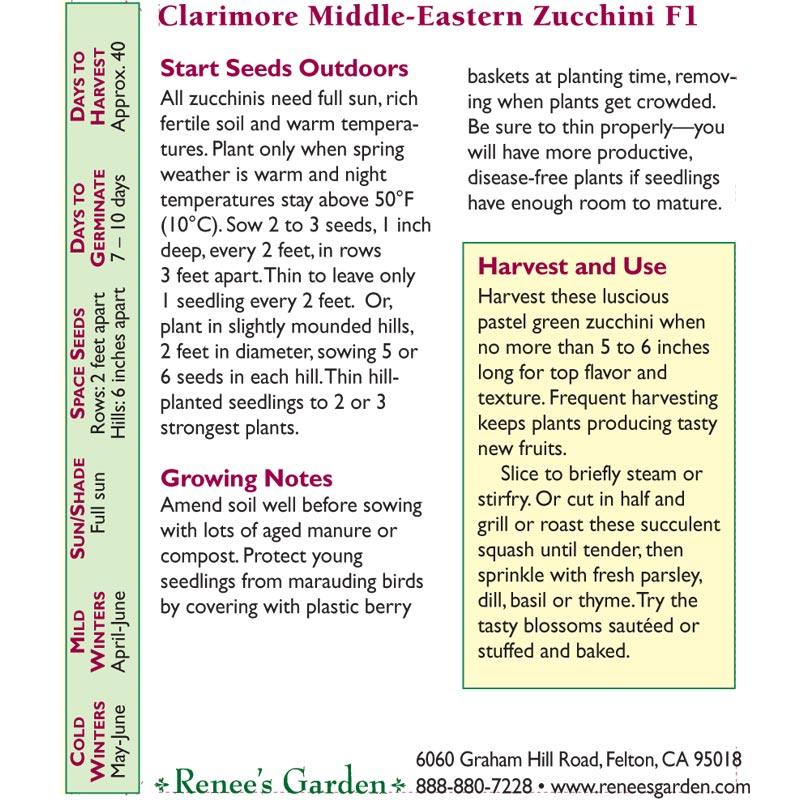
- Maturity: Soil Temperature: Above 50°F (10°C) Planting Depth: 1" Germination: 7–10 Days Height At Maturity: 24"–36" Days To…
- Light: Full Sun
- Planting season: Spring or Summer
- Starting location: Direct Sow or Start Indoors & Transplant
- Recorded soil pH: 6.1 - 6.5 or 6.6 - 7.0
Sow ‘Ishtar’ Middle Eastern Zucchini after the soil has warmed and frost danger has passed, or transplant established seedlings without disturbing their roots more than necessary. Preserve the recorded spacing because broad leaves and vines can occupy more room than young plants suggest. Check soil moisture at root depth and direct water toward the soil. Once fruit develops, inspect plants frequently and harvest at the stage appropriate to summer or winter squash. Use clean cuts to avoid damaging stems.
Before sowing ‘Ishtar’ Middle Eastern Zucchini, review the packet alongside the current product details and note any range in temperature, germination, or maturity. Ranges reflect biological and seasonal variation rather than a fixed promise. Label each planting with its date and location, then compare emergence, growth, and harvest with local weather. This record is useful for succession plantings and for deciding whether the crop fits better into an earlier or later seasonal window.
Explore related options in our full collection of vegetable seeds.
Seed Pack Shipping
Seed Pack Shipping
Qualifying seed-pack-only orders under $50 ship for a $7 flat rate via USPS. Spend $50 or more on qualifying seed packs and receive free USPS shipping. Available within the contiguous 48 states.
Shipping Information
Shipping Information
Shipping Weight: 0.01 lb
Dimensions: 4.5"L x 3.125"W x 0.1"H
Features
Features
- Attracts Bees/Butterflies
- Does Not Require Support
- Edible Flower
- Hybrid
- Matures Early
- Requires Summer Water
Characteristics
Characteristics
Planting & Care
Planting & Care
Soil & Water:Amend soil well before sowing with lots of aged manure or compost.
Planting & Growing:Plant only when spring weather is warm and night temperatures stay above 50 degrees. Sow 2-3 seeds, 1 inch deep, every 2 feet in rows 3 feet apart. Or plant in slightly mounded hills, 2 feet in diameter, sowing 5-6 seeds in each. Thin hill seedlings to 2-3 strongest plants. Protect seedlings from birds. Thin properly for more productive and healthier plants.
Harvesting & Storage: Harvest when no more than 5-6 inches long. Frequent harvesting keeps plants producing. Blossoms are also edible sauteed or stuffed.
Useful Information
Useful Information
Guarantee
Guarantee
- Choosing a selection results in a full page refresh.
- Opens in a new window.