Broccoli Plant Spacing Guide: Proper Distance for Maximum Head Size
Broccoli is a cool season crop that rewards careful planning. While soil fertility and watering matter, broccoli plant spacing often determines whether you harvest a tight, heavy broccoli head or a small, loose one. When plants compete for light, nutrients, and airflow, head size suffers.
This guide explains proper broccoli spacing, how far apart to plant broccoli, and how spacing changes in raised beds or traditional rows. With the right distance, you can grow strong plants that produce large central heads and healthy side shoots.

Why Broccoli Spacing Matters
Broccoli grows as a single upright stem with a wide canopy of leaves. It is considered a heavy feeder, meaning it needs steady nutrients and consistent moisture. When spacing broccoli plants too closely, roots compete underground and leaves shade each other above ground.
Proper spacing for broccoli plants improves:
- Air circulation, which reduces insect pests and disease
- Sunlight exposure, which supports head formation
- Root expansion in draining soil
- Strong development of side shoots after the main harvest
If you are planning a spring crop or fall planting, spacing plays a key role in both seasons.
For seed selection, browse our collection of broccoli seeds to compare head size and growth habits.
How Far Apart to Plant Broccoli
Standard Garden Rows
In most home gardens, the recommended space between broccoli plants is 18 inches. Rows should be spaced 24 to 36 inches apart.
This spacing between broccoli plants allows room for leaves to spread without crowding. It also gives each plant enough access to nutrients in the soil.
If you are wondering how much space does broccoli need to grow, the answer depends on variety and soil fertility, but 18 inches is the standard for full-sized heads.
Broccoli Spacing in Raised Beds
Broccoli spacing raised bed layouts can be slightly tighter if soil is rich and plants receive consistent water. In raised beds, spacing for broccoli is often 15 to 18 inches apart in a grid pattern.
Plant spacing broccoli too tightly in raised beds can limit airflow, especially during humid periods in spring and fall.
When planning planting space for broccoli in raised beds, consider mature leaf spread, not just seedling size.

Planting Depth and Early Growth
Sow seeds about ¼ to ½ inch deep if direct seeding. If transplanting, set seedlings slightly deeper than they were growing in containers.
Broccoli spacing planting begins at transplant time. Measure carefully before setting plants. Good plant spacing for broccoli ensures the developing broccoli head receives full sun during early spring or fall frost conditions.
Adjusting Spacing for Head Size
If your goal is maximum head size, use the full 18 inches or even 20 inches between plants. Wider spacing encourages larger central heads.
Closer spacing may produce smaller heads but can increase total yield per square foot. Gardeners sometimes adjust spacing broccoli in garden beds depending on whether they prioritize head size or overall production.
After you harvest broccoli, many varieties produce side shoots. Adequate spacing helps these secondary heads develop properly.
For a complete planting overview, review our guide on how to grow broccoli and watch practical demonstrations in our growing broccoli video.

Seasonal Timing and Spacing Considerations
Broccoli performs best in cool weather. In early spring, transplants go into the garden two to four weeks before the last frost date. For fall crops, plant in late summer so heads mature before hard frost.
Hot weather can cause small heads and early flowering. Proper broccoli spacing in garden beds improves airflow and reduces heat stress.
Broccoli is sensitive to insect pests like flea beetles. Crowded plants create sheltered conditions where pests multiply. Adequate spacing reduces pressure.
After plants establish, you can side dress with compost or a balanced organic fertilizer to support this heavy feeder through head formation.
Recommended Broccoli Varieties
Head size and growth habit vary slightly depending on the variety. Reliable options include:
- Calabrese Broccoli Seeds (Organic): Produces large central heads and strong side shoots.
- Di Cicco Broccoli Seeds (Organic): Known for early maturity and abundant side shoots.
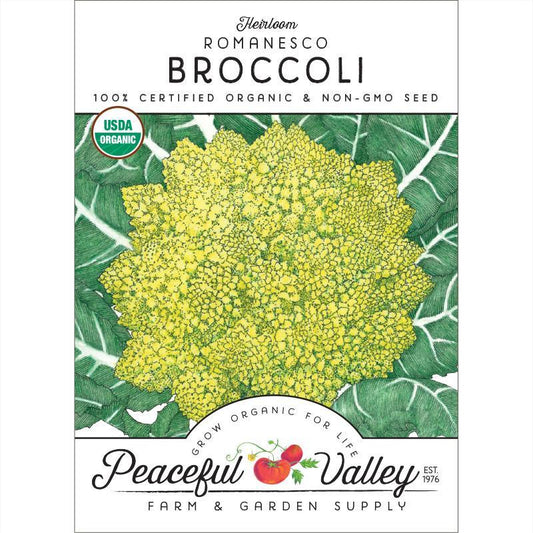
- Romanesco Broccoli Seeds (Organic): Distinctive spiraled heads that benefit from full spacing.
- Rudolph Broccoli Seeds: Suitable for fall harvest in cooler climates.
- All Season Broccoli Blend Seed Mix: Offers staggered maturity for extended harvest.
The Gift Seed Tin – Frost Kissed Collection also includes Calabrese Broccoli for cool season planting in spring and fall.
For seasonal planting ideas, see Red, White and Broccoli.
Common Spacing Mistakes
- Planting too close to maximize space
- Ignoring row spacing
- Overlooking airflow in raised beds
- Forgetting to thin direct-seeded plants
If broccoli spacing is too tight, heads remain small and plants may struggle during hot weather.
Conclusion
How far to space broccoli directly affects head size, plant health, and overall yield. In most home gardens, space plants about 18 inches apart and allow at least 24 inches between rows. In raised beds, a 15- to 18-inch grid works well, especially when soil is fertile and well-drained.
By giving each plant enough room, you support strong root development, improve air circulation, reduce disease and insect pressure, and encourage large, dense central heads followed by productive side shoots.
Understanding how far to space broccoli is one of the simplest ways to improve results when growing broccoli in both spring and fall.