Introduction
Cucumber pests can damage leaves, flowers, roots, and fruit. Before treating bugs on cucumber plants, identify what is causing the damage. Some insects on cucumber plants are helpful visitors, while insect pests such as cucumber beetles and aphids may need attention.
Good cucumber pest control uses integrated pest management, or IPM. This means checking plants, preventing damage, and choosing treatments only when needed. Our guide to integrated pest management explains this approach.

Identify Cucumber Beetles
Wondering what's eating my cucumber leaves? Look for chewing damage and inspect both sides of the leaves. Asking what is eating my cucumber leaves is a useful starting point, but holes alone cannot identify the pest.
The striped cucumber beetle Acalymma vittatum is yellow with three black stripes. This pest of cucurbit crops can damage cucumbers, squash, and melons. California also has a different species, the western striped cucumber beetle, Acalymma trivittatum.
The eastern spotted cucumber beetle Diabrotica undecimpunctata howardi has a yellow-green body with black spots. Gardeners sometimes describe it as a green spotted cucumber beetle. Western spotted beetles also occur, and the banded cucumber beetle is found mainly in warmer areas, including southern California.
Adult cucumber beetles feed on leaves, stems, flowers, and fruit. Some can transmit bacterial wilt to susceptible cucurbits. They can also spread squash mosaic virus. Cucumber mosaic virus is a different virus that is commonly spread by aphids.
Cucumber Beetle Life Cycle
The cucumber beetle life cycle varies by species and climate. Striped cucumber beetles can overwinter as adults in sheltered places. They become active in spring and move onto a suitable host plant.
Females lay eggs in the soil near cucurbit plants. Cucumber beetle larvae are pale and worm-like, with dark brown to black heads. Striped beetle larvae feed on the roots and underground stems. This feeding on root tissue can injure young plants.
The larvae pupate in soil before emerging as adults. Depending on the species and location, the life cycle may repeat during the growing season.
Spotted beetles behave differently in some regions. In Minnesota, for example, adults migrate from warmer areas, and their larvae commonly feed on grass and corn roots.

How to Protect Cucumber Plants From Bugs
For striped cucumber beetle control, cover seedlings with floating row covers before beetles arrive. Secure the edges and check that no beetles are trapped underneath. Remove covers when bee-pollinated varieties begin flowering.
Learning how to get rid of bugs on cucumber plants starts with regular checks. Hand-remove cucumber beetles or knock them into a container of soapy water. Remove old crop debris and weeds that shelter pests.
If you are searching for cucumber beetles control methods, combine these steps rather than relying on rotation alone. Adult beetles can fly into a new planting area.
A trap crop such as Blue Hubbard squash can attract beetles away from cucumbers. Plant it one to two weeks earlier, inspect it often, and remove or control beetles gathering there.
What to plant with cucumbers to keep bugs away? Companion planting is not a guaranteed barrier. Our companion planting guide offers ideas to consider alongside other controls.
For more growing advice, read our cucumber growing guide and tips for extending the cucumber growing season.
Sprays and Organic Options
If you are asking what can i put on my cucumber plants to keep bugs off, start with barriers and monitoring. Deciding what to spray on cucumbers for bugs comes after identifying the pest.
Choose a cucumber pesticide whose directions cover the crop and your intended use. Check application rates, harvest intervals, and pollinator precautions.
Some Extension guidance lists neem products, but neem oil formulations differ. Do not assume every product works equally well against beetles. When choosing an organic pesticide for cucumber beetles, check the specific product’s directions and supporting guidance.
Natural pesticides for cucumber plants can still affect beneficial insects. A cucumber beetle spray is only one tool for controlling striped cucumber beetle populations.
Browse our insect control options, organic pest control collection, and pest control solution chart. If using diatomaceous earth, choose a product labeled for the intended garden use.

Garlic Spray for Cucumber Plants
Garlic-based sprays are used as insect repellents. Alabama Cooperative Extension describes products such as Garlic Barrier as using strong odors to interfere with the cues insects use to find plants. Their effects may not last in poor weather. Garlic spray should be one part of pest management, not a promise of complete cucumber beetle control.
Can You Make Garlic Spray at Home?
Homemade recipes often involve crushing garlic, soaking it in water, and straining the mixture. However, a recipe is not proof that the spray controls cucumber pests or will not damage cucumber leaves.
The University of Washington’s horticultural library shares a garlic, onion, cayenne, and dish-soap recipe for aphids. It does not establish a tested treatment for cucumber beetles. The Royal Horticultural Society also cautions that homemade mixtures containing washing-up liquid or oils can scorch plants and harm other organisms. For these reasons, we do not recommend a homemade dilution as a proven cucumber treatment.
Using a Prepared Garlic Repellent
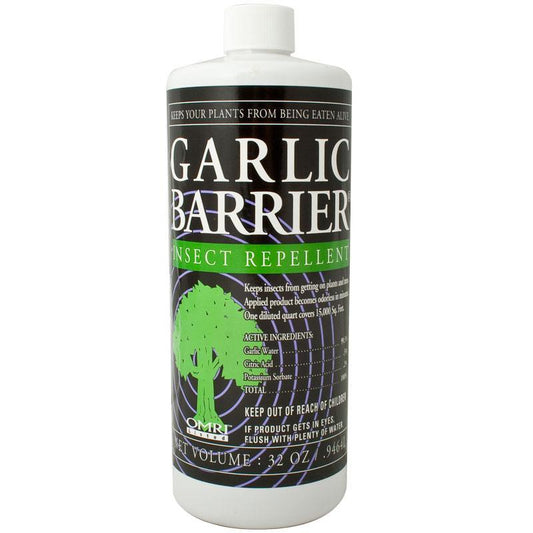
A commercially prepared option, such as Garlic Barrier Quart, saves the work of crushing, soaking, and straining garlic. It also provides a declared formulation and application instructions. These are practical benefits, but they do not guarantee better pest control.
Garlic Barrier is a concentrate that requires dilution, rather than a spray ready to use straight from the bottle. To prepare it:
- Read the label on your bottle and confirm that its directions cover your intended use.
- Shake the container as directed.
- Measure the concentrate and water using that formulation’s mixing instructions.
- Mix thoroughly and apply with suitable spraying equipment.
- Follow the directions for timing, repeat applications, storage, and precautions.
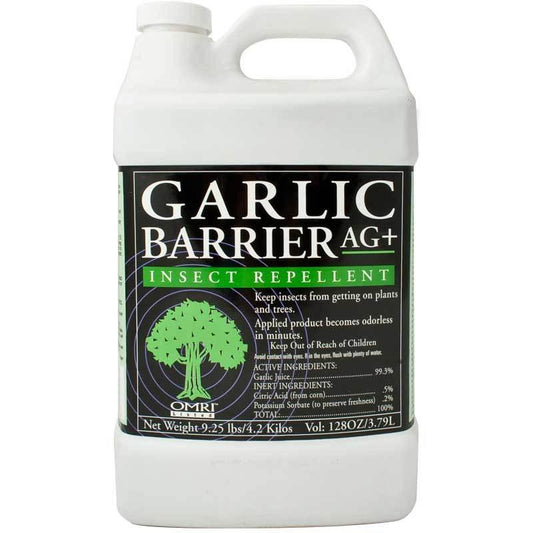
Do not substitute directions from another Garlic Barrier formulation. The quart and gallon products may have different concentrations.
Protect pollination, too. Grow Organic’s quart instructions warn against use just before or during pollination because bees may avoid treated plants. This matters for cucumbers that need bee visits to set fruit. Continue checking plants for pests and fresh damage rather than relying on garlic spray alone.

Other Cucumber Problems
What eats cucumber plants besides cucumber beetles? Slugs and other chewing pests may also cause damage, depending on your region. Holes in cucumbers can result from feeding, but inspect the fruit and nearby plants before choosing a treatment.
Why are my cucumbers round? Check the expected shape of your variety first. Poor pollination can cause uneven or underdeveloped fruit. Shape alone does not prove that pests are responsible.
Browse our cucumber seeds and compare cucumbers for eating or pickling. You can also read about bitter cucumbers and learn why cucumber blossom ends matter when preparing pickles.
Conclusion
Good cucumber bug control begins with identifying the pest. If you want to learn how to deter cucumber beetles, protect seedlings, inspect plants often, and remove beetles when practical. Use suitable labeled products when needed.
For gardeners searching for cucumber bugs control, the most useful approach is a plan that combines prevention, monitoring, and careful treatment.