Oregon summer plant damage should be diagnosed before it is treated. Heat, drought, smoke, wind, salinity, mites, grasshoppers, foliar disease, and root trouble can produce overlapping symptoms, while beneficial organisms may already be limiting a pest. The safest organic IPM sequence is to document the pattern, confirm the cause, correct plant stress, decide what damage is tolerable, and use the least-disruptive effective response only when action is justified.
Use the Oregon summer soil-and-water plan to coordinate pest and biodiversity decisions with the whole garden. When moisture distribution or root conditions may be causing symptoms, check the Oregon drip-irrigation guide and summer soil guide before treating.
Start with the pattern, not the product
Walk the garden when you can see symptoms clearly. Inspect both sides of leaves, stems, crowns, fruit, mulch edges, and the root zone of a representative plant. Compare affected and unaffected plants. Ask whether damage begins on the hot southwest exposure, follows an irrigation line, stays within one plant family, appears first in low wet ground, or advances from a dusty edge. Photograph the same marked leaves and count or rate damage consistently so that you can tell whether the problem is increasing.
Record recent heat, wind, smoke, irrigation failure, rain, transplanting, fertilizer, or pesticide use. A sudden band of scorched tissue after an extreme event differs from damage that expands as a pest population develops. Stippling and webbing can support a spider-mite diagnosis, but pale or brown leaves alone do not. Wilting in already-wet soil calls for root and drainage inspection, not more irrigation.
If identification remains uncertain, use clear photographs, a physical specimen when appropriate, and Oregon Extension or another qualified diagnostic service. Do not treat an unidentified organism merely because it is present. Many insects are harmless visitors, pollinators, predators, parasitoids, or decomposers.
Use a simple sample plan instead of searching only the worst leaf. Select plants from the damaged edge, the center of the affected area, and a comparable healthy area. On each, examine newer and older growth and note whether symptoms follow veins, leaf margins, feeding sites, or irrigation placement. For small arthropods, tap foliage over white paper and examine what falls with a hand lens; identify both potential pests and predators before deciding. Do not assume every mite, egg, larva, or spot has the same significance on every crop.
Also check the timeline. Abiotic injury often appears after a recognizable heat, wind, spray, salt, or irrigation event, whereas living agents may spread or develop as their life cycle continues. That distinction is a clue, not proof. Several causes can operate together, and stressed plants may become more vulnerable to opportunistic organisms. A qualified diagnosis matters most when symptoms are severe, unfamiliar, spreading, or likely to affect a high-value perennial.
Pest-versus-stress diagnostic table
| Observed pattern | Possible explanation | What to verify next | First low-disruption step |
|---|---|---|---|
| Leaf margins or exposed tissue scorch soon after heat or wind | Heat, drought, wind, root restriction, or salt stress | Root-zone moisture, exposure pattern, irrigation uniformity, and recent inputs | Correct water delivery and reduce avoidable stress; do not spray an unconfirmed pest |
| Fine stippling, bronzing, or webbing that increases in hot, dusty conditions | Spider mites or another mite group | Leaf undersides with magnification; pest mites, eggs, webbing, and predators | Reduce dust and water stress; preserve predators; confirm crop-specific guidance |
| Spots, blights, or decay concentrated where foliage stays wet | Foliar or root disease | Symptom margins, plant family, airflow, irrigation pattern, and laboratory diagnosis if needed | Remove only clearly affected material when appropriate; improve airflow and avoid needless leaf wetness |
| Chewed edges, missing tissue, or clipped seedlings | Grasshoppers, slugs, caterpillars, rodents, or other feeders | Time of feeding, tracks or frass, undersides and hiding places, and the exact organism | Protect vulnerable plants physically and remove confirmed pests by the least-disruptive practical method |
| General decline during smoke with no diagnostic pest signs | Weather and air-quality stress, altered light, heat, or irrigation mismatch | Root-zone condition, clean comparison leaves, symptom progression, and local air-quality guidance | Prioritize worker safety and stable irrigation; postpone unnecessary applications |
| One crop family declines while nearby unrelated plants do not | Host-specific pest, disease, or shared root-zone problem | Crop history, rotation, roots, vascular tissue, and a reliable identification | Isolate the decision to the affected crop; avoid whole-garden treatment |
Change the diagnosis across Oregon
Oregon coast
Cooler summer weather, wind, fog, and persistent leaf wetness can make foliar disease and slug or snail activity more important than heat-driven assumptions. Improve spacing and airflow without stripping all shelter or habitat. Water the soil rather than wetting foliage unnecessarily. A cool coast is not uniformly moist: exposed sandy beds and containers can still dry quickly, so verify the root zone before attributing damage to disease.
Willamette and western valleys
Dry summers follow a wet season, and heat waves can rapidly expose weak irrigation or shallow roots. Spider mites may increase in hot, dusty, stressed plantings, while dense canopies or poorly timed overhead water can sustain disease. Look for both pressures rather than treating them as mutually exclusive. Preserve soil cover, keep paths from becoming dust sources, and use the irrigation audit before escalating a pest response.
Cascade and high-elevation sites
Shorter seasons, cold nights, hail, wind, and occasional summer frost can mimic or compound biological damage. A crop nearing the end of its viable window may not justify a disruptive treatment. Compare remaining maturity, plant value, forecast, and pest trajectory. Physical protection must be ventilated and secured; remove it when it creates excess heat, trapped moisture, or pollinator barriers.
Central and eastern high desert
Hot sun, low humidity, dusty wind, limited water, and large day-night swings can favor stress-associated mite outbreaks and grasshopper injury. Rodents may use dense cover, while saline soil or irrigation water can create misleading leaf symptoms. Maintain appropriate moisture and reduce dust where possible, but do not promise that cultural changes will prevent an outbreak. Habitat plantings need water, monitoring, and a design that does not create unmanaged refuge beside vulnerable crops.
Use an IPM escalation ladder
- Observe and identify. Map symptoms, inspect closely, compare healthy plants, and confirm the organism or nonliving cause.
- Set an action point. Decide what level of damage matters for this crop, growth stage, remaining season, and garden purpose. Presence alone is not always a reason to intervene.
- Correct the growing conditions. Repair irrigation, improve airflow, reduce dust, moderate heat where appropriate, and avoid excess nitrogen or other untested inputs.
- Use physical or mechanical tactics. Remove a limited infestation, prune only where the crop tolerates it, exclude a confirmed feeder, or discard severely diseased material using locally appropriate sanitation.
- Protect biological control. Preserve predators, parasitoids, pollinators, and diverse flowering resources. If purchasing beneficial organisms, confirm the target pest, temperature window, release timing, shipping eligibility, and supplier instructions.
- Choose a labeled intervention only if needed. Confirm the crop and pest are on the label, that the product is currently registered for the intended Oregon use, and that timing protects beneficials and avoids heat, wind, drift, runoff, and harvest conflicts.
- Recheck. Measure the same indicator again. Stop, change, or escalate only from evidence; do not repeat a treatment automatically.
The organic integrated pest management guide explains how to identify pressure, set thresholds, and choose a proportionate response. For a confirmed mite problem, use the spider-mite guide for technique depth. A pesticide label is a legal direction, and “organic” does not mean harmless to people, pets, wildlife, pollinators, or natural enemies. Follow all label requirements and applicable regulations.
Preserve habitat without turning cleanup into neglect
Flowering plants with varied bloom forms and seasons can supply food and shelter for beneficial organisms. The beneficial-insect habitat guide covers plant choices in more detail. Avoid unsupported native-status claims; verify whether a plant is native to the relevant part of Oregon and whether it fits the site.
Habitat is not a substitute for scouting. Dense vegetation can also shelter slugs, rodents, or disease. Retain useful cover and floral resources while removing confirmed disease reservoirs, badly infested crop debris, and unmanaged weeds that interfere with the system. Rotate plant families where feasible, but do not leave soil bare simply to appear clean. Mulch, a manageable living cover, or a prompt next crop can protect soil if water and termination capacity support it.
Sanitation should match the diagnosis. Do not compost material that local or crop-specific guidance says should be destroyed or excluded. Clean tools between affected and healthy plants when mechanical transmission is plausible. Avoid heavy pruning during heat or smoke merely to remove cosmetic injury; it can expose more tissue and reduce the plant’s remaining capacity.
Handle smoke and extreme weather as safety events
Wildfire smoke can arrive with heat, wind, ash, and changing light. Protect people first: follow current air-quality, fire, and evacuation guidance and postpone nonessential outdoor work. Do not wash plants or increase irrigation by reflex. Check whether ash, dry soil, a damaged line, or a biological agent is actually involved, then choose a crop-appropriate response. Avoid applying pesticides during unsafe air conditions or weather that conflicts with the label.
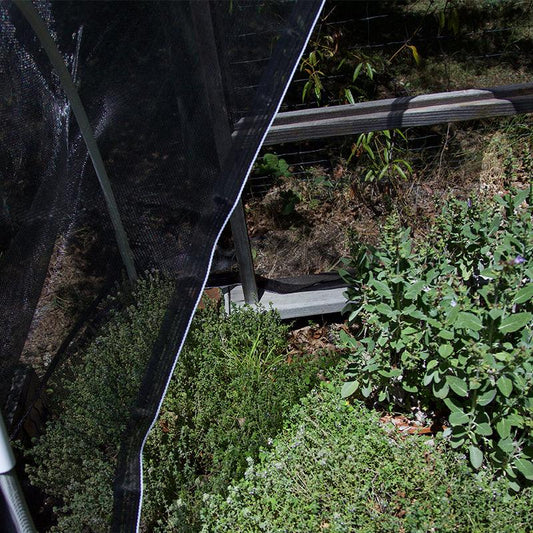
After hail or a storm, separate torn tissue from feeding damage and inspect for broken supports, saturated pockets, and contaminated produce. After premature frost, wait until injury is clear before pruning perennials. Heat protection and shade materials can help certain crops under defined conditions, but they require anchoring, ventilation, pollination access, reuse, and end-of-life planning. No cover guarantees protection.
Choose a control only after identification
When monitoring shows a real need, begin with the Organic Pest Control collection and filter choices by the confirmed crop, pest, label, Oregon registration, and risk to beneficials. If an identified pest and local conditions fit biological control, compare the Beneficial Insects collection while checking live shipping and release requirements. For a verified disease problem, use the Organic Disease Control collection only after cultural conditions and diagnosis are addressed. Recheck availability and eligibility immediately before purchase.
The desired outcome is not a pest-free garden. It is earlier diagnosis, tolerable damage, fewer broad-spectrum interventions, and a better chance for predator-prey balance. Record what you saw, what threshold prompted action, what you changed, and what happened next. That evidence will improve the next Oregon summer decision without promising prevention or control.
Adapt pest management through Oregon's seasons
Use the fall IPM guide as rain and cleanup change habitat, the winter IPM guide for slugs, rodents, and storage, and the spring IPM guide as tender growth and late frost overlap.
Gardeners near a regional boundary can compare Washington summer pest and smoke pressure, cold-summer disease and beneficial insects, and Interior West hail, grasshopper, mite, and weather stress. Apply only practices that match local soil, exposure, forecast, water, and crop response.