Introduction
Perennial vegetable crowns, roots, and tubers return from established underground structures, but they do not share one planting method. Asparagus crowns, rhubarb crowns, horseradish roots, and Jerusalem artichoke tubers need different depths, spacing, harvest restraint, and spread management.
This overview helps you choose and place the crop. Use the linked crop guide and product page for the exact planting instructions for the stock you receive.
Compare Perennial Vegetable Crops
| Crop | Planting stock | Planning priority | Crop guide |
|---|---|---|---|
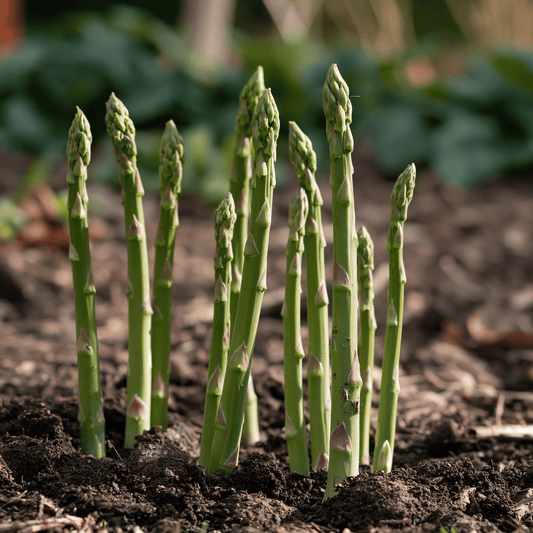
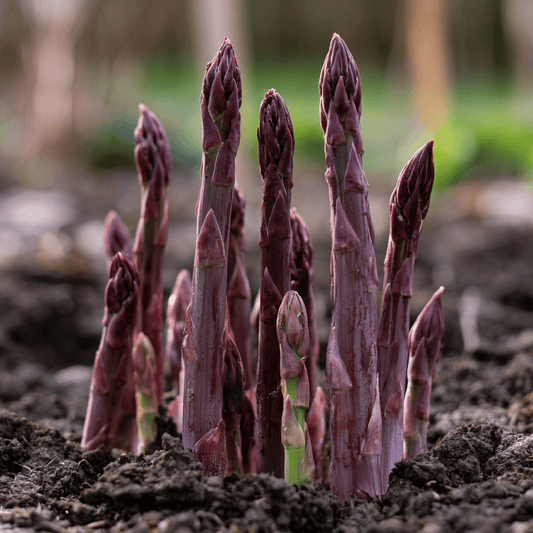
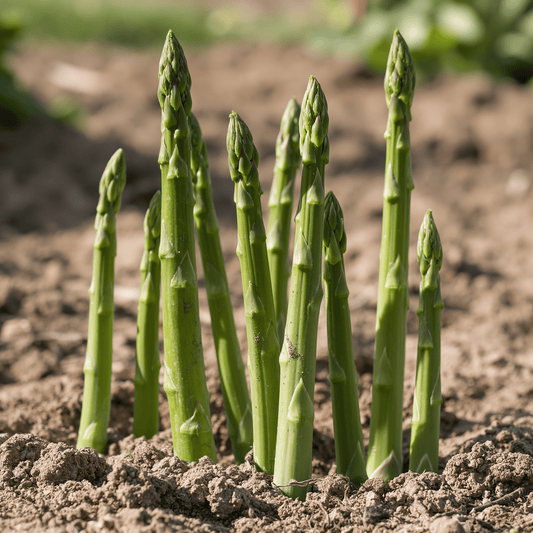
| Asparagus | Crowns | Long-term, well-drained bed; room for fern growth; limited early harvest | Asparagus Crowns: Planting & Growing Guide |
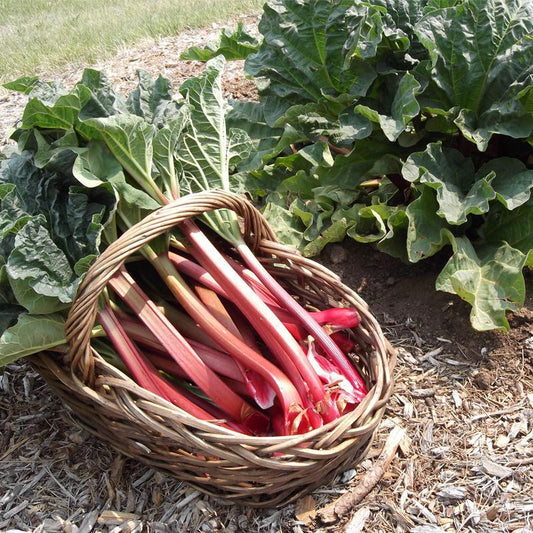
| Rhubarb | Crowns | Climate fit, crown placement, drainage, and establishment before substantial harvest | How to Grow Rhubarb |
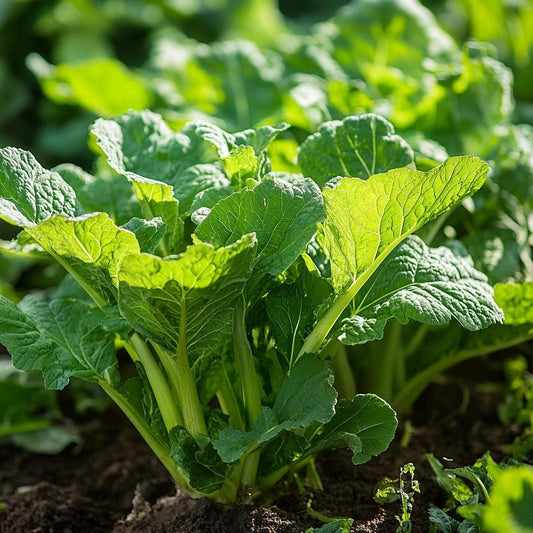
| Horseradish | Root cuttings | Deep, workable soil and deliberate containment of spreading roots | How to Grow Horseradish |
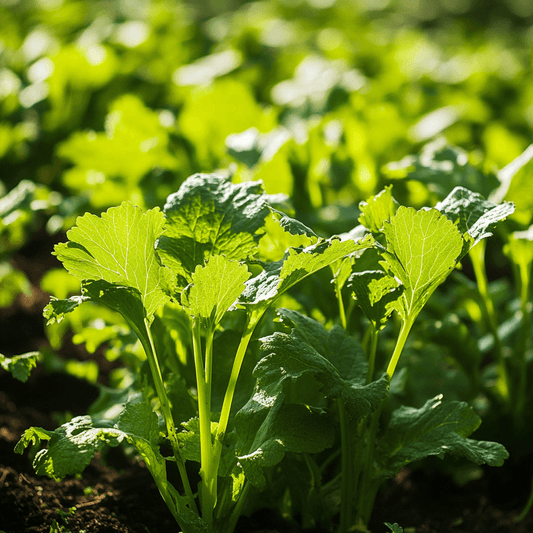
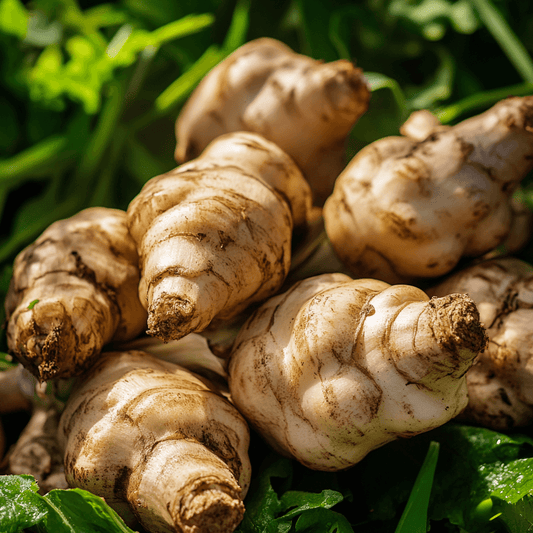
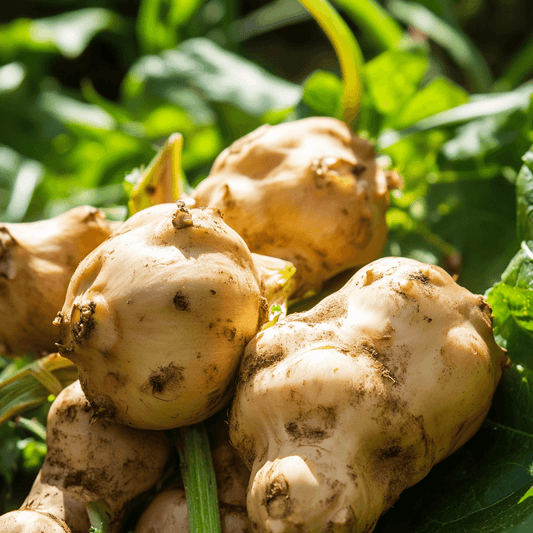
| Jerusalem artichoke | Tubers | Full-size height, underground spread, harvest access, and containment | How to Grow Jerusalem Artichokes |
Choose a Permanent Site Carefully
These crops can remain in place or regrow from missed roots and tubers, so site selection matters more than it does for an annual vegetable row. Consider:
- Drainage: avoid sites that stay saturated around dormant crowns or roots.
- Soil access: deep, workable soil simplifies establishment and harvest.
- Mature footprint: include fern height for asparagus, leaf spread for rhubarb, and tall stems for Jerusalem artichokes.
- Containment: horseradish and Jerusalem artichoke can persist from root or tuber pieces. Use a location where that behavior can be managed.
- Crop safety: only rhubarb stalks are used as food; the leaf blades are toxic and should not be eaten.
Match the product to your USDA growing zone and local climate. A zone number alone does not describe drainage, summer heat, snow cover, or winter soil conditions.
Plant Crowns, Roots, and Tubers by Their Actual Form
Open the package promptly and identify the crown, buds, roots, or tuber before planting. Keep dormant stock cool and protected from drying while the site is prepared. Do not use one universal depth:
- Asparagus crowns are commonly arranged with roots spread in a prepared planting area, then covered according to the crop guide and local soil conditions.
- Rhubarb crowns must be oriented so the crown and buds are positioned correctly and are not buried excessively.
- Horseradish root cuttings have a top and lower end; orientation and harvest planning affect later management.
- Jerusalem artichoke tubers are planted like a perennial tuber crop, with enough room to locate and lift tubers later.
Firm soil enough to remove large air pockets, water the planting area, and keep mulch away from exposed crown tissue.
Establishment, Maintenance, and Harvest
New perennial vegetables need time to build underground reserves. Heavy first-year harvest can weaken establishment, especially with asparagus and rhubarb. Follow the crop guide rather than assuming that every visible shoot or stalk should be harvested.
During active growth
- Water according to soil moisture and weather rather than a fixed calendar.
- Control weeds before they compete with young crowns.
- Use soil-test results and crop guidance before adding fertilizer.
- Watch for shoots outside the intended horseradish or Jerusalem artichoke area.
At the end of the season
Let healthy foliage perform its crop-specific role before removing it. Cleanup timing differs among asparagus ferns, rhubarb leaves, horseradish foliage, and Jerusalem artichoke stems. Remove diseased material and avoid moving root or tuber pieces to areas where spread is unwanted.
Growing Guides and Shopping Paths
- Shop Perennial Vegetable Crowns & Roots
- Shop Asparagus Crowns
- Shop Rhubarb Crowns
- Shop Horseradish Roots
- Shop Jerusalem Artichoke Tubers
The product page and crop guide are the final authority for planting form, depth, quantity, seasonal condition, and cultivar-specific care.
FAQs About Perennial Vegetable Crowns & Roots
Can I plant asparagus, rhubarb, horseradish, and Jerusalem artichokes at the same depth?
How soon can I harvest newly planted perennial vegetables?
References for the added FAQs: Oregon State Extension asparagus guide; Oregon State Extension rhubarb guide; Utah State Extension horseradish guide; UC Marin Master Gardeners sunchoke guide.