

Organic, heirloom, open-pollinated, hybrid, non-GMO, and untreated describe different seed attributes. One term does not automatically imply another. Use this guide to identify the characteristic that matters to you, then confirm it on the current product listing and packet.
Compare available options in the Non-GMO and Organic Seeds collection, the broader organic seed collection, or all vegetable seeds. Collection membership is a shopping aid; verify the current attributes of each item.
Seed terms compared
| Term | What it describes | What it does not automatically mean |
|---|---|---|
| Certified organic | Production and handling under applicable organic standards | Heirloom, open-pollinated, untreated, pesticide-free, or better adapted |
| Non-GMO | A representation about genetic engineering | Certified organic, untreated, heirloom, or open-pollinated |
| Heirloom | A variety's history and continuity; definitions vary | Certified organic, healthier, superior tasting, or regionally adapted |
| Open-pollinated | A pollination and seed-saving category | Certified organic or guaranteed true-to-type without isolation and selection |
| Hybrid | A deliberate cross between selected parent lines | Genetically engineered or ineligible for organic certification |
| Untreated | No specified seed treatment was applied | Certified organic or free from all possible residues |
Certified organic seed
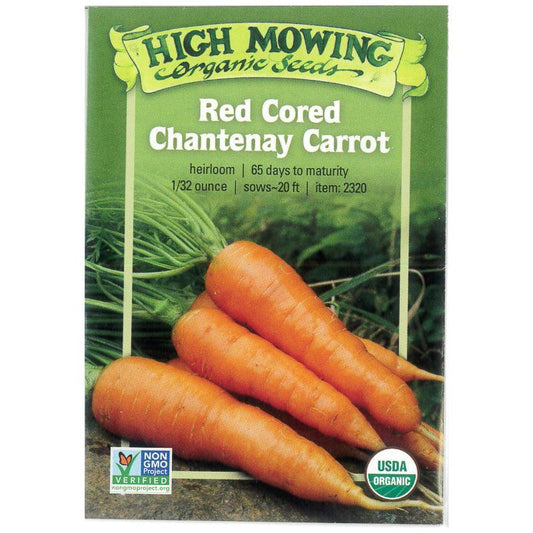
Certified organic seed is produced and handled under USDA organic standards. Genetic engineering is prohibited, and synthetic inputs are restricted unless allowed by the standards. Organic is not a blanket claim that a product is chemical-free, pesticide-free, untreated, nutritionally superior, or guaranteed to perform better.
If certification matters, look for the current organic statement and certifier on the individual listing. Do not infer one product's certification from another size, variety, or collection.
Heirloom and open-pollinated seed
Heirlooms are generally open-pollinated varieties with historical or community continuity, but sellers use different age and heritage criteria. Open-pollinated seed can reproduce relatively true to type when compatible crops are isolated and selection is maintained. Cross-pollination, small populations, and unintentional selection can change a saved line.
Hybrid seed
Hybrid seed is produced from controlled parent crosses. It can combine particular characteristics such as maturity, uniformity, disease resistance, plant habit, or quality. Hybrid does not mean genetically engineered. Hybrid plants can produce seed, but the next generation may vary and may not reproduce the purchased variety.
Non-GMO seed
Non-GMO addresses genetic engineering. It does not establish organic certification, treatment status, breeding method, or seed-saving suitability. USDA organic standards prohibit genetic engineering, but a standalone non-GMO claim is not equivalent to organic certification.
Choose based on the garden task
- Climate and season: compare crop tolerance and days to maturity with your planting window.
- Space: look for bush, compact, container, vining, or support requirements.
- Use: select varieties for fresh eating, storage, sauce, drying, pickling, bouquets, or pollinator plantings.
- Specific resistance: treat a listed disease-resistance trait as useful information, not immunity.
- Seed saving: choose an appropriate open-pollinated variety and learn isolation and population requirements.
- Certification: verify the exact product and certifier.
Example seed decisions
A short-season gardener choosing a tomato may prioritize early maturity before heirloom status. A seed saver may choose an open-pollinated bean and plan isolation. A grower who requires certified organic seed should verify the exact product and certifier rather than relying on the variety name. A container gardener may prefer a compact hybrid or open-pollinated variety based on plant habit. None of these choices makes the other seed categories broadly inferior.
For flowers and herbs, also consider life cycle and dormancy. An heirloom perennial flower may still need cold stratification and may not bloom the first season. A certified organic herb seed may be hybrid or open-pollinated. Read the planting directions separately from the label claims.
Comparison questions
Are heirloom seeds always open-pollinated?
They are generally represented that way, but verify the seller's description and seed-saving guidance.
Can hybrid seed be certified organic?
Yes. Hybrid describes breeding; organic describes regulated production and handling.
Does untreated mean no pesticide was ever used?
No. It describes the seed treatment status specified by the seller and does not make a blanket production claim.
Are organic seeds better adapted to organic gardens?
Certification does not by itself establish local adaptation. Compare variety trials, climate, maturity, resistance traits, and intended use.
Which seed type germinates best?
Germination depends on the lot, crop, storage, and conditions. One label category does not guarantee a higher result.




1 comment
Thank you for the great information and explanation of the types of tomato plants. Always fun to learn new things.