


Item Number: FT100
Black Mission Potted Fig Tree
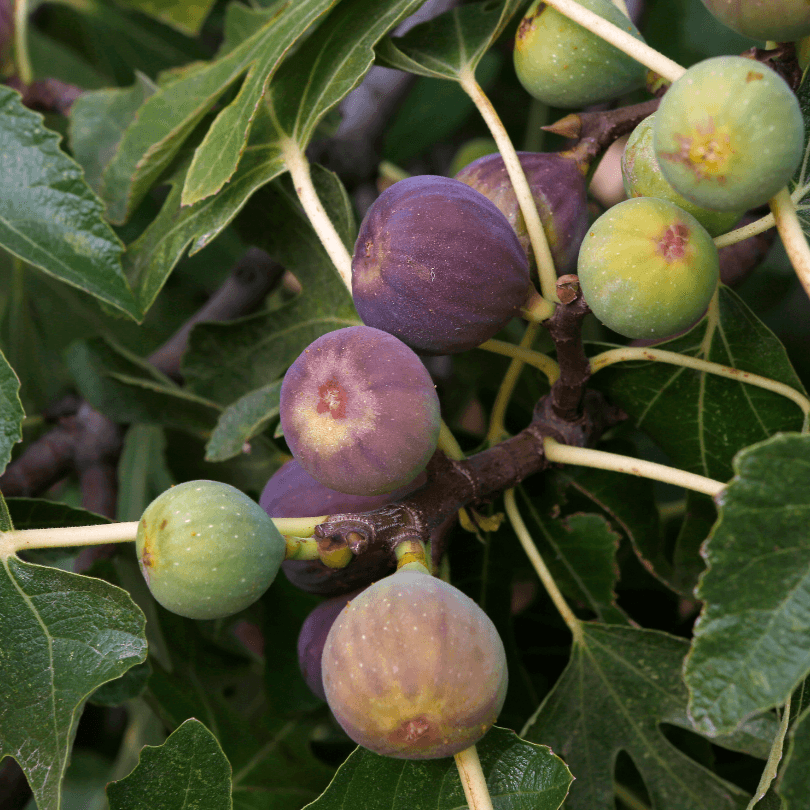
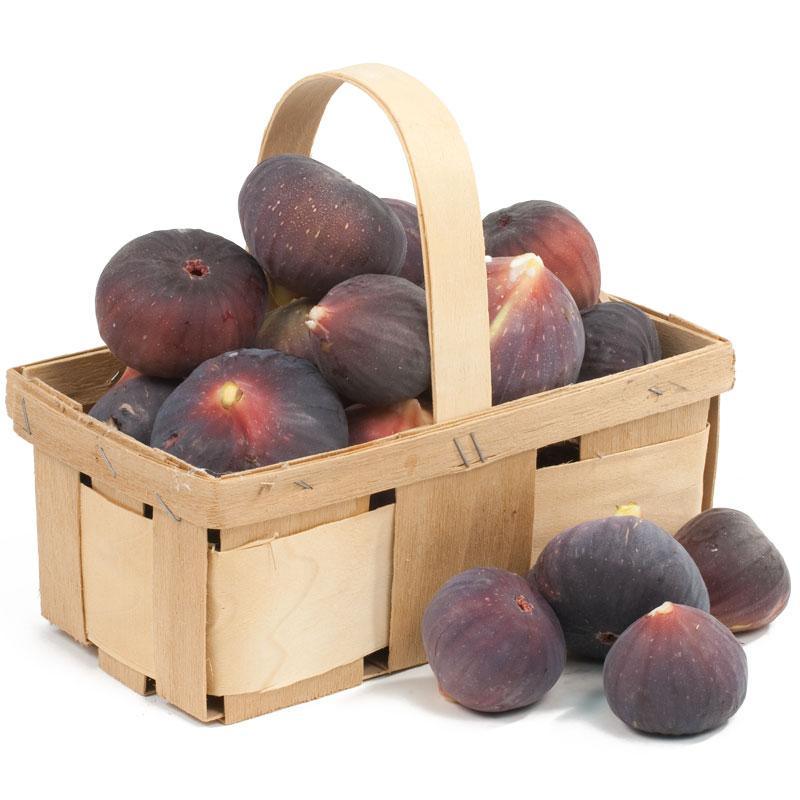
Classic purple-black figs with rich, strawberry-red flesh.



Check Your Zone Compatibility:

Our Guarantee To You
Since 1976, we've served our customers at every stage of growing. Please contact us at any time. We are happy to support and assist you.
Description
Description
Black Mission fig is a widely grown California variety with purple-black skin and strawberry-red flesh. The ripe fruit has a rich flavor and can be eaten fresh, dried, cooked, or preserved.
Product Details
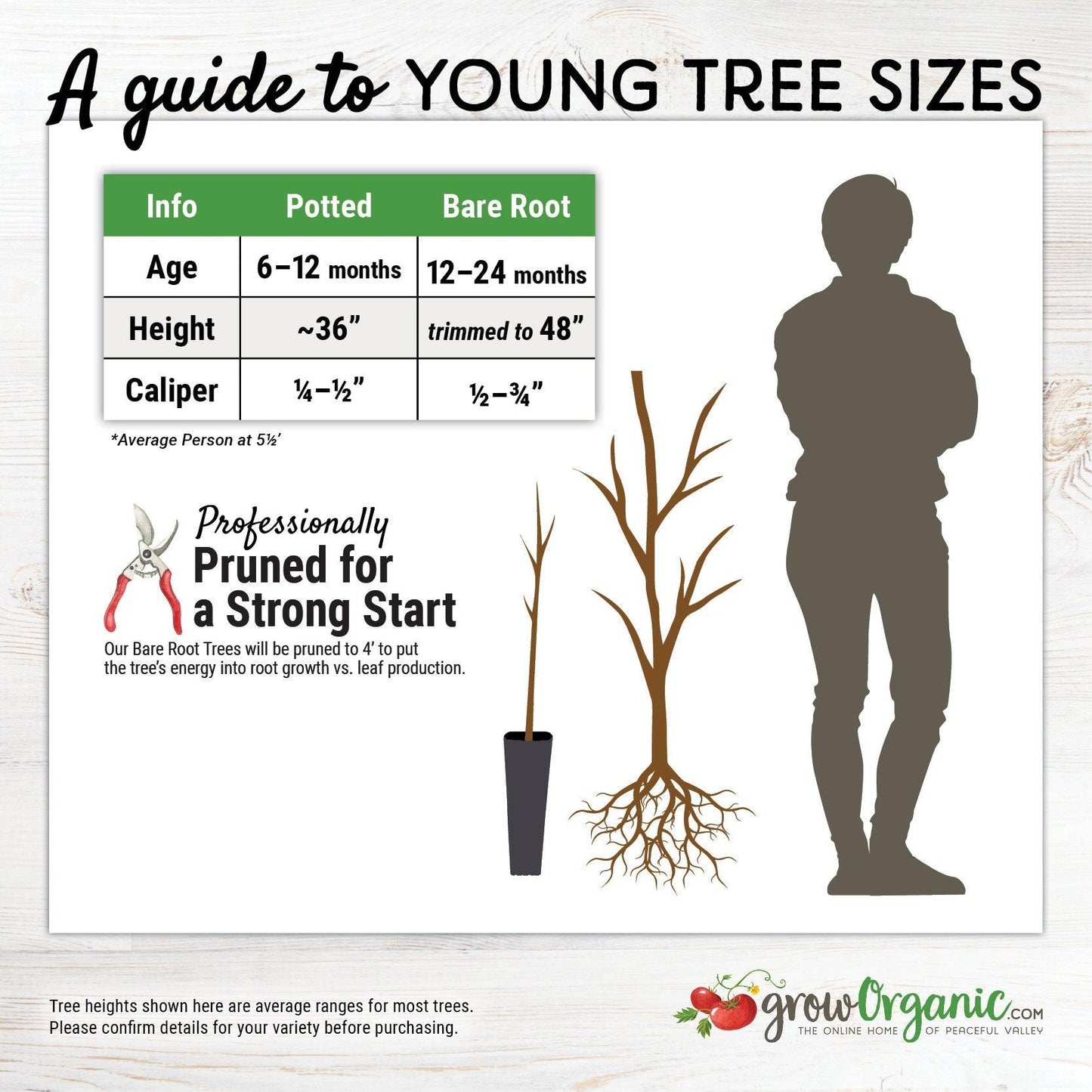
- Plant form: Potted, own-root deciduous fig tree
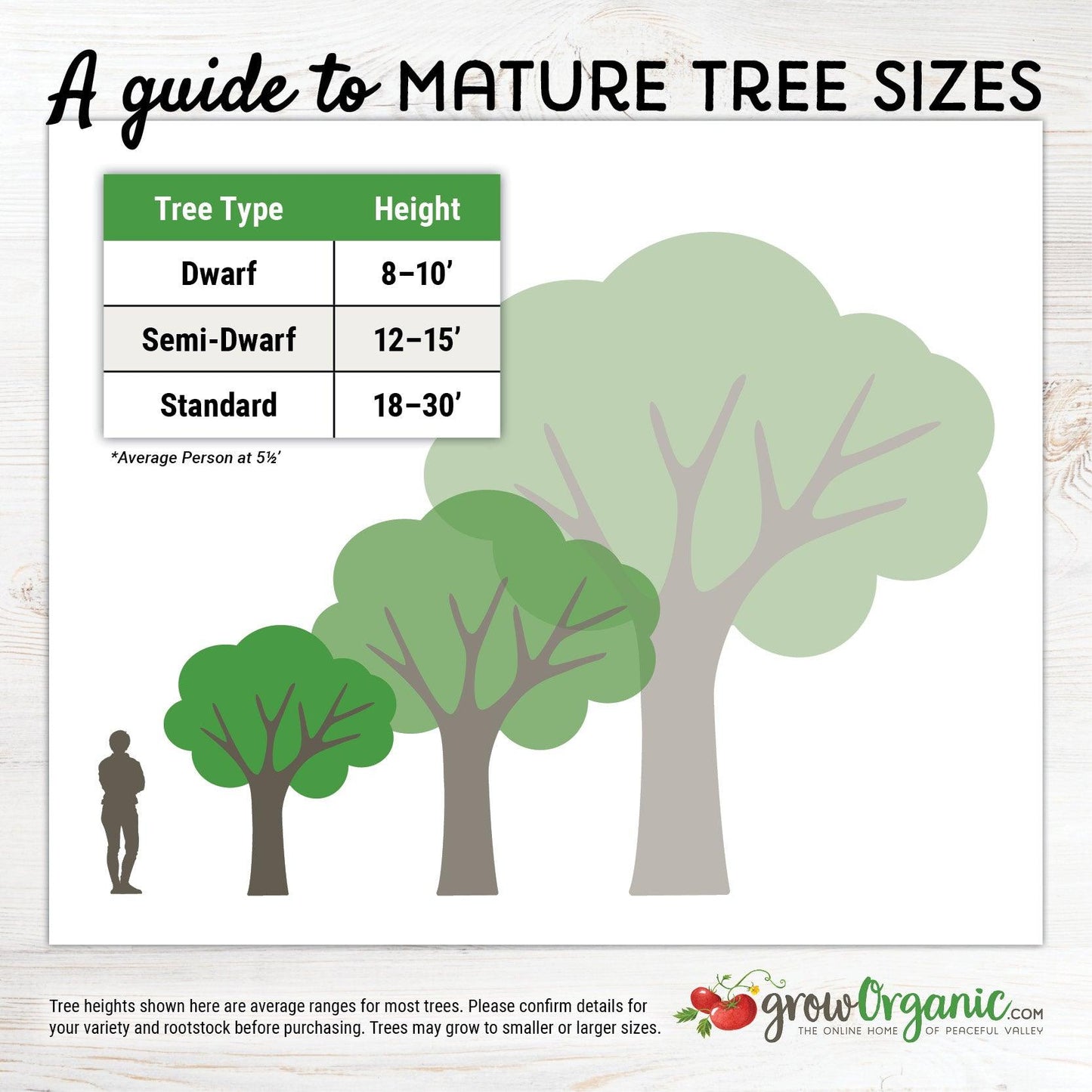
- Tree habit: Standard fig that can become a broad tree; prune to manage size and harvest access
- USDA zones: Listed for Zones 7–9; winter survival and dieback depend on microclimate and protection
- Harvest: A breba crop may ripen in early summer on older wood, followed by a main crop in late summer or fall
- Fruit: Purple-black skin with strawberry-red flesh; suited to fresh eating, drying, and preserves
- Pollination: Common-type fig; a second tree or fig-wasp pollination is not required
- Site: Full sun, summer warmth, and well-drained soil
See the Figs Growing Guide and potted fruit tree planting guide. Compare varieties in the Fig Trees collection or browse all potted fruit trees.
Seasonal note: This deciduous tree may arrive dormant and leafless. Inspect it promptly and contact Customer Service within three days if it arrives damaged or in poor condition.
Pruning and ripeness
Black Mission can develop a broad canopy, so choose its permanent space with harvest access in mind. Thin congested branches during dormancy instead of repeatedly shearing the exterior; an open structure improves light penetration and makes ripe fruit easier to find. Preserve selected older wood if an early breba crop is important. Wait until fruit softens, droops at the neck, and shows its mature dark color before picking. For drying or preserving, sort out damaged fruit promptly. Production varies with winter injury, summer heat, irrigation, and tree age.
Potted Plant Free Shipping
Potted Plant Free Shipping
Mix and match six qualifying potted plants within the Potted Trees shipping group and receive free standard shipping. Eligible potted-plant orders of one to five plants currently ship for a $19.99 fixed rate by FedEx or UPS.
Bare root trees and perennials are calculated separately and do not count toward the six-plant threshold.
Free standard and fixed-rate shipping offers apply to qualifying deliveries within the contiguous 48 states. USPS and expedited delivery are charged separately.
Shipping Information
Shipping Information
Cannot ship to the following states: HI, AK, PR, GU, VI
Shipping Weight: 5.5 lb
Dimensions: 35.9"L x 3.9"W x 3.9"H
Features
Features
- Potted
- Self-fruitful
- Suited to Warmer Climates
Characteristics
Characteristics
Planting & Care
Planting & Care
Useful Information
Useful Information
Guarantee
Guarantee
We guarantee the perishable items we sell to be in good, viable condition when we sell them. Perishable items include, but are not limited to, garlic bulbs, flower bulbs, seed potatoes, onion sets & transplants, potted or bare root trees, vegetable crowns, etc. If your perishable item arrives in substandard condition, take photographs and please contact us within 3 days of the purchase date (or delivery date). For qualifying claims involving perishable items that arrive in substandard condition, we will provide a refund of the affected item’s purchase price, excluding shipping costs. At our discretion, we may offer a replacement instead, subject to product availability and shipping feasibility. You may accept the replacement (if we are able to offer one) or receive the refund. Accordingly, we urge you to open any boxes marked as ""Perishable"" immediately upon receiving them and inspect the shipment thoroughly (do not crack open heads of garlic, we do not accept claims on cracked garlic). Because some perishable items can deteriorate very quickly, we cannot accept any claims beyond the 3-day time frame as it becomes too difficult to determine if these items were delivered in substandard condition, or if they turned into such substandard condition because of having been improperly cared for or stored once delivered.


- Choosing a selection results in a full page refresh.
- Opens in a new window.