
Item Number: SNV8411
Watermelon Radish Seeds (Organic)
Watermelon Radish - Unique Large Radish with Pink Inner Flesh







Check Your Zone Compatibility:

Our Guarantee To You
Since 1976, we've served our customers at every stage of growing. Please contact us at any time. We are happy to support and assist you.
Description
Description
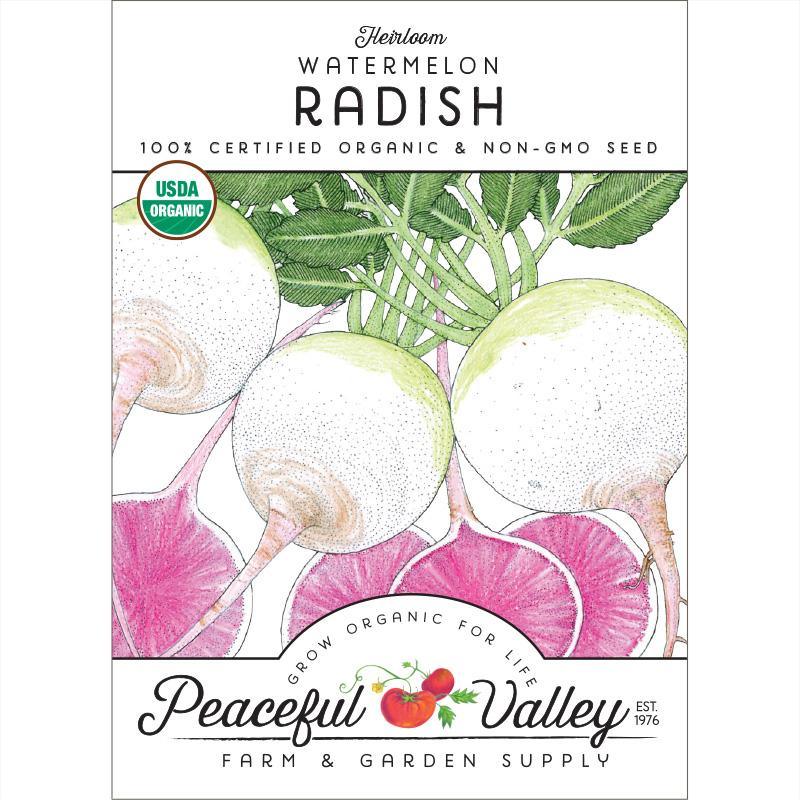
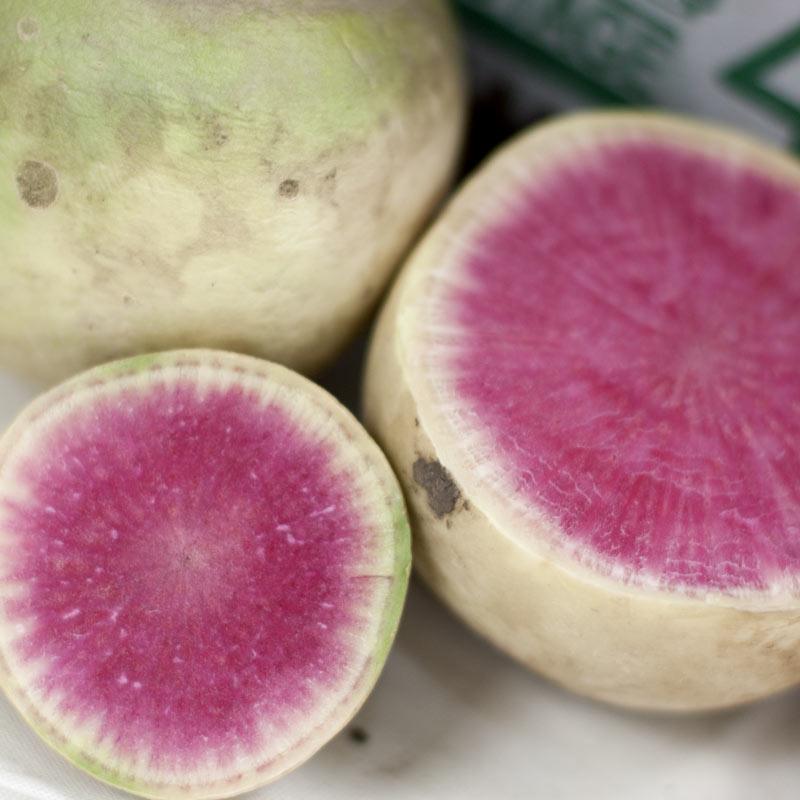
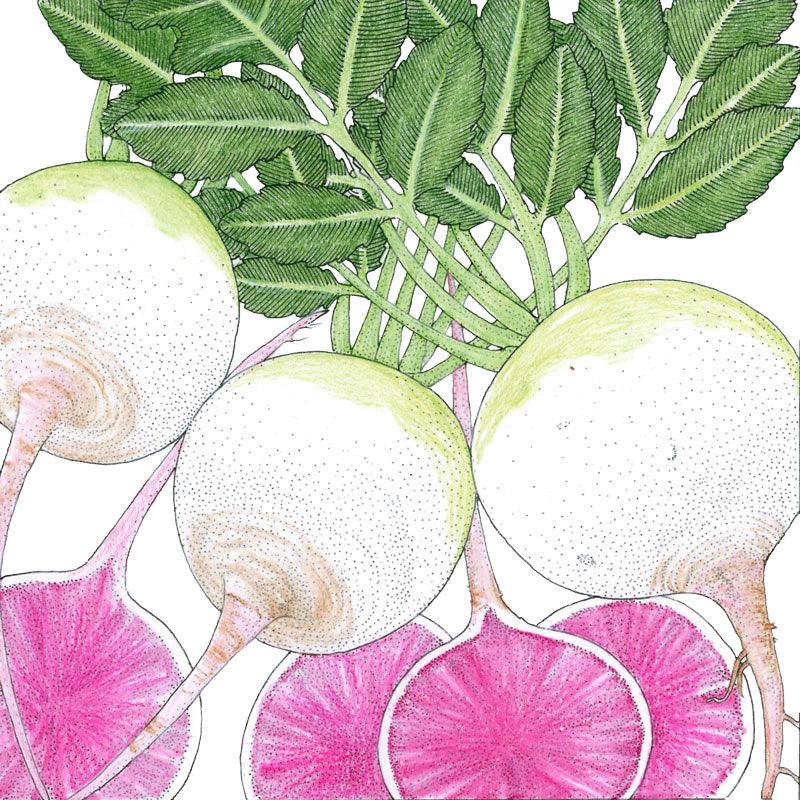
Radish - Watermelon - Raphanus sativus Hardy Annual Heirloom. A uniquely colored and very large radish, the watermelon radish grows to about 4" causing it often to be mistaken for a turnip. It has green shoulders that fade to brilliant white on the exterior and bright pink inner flesh. The white part is hotter and the interior is peppery-sweet. Watermelon radishes are an extremely mild radish. The Watermelon Radish is a type of daikon radish that is called Shinrimei in its native land of China.
Variety Details
- Botanical name: Raphanus sativus
- Plant type: Hardy Annual
- Growth habit: Herbaceous
- Crop category: Radish
- Kitchen profile: Watermelon radishes are not only visually appealing but also offer a mild, slightly peppery flavor with a hint of sweetness.
- Recorded feature: Open-Pollinated
- Product format: Seed packet
Sowing & Growing
- Soil Temperature: 45-95°F
- Planting Depth: 1/2"
- Germination: 4-12 Days
- Height At Maturity: 4"-6"
- Days to Maturity: 55 Days
- Sun/Shade: Full Sun
- Spacing After Thinning: 3"
Direct sow Watermelon Radish into a fine, loose seedbed during a suitable cool-season window. Keep the shallow root zone evenly moist as seedlings emerge, then thin to prevent crowding and misshapen roots. Radishes can change texture as they remain in the ground, so begin checking root shoulders near the early end of the maturity range. Harvest at the diameter and crispness you prefer, and date succession sowings separately.
Soil and Water: Radishes prefer well-drained soil with plenty of added organic matter.
Before sowing Watermelon Radish, review the packet alongside the current product details and note any range in temperature, germination, or maturity. Ranges reflect biological and seasonal variation rather than a fixed promise. Label each planting with its date and location, then compare emergence, growth, and harvest with local weather. This record is useful for succession plantings and for deciding whether the crop fits better into an earlier or later seasonal window.
Explore related options in our non-GMO and organic seeds for sale.
Seed Pack Shipping
Seed Pack Shipping
Qualifying seed-pack-only orders under $50 ship for a $7 flat rate via USPS. Spend $50 or more on qualifying seed packs and receive free USPS shipping. Available within the contiguous 48 states.
Shipping Information
Shipping Information
Shipping Weight: 0.01 lb
Dimensions: 4.5"L x 3.25"W x 0.1"H
Features
Features
- Heirloom
- Open-Pollinated
- Succession Planting
Characteristics
Characteristics
Planting & Care
Planting & Care
Soil and Water: Radishes prefer well-drained soil with plenty of added organic matter. They have low nutrient requirements; especially avoid excess nitrogen to promote good root development. Preferred soil pH is 6.0-7.0.
Planting and Growing: Cool weather is needed for best development. Sow seed directly in late summer and fall rather than spring or else these radishes will bolt rather than form nice round roots.
Harvesting and Storage: Harvest is best when 3" or so in diameter. Watermelon radishes grow milder and woodier the longer you wait to harvest them. May keep 1-2 weeks in the fridge.
Useful Information
Useful Information
Guarantee
Guarantee

Peaceful Valley Farm & Garden Supply brand vegetable seeds are guaranteed to germinate. Once the seeds have sprouted, please understand that Peaceful Valley cannot be held responsible for the many uncontrollable growing and climatic conditions that must be met to ensure the success of your crop(s).


- Choosing a selection results in a full page refresh.
- Opens in a new window.