
Item Number: SNV5158
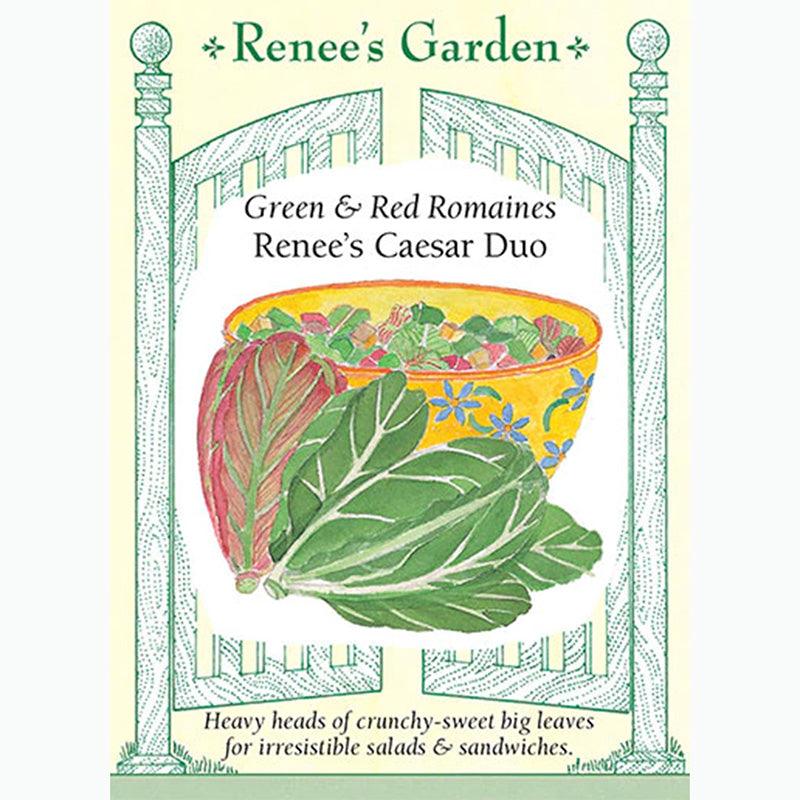
‘Renee’s Caesar Duo’ Green & Red Romaine Lettuce Seeds
Colorful Crunchy Duo



Check Your Zone Compatibility:

Our Guarantee To You
Since 1976, we've served our customers at every stage of growing. Please contact us at any time. We are happy to support and assist you.
Description
Description
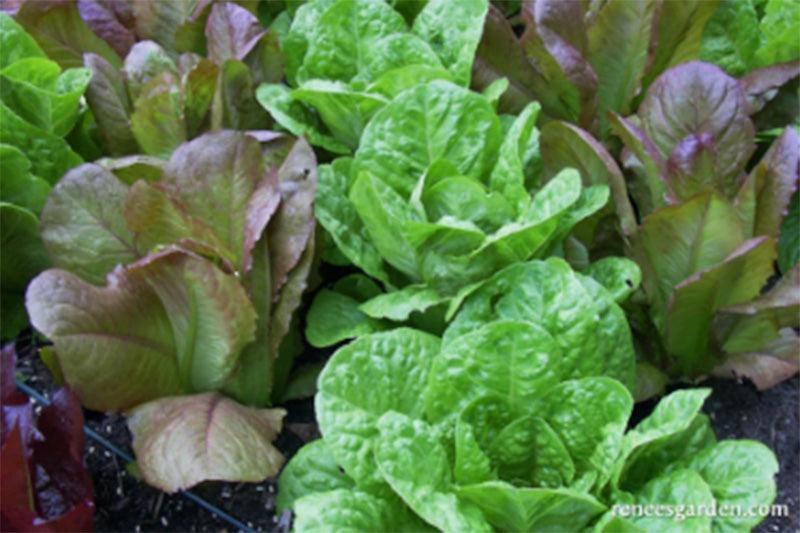
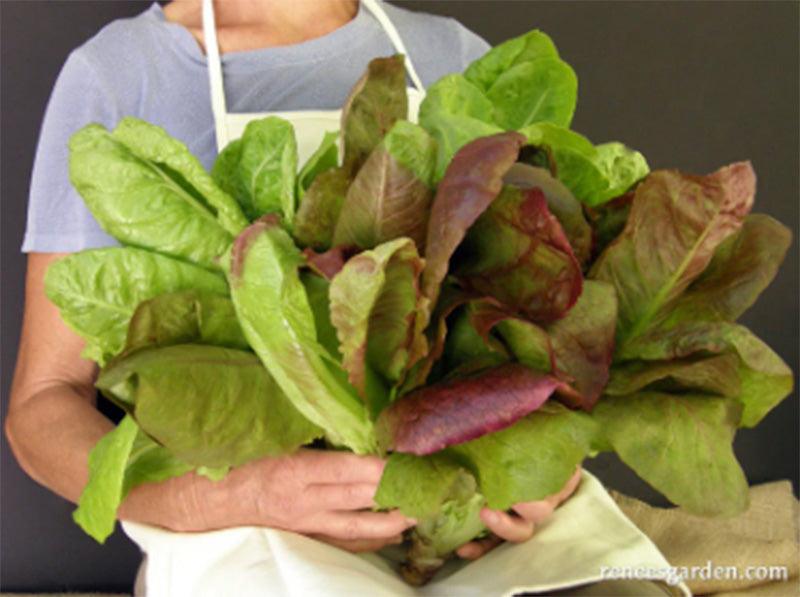
The Garden Red & Green Romaines Caesar Duo, a distinctive cultivar, is a blend of two romaine lettuce varieties cherished for their flavor and visual appeal. Romaine lettuce, scientifically known as Lactuca sativa, originated in the Mediterranean region and has become a staple in various cuisines worldwide. This Caesar Duo presents an alluring aesthetic with a blend of dark red and vibrant green leaves. The contrast between the colors creates an eye-catching visual in gardens or containers, adding ornamental value to its culinary appeal.
Variety Details
- Plant type: Hardy Annual
- Growth habit: Upright
- Crop category: Lettuce
- Kitchen profile: The Garden Red & Green Romaines Caesar Duo, a distinctive cultivar, is a blend of two romaine lettuce varieties cherished for their flavor and visual appeal.
- Recorded feature: Open-Pollinated
- Product format: Seed packet
Sowing & Growing
- Light: Full Sun/Part Sun
- Planting season: Fall or Spring or Summer
- Starting location: Direct Sow or Start Indoors & Transplant
- Recorded soil pH: 6.1 - 6.5 or 6.6 - 7.0
- Recorded USDA zones: 4, 5, 6, 7, 8, 9
Prepare a fine seedbed for ‘Renee’s Caesar Duo’ Green & Red Romaine Lettuce and keep the shallow sowing zone evenly moist while seedlings emerge. Thin according to the intended harvest stage: closer spacing can suit young leaves, while mature heads need more room. In warming weather, evaluate soil moisture and plant condition frequently instead of following a universal schedule. Pick outer leaves or cut mature plants at the stage you prefer. Record sowing and harvest dates to refine timing for the next planting.
Before sowing ‘Renee’s Caesar Duo’ Green & Red Romaine Lettuce, review the packet alongside the current product details and note any range in temperature, germination, or maturity. Ranges reflect biological and seasonal variation rather than a fixed promise. Label each planting with its date and location, then compare emergence, growth, and harvest with local weather. This record is useful for succession plantings and for deciding whether the crop fits better into an earlier or later seasonal window.
Explore related options in our Lettuce Seeds.
Seed Pack Shipping
Seed Pack Shipping
Qualifying seed-pack-only orders under $50 ship for a $7 flat rate via USPS. Spend $50 or more on qualifying seed packs and receive free USPS shipping. Available within the contiguous 48 states.
Shipping Information
Shipping Information
Shipping Weight: 0.01 lb
Dimensions: 4.5"L x 3.125"W x 0.1"H
Features
Features
- Open-Pollinated
- Succession Planting
Characteristics
Characteristics
Planting & Care
Planting & Care
Soil & Water: Lettuce likes full sun except in hot summer climates where it prefers some shade, especially in the afternoon. Add plenty of compost to the soil to encourage rapid growth. Water evenly and moderately to prevent bitterness.
Planting & Growing: Start seeds indoors 4 weeks before transplanting outside, or sow seed directly as soon as the soil is workable. Make successive plantings every 10-14 days for a continuous harvest. In mild climates, lettuce can be sown from spring through fall.
Harvesting & Storage: Begin harvesting outer leaves as soon as they are large enough and continue until a central stalk begins to form, which signals the end of the harvest period. You can also harvest the entire plant when it's mature but still young and crisp.
Useful Information
Useful Information
Guarantee
Guarantee

- Choosing a selection results in a full page refresh.
- Opens in a new window.