

Introduction - How to Grow Giant Garlic
A large head of garlic starts with small choices made months before harvest. The cloves you plant, the space between them, and spring care all affect the result. Extra fertilizer alone will not turn a weak crop into jumbo garlic.
If you want to learn how to grow big garlic, focus on healthy roots and leaves first. These nine steps explain how to grow large garlic bulbs while avoiding common mistakes. Results still depend on your climate, soil, and chosen garlic variety.
Quick answer (for bigger bulbs):
- Space cloves 6 inches apart (crowding is a top cause of small bulbs).
- Plant pointy end up, typically 1–2 inches deep (deeper in colder areas).
- Feed for strong leaf growth in early spring, then taper nitrogen as bulbing begins.
- Keep moisture consistent in spring, then taper watering as plants near maturity.
- For hardneck garlic, remove scapes to help direct energy into bulbs.
- Harvest when about half the leaves have yellowed, then cure in shade with airflow.

1. Choose Garlic That Suits Your Climate
The two main types of garlic are hardneck and softneck. Hardneck varieties produce a central flower stalk, called a scape, and often perform well in regions with cold winters. Softneck varieties generally suit milder climates, produce more cloves, and tend to store longer. However, performance varies by variety and growing conditions. Learn more in this guide to hardneck and softneck garlic.
- Hardneck garlic: Explore hardneck seed garlic for varieties known for distinctive flavors and larger individual cloves.
- Softneck garlic: Browse softneck seed garlic for varieties that often store well and are suitable for braiding.
- New varieties: Discover new garlic selections for 2026, checking each variety's suitability for your climate before planting.
Check your local growing conditions before choosing. The USDA growing zone guide can help US gardeners identify their hardiness zone, but garlic selection also depends on temperature and day-length requirements.
Looking for exceptionally large cloves? Elephant garlic produces huge bulbs, but it is not true garlic (Allium sativum). It is related to leeks (Allium ampeloprasum) and has a milder flavor.
2. Start With Large, Healthy Cloves
Choose firm, large cloves from healthy bulbs. Reject any with mold, soft spots, or damage. Large cloves have more stored food to support early growth.
Browse seed garlic from sources that supply planting stock. Bulbs from grocery stores may carry disease or come from varieties poorly suited to your area.
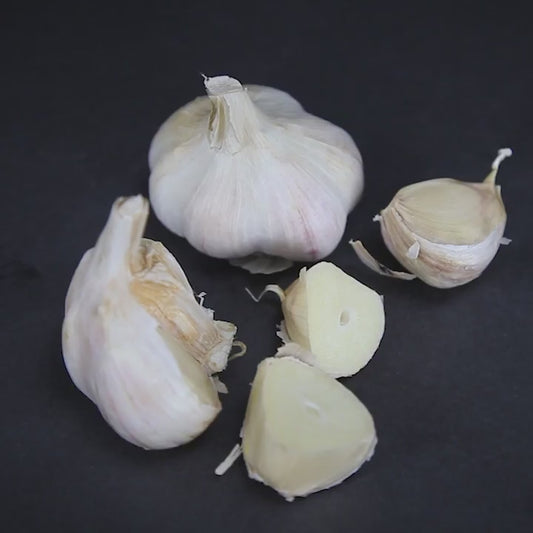
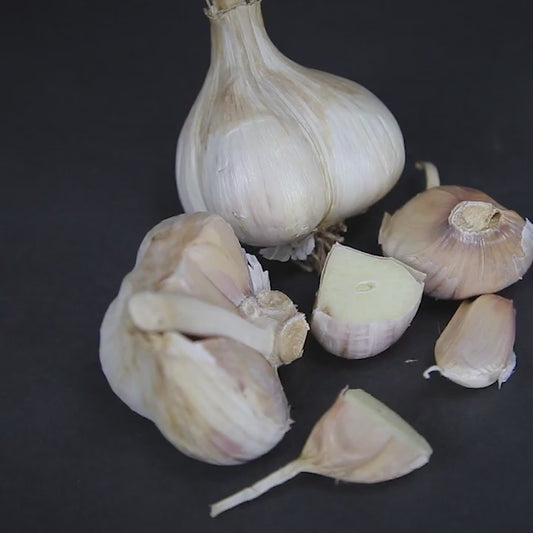
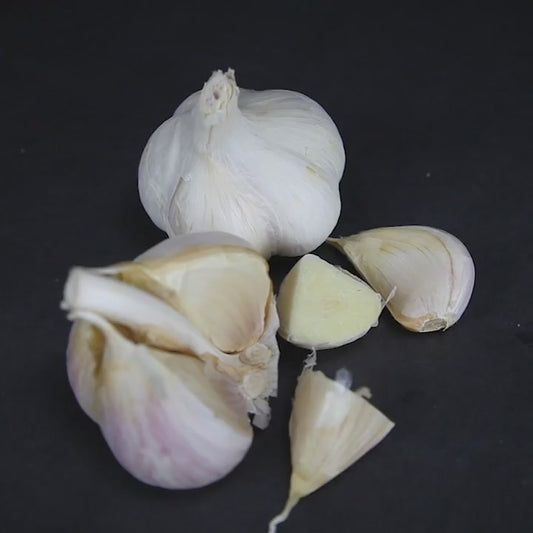
Knowing how to plant garlic from a bulb starts with separating the cloves shortly before planting. Keep their papery skins intact.
3. Plant at the Right Time
Fall planting gives roots time to form before strong spring growth. In many regions, garlic planted in the fall also gets the cold exposure needed for normal bulb development.
Choose dates using local Extension advice. Cold regions and mild winter gardens need different schedules. Our fall timing guide explains these differences.
Spring planting can work, but often yields smaller bulbs. Garlic growing time varies; many fall crops take about eight to nine months.

4. Give Each Clove Enough Space
Plant each garlic clove with its pointed end up and root end down. About six inches between cloves is a starting point for larger bulbs.
Depth guidance varies by climate. Minnesota Extension places the clove base two to three inches deep. Follow local advice, and check whether measurements refer to the base or soil above the tip.
Review our depth and spacing guide before you plant your garlic.
5. Prepare a Sunny, Well-Drained Bed
Choose full sun and soil that drains well. Raised beds can help where water collects. Mix in mature compost as needed, but do not assume more is always better.
Use soil testing to check pH and nutrients. A pH near 6.0–7.0 suits garlic. Add lime only if test results call for it.
Plan garlic rotation planting with crops outside the onion family. Rotation can reduce some problems, but it cannot clear every soil disease.
6. Feed Early Growth Wisely
Garlic fertilizer requirements depend on soil fertility and earlier compost use. Nitrogen supports leaves, which help build bulbs. Extra nitrogen late in growth can delay bulb development.
If you wonder what fertilizer for garlic will help, start with a soil test. Blood meal is one organic fertilizer for garlic that supplies nitrogen, when needed. Follow label rates.
Choose planting supplies based on a clear need rather than adding several feeds at once.

7. Keep Moisture Steady and Weeds Down
Garlic plants have shallow roots and compete poorly with weeds. Pull weeds while small.
Mulch helps hold moisture and limit weeds. In cold climates, straw also protects beds from winter temperature swings. Adjust thick mulch in spring if it blocks shoots.
Water when the root area starts drying. Count rainfall, and avoid soggy soil. Reduce irrigation as bulbs near maturity; local guidance often advises stopping about two weeks before harvest.
8. Remove Hardneck Scapes
A garlic scape is the flower stalk that grows from hardneck plants. Cut it once it starts curling, without removing leaves. This can help direct growth toward the bulb.
Tender scapes are edible. Chop them into stir fries or blend them into pesto.
9. Harvest Before Bulbs Split
Good harvest timing protects both size and storage life. Start checking bulbs when lower leaves brown but several upper leaves remain green.
Lift a sample. Look for full cloves inside intact wrappers. Harvesting too early limits size; waiting too long can split wrappers.
Loosen soil with a fork and lift gently. Cure bulbs in shade with good airflow until necks and wrappers dry. Our garlic growing guide covers aftercare.
Conclusion
Growing giant garlic takes steady care through the growing season. Record spacing, feeding, and results to learn how to get bigger garlic bulbs in your own garden.
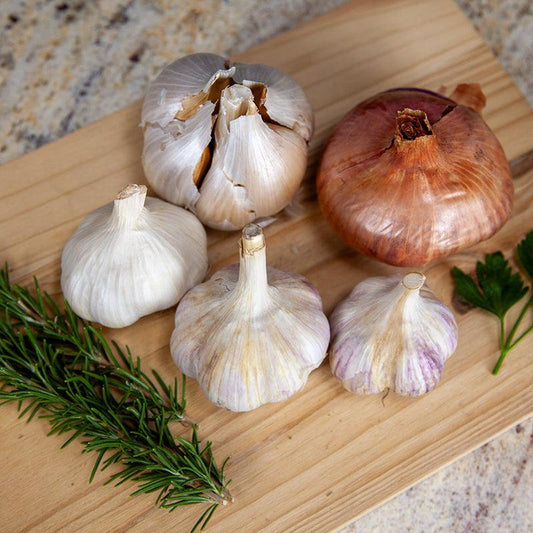
Use our beginner tips when planning, and compare garlic and shallot planting stock for your next crop.






50 comments
Is it okay to cover my garlic with hay. We have a farm and I have plenty of it.
Azam, I personally do not like using wheat straw since you usually get lots of wheat growing from it. I like using rice straw since you do not get seeds growing. I have never heard anything about wheat straw attracting termites.
Nic to have a comment box that works without logging in. My question is that farmers say wheat straw mulch attracts termites which converts the solution into a problem. Whats your take on this?
A note on the scapes that I learned by accident. If you let them come to a head about a nickle to a quarter in diameter when you pick them, you will be rewarded in January with fresh rice sized garlic seeds to eat. Just harvest them as other ones and store them in a bag in the refrigerator. The little bulbs will continue to be fed by the neck of the scape.
This is absolutely the best set of instructions for growing garlic I have ever read: very to the point with “do’s” and “don’t’s”. Thank you.