Choosing the Right Drip Irrigation System for Your Garden

Finding the right irrigation system is one of the smartest investments you can make for your garden, orchard, vineyard, or farm. Whether you're growing vegetables in raised beds, caring for fruit trees, or maintaining rows of crops, the right watering solution helps conserve water, reduce weeds, and encourage healthier plants. The journey begins by understanding your growing space, soil type, and the unique watering needs of your plants.
From drip irrigation systems and drip tape for vegetable gardens and row crops, to emitterline for orchards, vineyards, and landscapes, and soaker hoses for flower beds and foundation plantings, there's an efficient solution for every growing space. Choosing the right irrigation products not only saves time and water but also delivers moisture directly to plant roots where it's needed most.
Whether you're installing your first irrigation system or expanding an existing one, GrowOrganic.com offers the irrigation supplies, expert guidance, and trusted products you need to build a water-wise, productive garden that thrives season after season.
There are quite a few things to consider before choosing the type of irrigation you want to use. Drip systems can be made up of drip tape, emitterline, soaker hose, drip emitters, or a combination of several parts. The right choice depends on your layout, water pressure, soil type, slope, and what you are growing.

Drip irrigation is popular because it delivers water slowly and directly to the root zone. Compared with overhead sprinklers, it reduces evaporation, limits runoff, and helps keep plant leaves drier, which can reduce disease pressure. Grow Organic's article on Drip Irrigation Systems Instead of Sprinklers for Water Conservation explains how drip systems can help conserve water while supporting healthy plant growth.
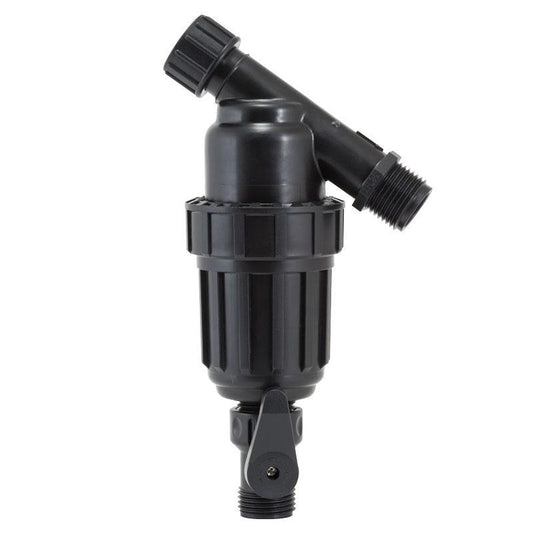
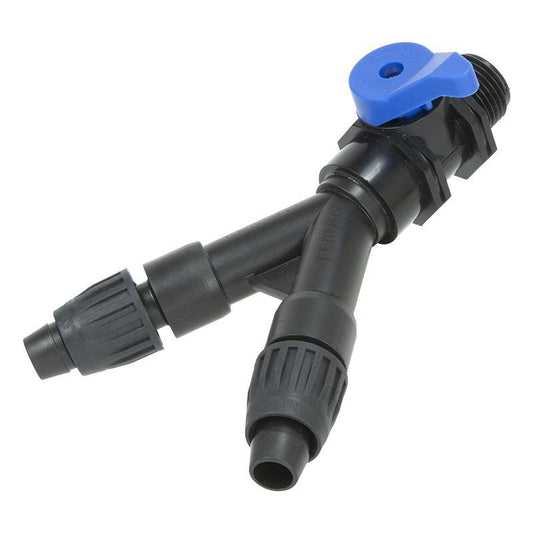
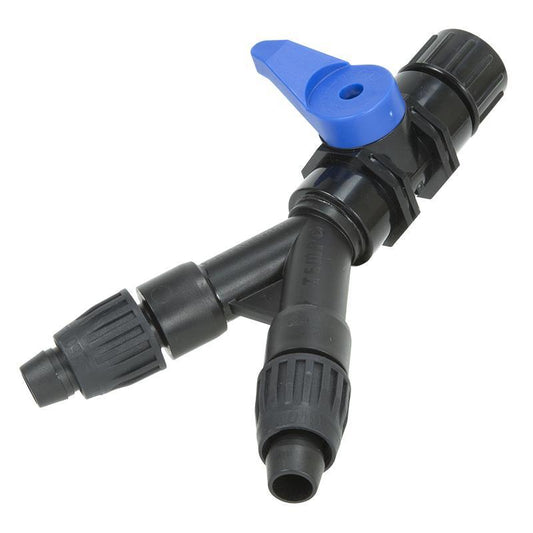
Before choosing tubing or emitters, start at the faucet. A complete system usually needs a Y connector, timer, vacuum breaker, filter, pressure regulator, and mainline tubing. Grow Organic's Drip Irrigation Part 1: Planning and Set-Up at the Faucet is a helpful companion if you are building your first system. A 3/4" Flushable Y Filter is especially useful because it removes sediment before it can clog emitters, drip tape, or soaker hose.
For straight, flat vegetable rows, drip tape is usually the best fit. It lays neatly beside crops like tomatoes, peppers, lettuce, beans, and greens, delivering even moisture along the row. Drip tape works best at low pressure, so most home gardeners should use a 10 PSI Pressure Regulator to prevent bursting, leaking, or uneven watering. Grow Organic's Drip Tape Irrigation Part 3 recommends drip tape for efficient row watering and explains how to lay it with the emitter holes facing up, flush the system, and close the ends properly.

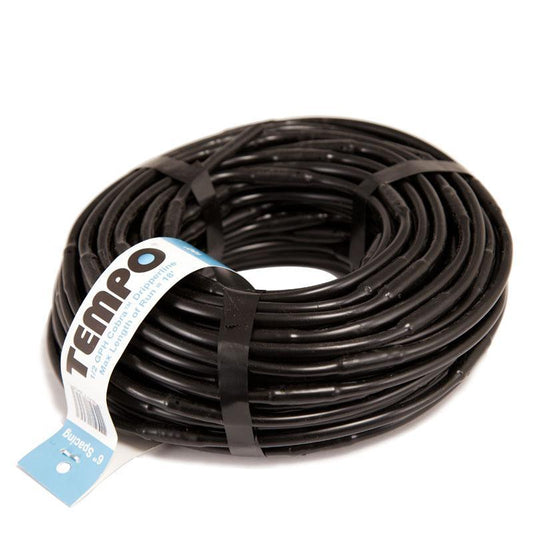
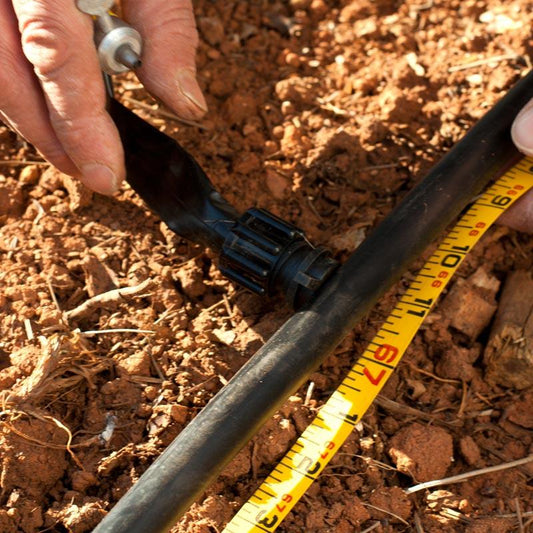
If your garden is not arranged in straight lines, emitterline may be easier to use. Emitterline has built-in emitters spaced along flexible tubing, which makes it useful for curving around shrubs, perennials, and uneven planting beds. The 1/4" Emitterline with 6" Spacing is designed for pressure-regulated systems and works well where a meandering line is more efficient than straight drip tape. It can be used around landscape plants, perennial beds, and tighter spaces where individual emitters would take longer to install.

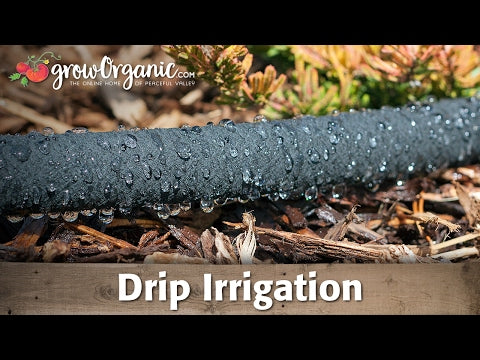
For landscape beds, orchard borders, raised beds, and dense plantings, soaker hose is another simple option. A 1/2" Soaker Hose slowly weeps water along its entire length and can be placed around trees, shrubs, flowers, and vegetables. It is best used without sharp bends and should be paired with a regulator and filter. Grow Organic's guide to water pressure and water flow issues notes that soaker hose performs best at lower pressure, around 10-12 PSI, while poly tubing with emitters often works closer to 25-30 PSI.
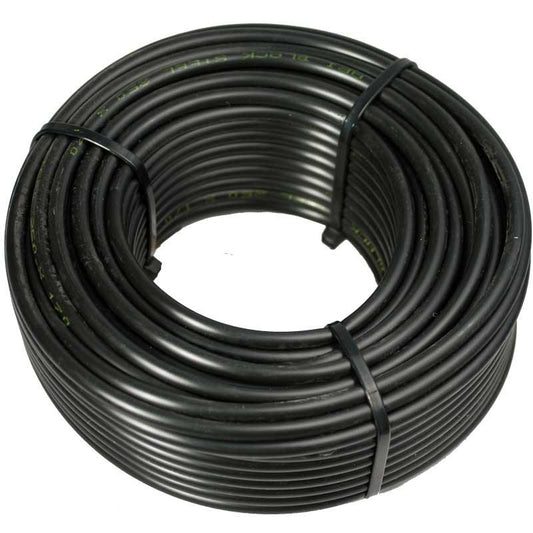
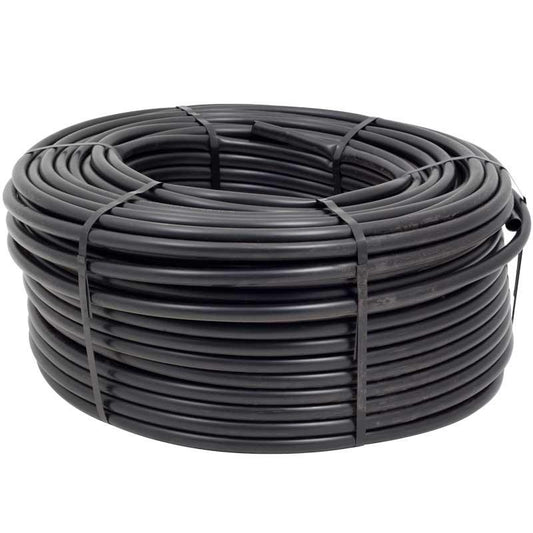
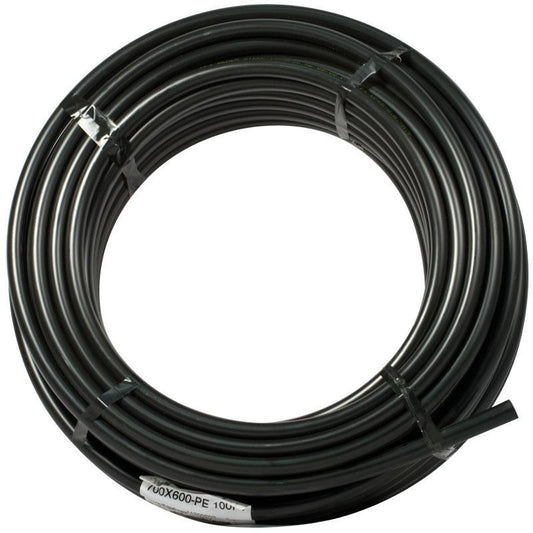
Poly tubing is the backbone of many drip systems. Use 1/2" Poly Tubing to move water from the faucet area to the garden, then connect drip tape, emitterline, soaker hose, sprayers, or individual emitters from that mainline. Poly tubing is a good choice when you want a customizable setup for several different plantings. Grow Organic's Drip Irrigation Part 2 explains how poly tubing can support emitters, sprayers, and other parts for more precise watering.
If your property has a slope, pressure management matters even more. Water naturally flows faster downhill, which can leave the top of a line dry and the bottom overwatered. In that case, use shorter zones, install pressure regulators where needed, and consider emitterline or pressure-compensating emitters for more consistent output. Grow Organic's article on solving low pressure drip irrigation problems suggests checking for leaks, cleaning filters, shortening long runs, and dividing the system into zones when pressure is uneven.
Raised beds are another common place to use drip irrigation. A simple raised bed system might include a timer at the faucet, 1/2" poly tubing as the mainline, and either drip tape for straight crop rows or emitterline for mixed plantings. Grow Organic's Easy Drip Irrigation for Raised Beds recommends using a timer, filter, regulator, and tubing to keep raised beds consistently watered while reducing daily hand watering.
Container gardens can also benefit from drip irrigation. Herbs, patio vegetables, and potted flowers dry out quickly, especially in warm weather. For containers, run poly tubing behind the pots and install drip emitters into each pot, using one or more emitters depending on container size. Grow Organic's Herb Container Gardening with Drip Irrigation is a useful reference for watering herbs and edible containers efficiently.
In the end, the best drip irrigation system is the one that matches your garden. Use drip tape for straight vegetable rows, emitterline for curved beds and mixed plantings, soaker hose for simple low-pressure watering, and drip emitters for containers or individual plants. Add a filter to prevent clogs, a pressure regulator to protect your system, and poly tubing to deliver water where it needs to go. With the right setup, drip irrigation saves water, reduces weeds, supports healthier roots, and makes everyday garden care much easier.
Choose the Watering Method Before Choosing Parts
Start with the planting layout, available pressure and flow, soil wetting pattern, maintenance requirements, and the amount of direct observation the garden needs. The most automated option is not automatically the best option.
| Garden situation | Useful starting method | Next destination |
|---|---|---|
| Straight vegetable rows | Drip tape or emitterline, depending on spacing, pressure, reuse goals, and soil wetting pattern. | Drip Tape & Fittings |
| Individual shrubs, trees, or containers | Individual emitters or adjustable outlets sized to the root zone. | Emitters |
| Curved or closely planted beds | Emitterline, soaker hose, or micro-sprayers after checking pressure, slope, and coverage. | Emitterline & Fittings |
| Seedbeds, lawns, or broad coverage | Sprinklers or micro-sprayers when uniform surface coverage is needed. | Sprinklers & Sprayers |
| Small mixed plantings and new transplants | Hand watering may provide the observation and flexibility needed. | Compare Watering Methods |
Build a Complete Irrigation Path
- Plan the faucet assembly and drip layout.
- Select filtration and prevent clogs.
- Choose and program a timer only after the zones are defined.
- Set duration and frequency by checking the soil and root zone.
- Maintain, repair, and winterize the system.
Shop the full Irrigation & Watering collection or browse Drip-Irrigation Resources.