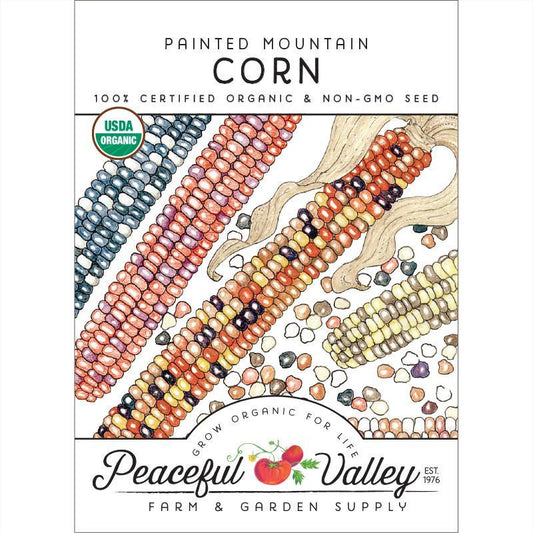
Different Color Corn Explained: Why Corn Comes in Purple, Blue, and Rainbow Shades
Corn is often pictured as yellow or white corn on the cob, but gardeners know that corn colors go far beyond that. From deep blue and purple red kernels to rainbow corn that looks like stained glass, colorful maize has a long history and real uses in the kitchen and garden. Understanding different color corn helps home gardeners choose the right type of corn to grow and enjoy.
This article explains where colored corn comes from, what makes corn kernels change color, and how purple corn, blue corn, and rainbow corns fit into today’s gardens.
Colorful Corn Varieties You Can Grow
Rainbow & Multi-Colored Corn
These varieties are known for their vibrant, jewel-toned kernels and are typically grown as ornamental or flint corn. While not sweet, they are edible when fully dried and ground.
- Glass Gem Corn Seeds (Organic) – A classic rainbow flint corn famous for translucent, jewel-like kernels in pink, blue, green, and purple shades.
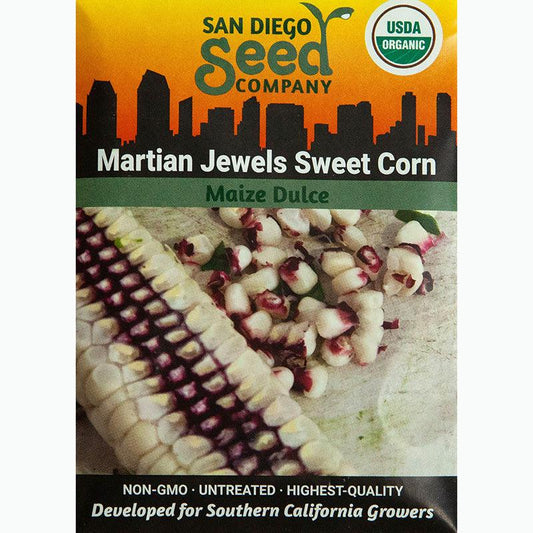
- Organic Martian Jewels Corn Seeds – Produces bright, multi-colored ears ideal for decoration or grinding into flour.
- Who Gets Kissed Corn Seeds (Organic) – An ornamental-style Indian corn with bold, mixed coloration.
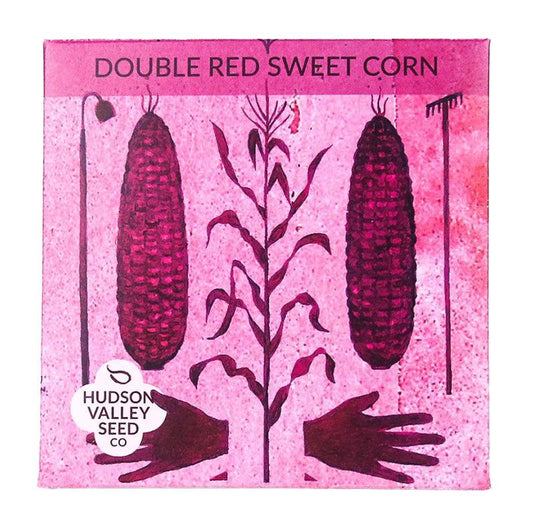
- Double Red Corn Art Pack (Organic) – Rich red kernels, excellent for decorative displays or dry use.
Popcorn & Dark-Kernel Types
Colorful popcorn varieties offer striking kernel colors that dry well and pop into white or lightly tinted popcorn.
- Dakota Black Popcorn Corn – Nearly black kernels that pop bright white.
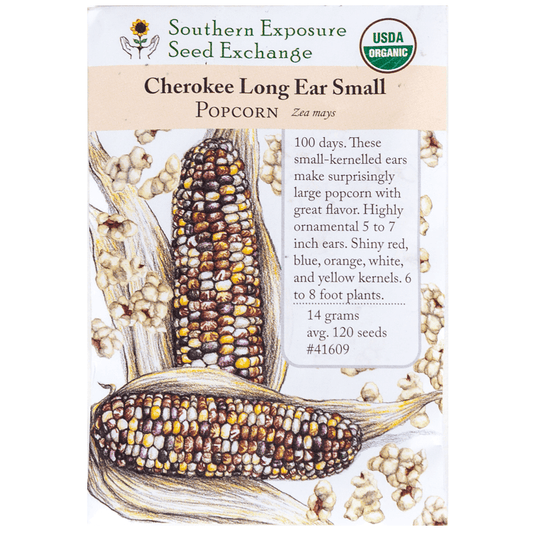
- Cherokee Long Ear Popcorn Corn (Organic) – A traditional, colorful popcorn variety with strong ornamental appeal.

Why Corn Comes in Different Colors
Corn coloration is controlled by genetics and pigments stored in the corn kernel. These pigments include anthocyanins and carotenoids, which create blue, purple, red, and yellow shades. Corn colors developed over thousands of years as Native American farmers selected seeds for flavor, storage, and cultural use.
Long before modern breeding, colorful corn was grown across the southwestern United States and other regions of the Americas. Many heirloom variety seeds still carry these traits today. While online sources often summarize corn history, gardeners see these differences firsthand when ears of corn mature in the field.
Purple Corn and Its Uses
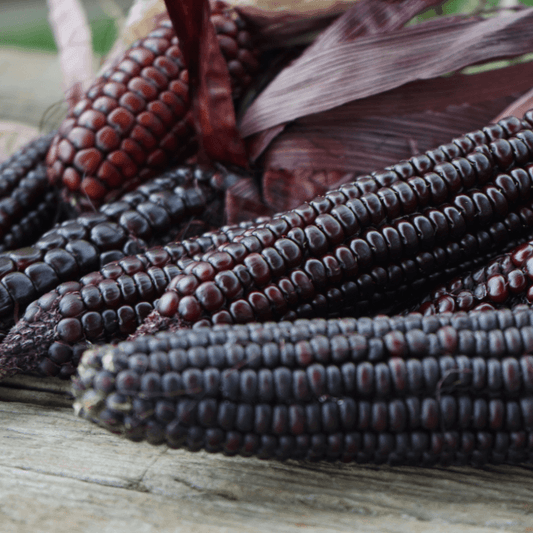
Purple corn is rich in anthocyanins, the same compounds found in blueberries. The kernels often appear dark purple to nearly black when dry. This type of corn is usually classified as flour corn or field corn, rather than sweet corn.
Purple corn is commonly used for corn product processing such as ground flour, baked goods, and traditional drinks. It is not typically eaten fresh off the cob. Gardeners growing heirloom variety corn like Painted Mountain or other purple red types will notice that kernels deepen in color as they dry.
What Is Blue Corn?
What is blue corn? Blue corn contains anthocyanins like purple corn, but in lower amounts, giving kernels a deep blue tone rather than black. Blue corn has been grown for centuries by Native American communities and remains popular today.
Blue corn tortillas are a well-known use, valued for their earthy flavor and dense texture. Blue corn is also used in chips and other baked goods. Like purple corn, it is usually a flour corn or field corn, not a sweet corn variety.

Rainbow Corn and Glass Gem Corn
Rainbow corn is often what people mean when they talk about colorful corn. Each ear may include pink, purple, blue, yellow, and green kernels all together. Glass Gem corn is the most famous example, known for its jewel-like appearance.
Rainbow corns are typically grown as Indian corn or ornamental corn, though they are edible when fully dried and ground. Many gardeners grow them for decoration, seed saving, or educational value. These types of corn are excellent for teaching about corn kernel genetics and pollination.
Types of Corn and Their Colors
Understanding types of corn helps gardeners decide how to use their harvest:
- Sweet corn seeds produce tender kernels meant for fresh eating. Most are yellow or white corn, though some sweet corn varieties show pale color variation.
- Flour corn includes blue corn and purple corn, best for grinding.
- Field corn is often used for animal feed and processed foods.
- Popcorn varieties can be yellow, white, or even red.
- Indian corn includes many colorful corn types grown for decoration.
Choosing the right seed matters. Resources like our corn seeds collection and guides on choosing the right corn varieties help gardeners match color with use.

Growing Colorful Corn Successfully
Growing colorful maize follows the same basics as growing standard corn. Corn needs full sun, fertile soil, and block planting for good pollination. Poor pollination can cause uneven kernel color and gaps on ears of corn.
Gardeners with limited space can still grow colorful corn by following tips for growing corn in small spaces or using the Three Sisters companion planting method. Color does not affect how corn grows, but isolation matters. Different types of corn should be separated to prevent cross-pollination if you want true seed color.
Corn Color and the Kitchen
Colored corn is used differently than yellow or white corn. Blue corn and purple corn shine in baked goods and traditional dishes. Rainbow corn is often dried and displayed, though it can also be ground into flour. Sweet corn varieties remain the best choice for fresh eating.
If you want inspiration beyond the garden, learning how to grow sweet corn, popcorn, or dry corn helps connect color with harvest goals.
Conclusion
Corn colors reflect thousands of years of selection, culture, and adaptation. From blue corn used in tortillas to rainbow corn grown for beauty, colored corn offers gardeners more than just visual appeal.
By choosing the right type of corn and growing it with care, home gardeners can enjoy vibrant harvests that tell a deeper story than yellow kernels alone.