How to Grow Norland Red Potatoes
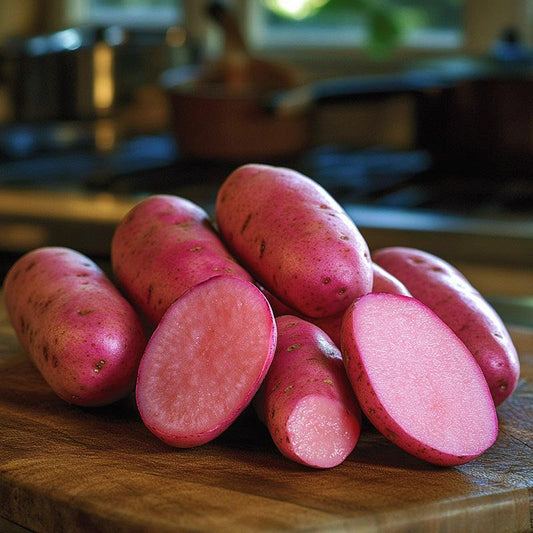
Norland Red is an early-season potato valued for thin red skin, shallow eyes, smooth texture, and light-yellow to white flesh. The current Organic Norland Red Seed Potato listing identifies it as an early variety at 65+ days. Weather, planting date, and growing conditions can shift the actual harvest date, so use plant and skin condition—not the calendar alone—to decide when to dig.
Choose a Site and Prepare the Soil
Plant in full sun and loose, well-drained soil. Potatoes grow best in slightly acidic soil; a soil test is the safest way to decide whether amendments are needed. Avoid adding lime without a test, because a higher soil pH can increase common scab risk. Rotate potatoes and other nightshades out of the same bed when practical.
Prepare and Plant Seed Potatoes
Plant certified seed potatoes after the danger of hard frost has passed and the soil is workable. Small seed potatoes can be planted whole. Cut larger tubers into pieces with at least one sound eye per piece, then allow cut surfaces to dry before planting. Set pieces about 3–4 inches deep and roughly 10–12 inches apart, with rows about 30–36 inches apart.
Water, Feed, and Hill
Keep soil evenly moist, especially from flowering through tuber bulking, but do not leave roots waterlogged. Irregular watering can contribute to misshapen or cracked tubers. Base fertilizer choices on a soil test and product directions; excess nitrogen can favor vines over tubers.
When stems are about 6–8 inches tall, pull several inches of soil or clean mulch around them, leaving the upper leaves exposed. Repeat as plants grow. Hilling protects developing tubers from light, which can turn them green, but it does not create unlimited layers of potatoes.
Growing Norland Red in Containers
Use a large container or grow bag with drainage holes and a loose potting mix. Give each seed piece enough room rather than crowding the container. Container soil dries faster than garden soil, so check moisture frequently while avoiding saturation. Add mix around stems as they grow to keep tubers covered.
Flowers, Pests, and Disease
Plants may flower, but flowering varies and is not required for a crop. Scout leaves regularly for chewing insects, yellowing, spots, or rapid collapse. Diagnose the cause before treating: drought, excess water, nutrient problems, insects, and diseases can produce similar symptoms. Norland Red is listed with moderate resistance to common scab, not immunity.
Harvest and Storage
For tender new potatoes, carefully test-dig after plants have flowered or begun to decline. For mature potatoes with better storage potential, wait for vines to yellow and die back, then allow skins to set before digging. Cure sound, mature tubers in darkness with good ventilation at roughly 50–60°F and high humidity for about 7–14 days. Store them dark, humid, and well ventilated at about 40–46°F; check regularly and remove damaged tubers.
For detailed readiness signs, see the Norland Red maturity and harvest guide. To compare it with another red-skinned variety, use the Norland Red vs. Red Pontiac guide.
Norland Red Growing FAQs
Is the variety called Norland Red or Red Norland?
The store product is named Norland Red. “Red Norland” is also widely used for the same variety, so both names appear in gardening searches.
How long does Norland Red take to mature?
The current product listing classifies it as early season at 65+ days. Treat that as a planning estimate and confirm maturity from vine decline and skin set.
Are Norland Red potatoes determinate?
Determinate and indeterminate labels are inconsistent for potatoes and are not a reliable basis for planting depth or hilling. Follow the variety’s maturity class and standard potato culture instead.
Related guidance: Return to the complete potato growing guide or browse seed potato varieties.
Distinctive Norland Red Traits
Norland Red was developed at North Dakota State University. The current product is described as an early-season variety with smooth, thin red skin, shallow eyes, and light-yellow to white flesh. It is also listed as a good keeper with moderate resistance to common scab; resistance reduces risk but does not provide immunity.
Use the seed potato selection guide to compare Norland Red with later varieties.