Introduction
Choosing the right clover depends on your goals, climate, and how long you want it to remain established. Crimson clover and red clover are both legumes, but they differ in life cycle, growth habit, winter behavior, and use in cover crop systems.
When comparing crimson clover vs. red clover, the right choice depends on your planting window, soil conditions, and management plan. Across the United States and North America, different clover types are used for cover crops, soil improvement, forage, and pollinator plantings.

What Is the Difference Between Red Clover and Crimson Clover?
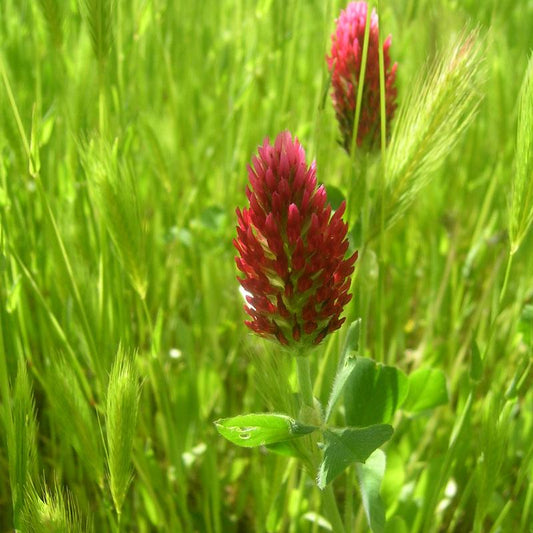
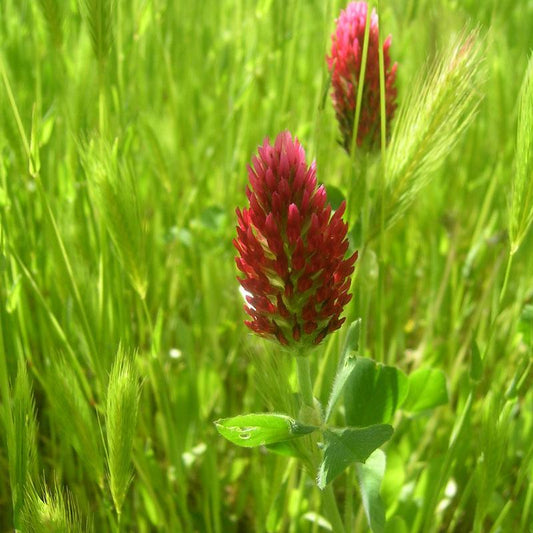
Crimson clover (Trifolium incarnatum) is an annual clover commonly used as a cool-season cover crop. It grows quickly, produces tall flower heads, and is often planted in early fall for spring growth.
Red clover (Trifolium pratense) is usually a short-lived perennial or biennial. It can remain productive for more than one season, making it useful where longer cover is desired.
So, is crimson clover the same as red clover? No. They belong to the same plant family but have different growth patterns.
The main difference between red clover and crimson clover is their life cycle. Crimson clover completes its growth cycle in one season, while red clover can continue growing after its first year.
When looking at red clover vs crimson clover, consider whether you want a temporary planting or a crop that can remain established longer.
Red clover vs. crimson clover: quick comparison
| Characteristic | Crimson clover | Red clover |
|---|---|---|
| Typical life cycle | Annual | Biennial or short-lived perennial |
| Common cover-crop role | Cool-season annual cover, early bloom, and mixtures | Longer-duration cover, overseeding, and rotations where persistence is useful |
| Growth pattern | Upright annual growth with elongated crimson flower heads | Branching growth with rounded pink-to-red flower heads |
| Winter behavior | Survival varies with cultivar, establishment, and local winter conditions | Generally more persistent, but winter survival still depends on variety and site |
| Termination | Plan before mature seed if volunteers are not wanted | Allow for possible crown or root regrowth; the method must match the rotation |
| Best reason to choose it | A defined annual window and earlier seasonal growth or bloom | A longer cover period or a system that benefits from short-lived perennial growth |
What Does Crimson Clover Look Like?
Crimson clover has upright growth with long, narrow flower heads that create a bright red display. It is sometimes called scarlet clover because of its deep crimson blooms.
This clover with red flowers is popular because it adds seasonal color while serving as a useful cover crop. As a crimson clover ground cover, it can help protect bare soil during part of the year, although it should still be managed based on the planting goal.
Among the different clover types, crimson clover is one of the most recognizable because of its tall flower spikes and annual growth habit.

What Is Red Clover?
Red clover (Trifolium pratense) produces rounded pink flowers and has a spreading growth habit compared with crimson clover. It is commonly used in agricultural rotations, gardens, and pollinator plantings.
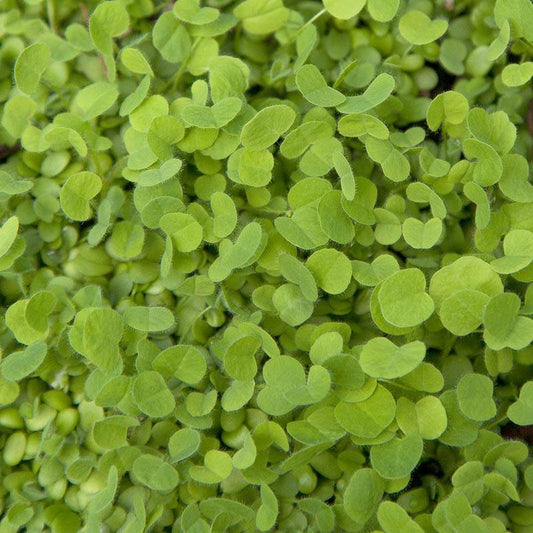
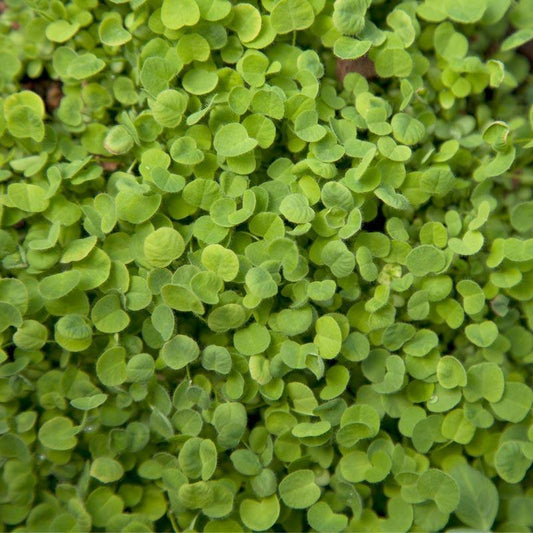
If you are asking what does red clover look like, look for three-part leaves and rounded flower heads held above the foliage.
There are several red clover species and varieties available, with differences in growth speed, persistence, and climate adaptation. Depending on the variety, how tall does red clover grow can range from about 12 inches to over 30 inches.
Nitrogen Fixation and Soil Benefits
Both crimson and red clover are legumes. With the right rhizobia bacteria, they can form root nodules that allow nitrogen fixation. This process helps convert atmospheric nitrogen into forms plants can use.
However, results vary. Healthy nodulation depends on the correct bacteria, soil conditions, and plant growth. A soil test can help determine whether your planting area needs additional amendments.
Learn more about legume benefits in our guide on fixing nitrogen in your soil.

Planting and Growing Considerations
Planting clovers begins with choosing a species that matches your site. Soil type, drainage, planting date, and climate all influence establishment.
Before planting, check the recommended seeding rate for your chosen product. Seed yields and plant density can vary depending on seed quality, coating, and whether the clover is being grown for cover, forage, or pollinator use.
Crimson clover is often planted in early fall where winters allow establishment. Red clover may be selected when a longer-lasting stand is preferred.
Both plants prefer drained soils and perform best when planted according to regional recommendations.
Which Clover Is Best for Bees?
Both crimson and red clover can attract bees when flowering. The question of the best clover or bees depends on bloom timing, climate, and what other flowers are available nearby.
Crimson clover may provide an earlier nectar source in some regions, while red clover can offer flowers over a longer period. A mixture of flowering plants usually provides more consistent resources for pollinators.
Explore additional pollinator-friendly clover options and compare different planting choices before selecting seed.
Managing and Terminating Clover
Before planting, decide how you will manage the crop. Crimson clover may be easier to manage because it is annual. Allowing it to mature fully can increase seed production and volunteer plants.
Red clover may require more planning because it can regrow after cutting. Termination timing depends on the next crop, weather, and equipment.
Read when to cut down your cover crop and turning cover crops into green manure before making a plan.
Conclusion
The choice between red vs crimson clover depends on your garden goals. Crimson clover fits short-term cover needs, while red clover works well when a longer-lasting planting is preferred.
Neither is always the best choice. Consider your climate, soil, planting date, and management plan before selecting seed.