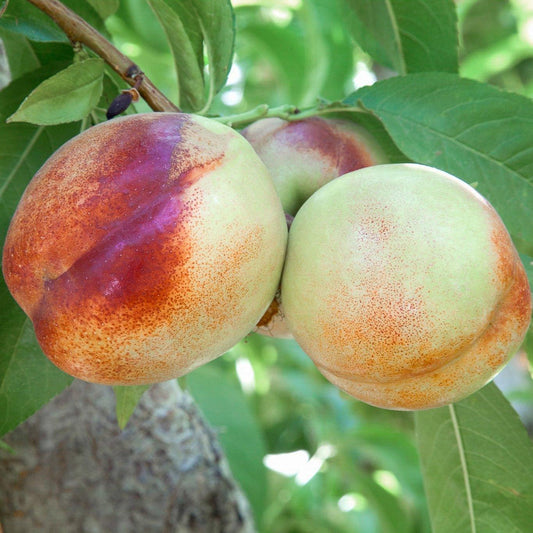
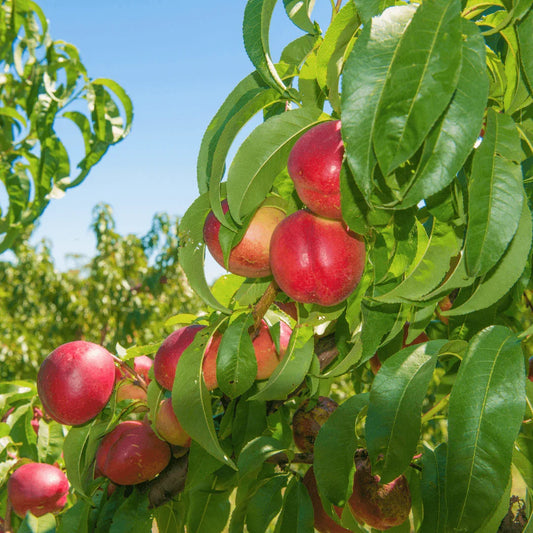
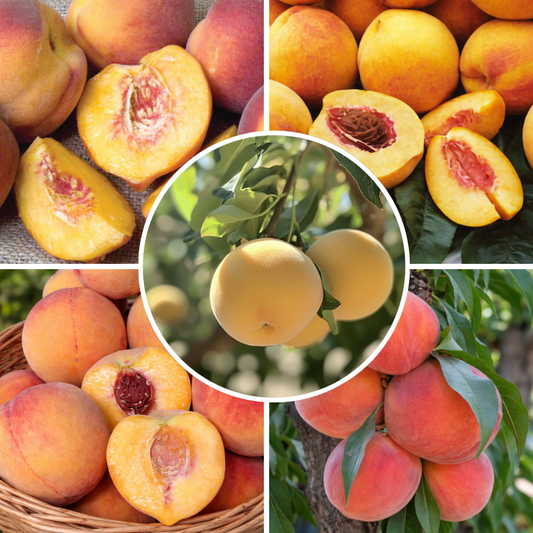
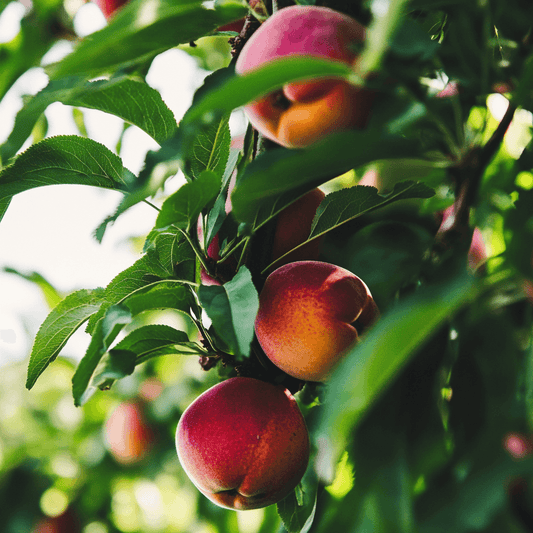
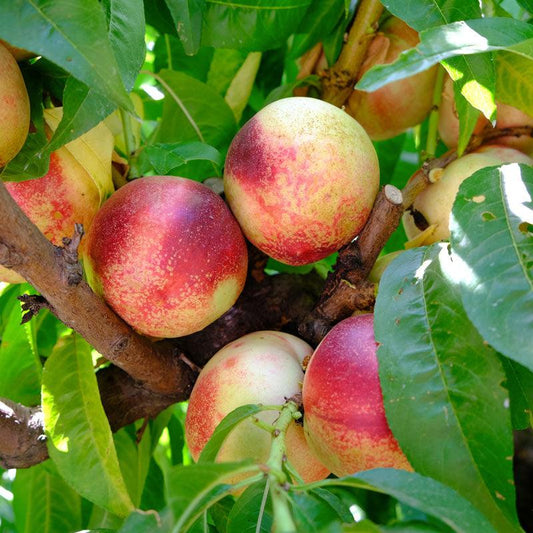
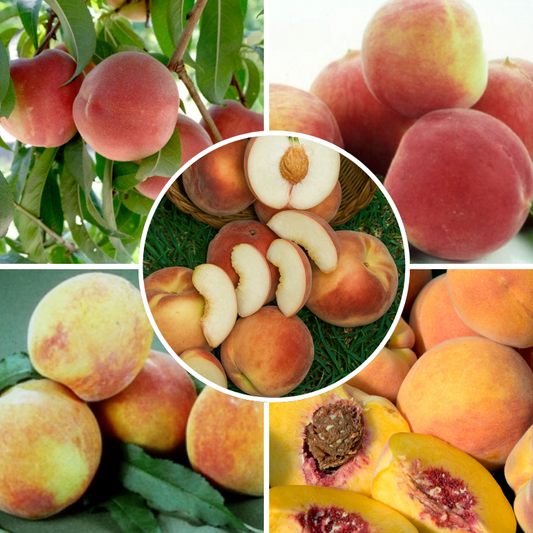
Peaches and nectarines are the same species, Prunus persica. Nectarines carry a genetic trait for smooth skin, while peaches have fuzz. Neither fruit is inherently sweeter, easier to grow, or better for every garden: cultivar, climate fit, harvest stage, rootstock, and intended use matter more than the name alone.

Peach vs. nectarine at a glance
| Trait | Peach | Nectarine |
|---|---|---|
| Skin | Fuzzy | Smooth |
| Flesh colors | Yellow, white, or red-blushed | Yellow, white, or red-blushed |
| Pit types | Freestone, clingstone, or intermediate | Freestone, clingstone, or intermediate |
| Flavor and texture | Ranges from melting and juicy to firm and crisp; the cultivar and ripeness are more predictive than the fruit type. | |
| Tree care | Similar planting, irrigation, pruning, thinning, pollination, and pest-management framework, with cultivar- and site-specific differences. | |

Why nectarines are not peach–plum hybrids
A nectarine is a smooth-skinned form of peach, not a cross between a peach and a plum. The skin trait is inherited, which is why peach seedlings can occasionally produce smooth fruit and nectarine seedlings can vary. A seed-grown tree is genetically different from its parent and should not be expected to reproduce a named peach or nectarine cultivar exactly.
Do peaches and nectarines taste different?
Both groups contain cultivars that are sweet, tart, aromatic, mild, firm, melting, juicy, or crisp. White-fleshed fruit is often described differently from yellow-fleshed fruit, but broad flavor rules have exceptions. Harvest maturity also changes sweetness, acidity, aroma, and texture. Compare the named cultivar’s description and intended use instead of assuming every nectarine is firmer or every peach is juicier.
Choose by cultivar, not fuzz
- Fresh eating: compare flavor, texture, skin preference, and harvest window.
- Canning or cooking: look at flesh firmness, pit type, acidity, and whether the cultivar is recommended for the intended process.
- Extended harvest: combine compatible early-, mid-, and late-season cultivars rather than relying on a single tree.
- Small spaces: verify the exact rootstock, support needs, mature-size range, and pruning commitment.
- Local disease pressure: use cultivar-specific resistance or susceptibility information; “resistant” does not mean immune.
Hardiness zones and chill hours answer different questions
USDA hardiness zones describe average annual extreme minimum winter temperatures. Chill-hour or chill-portion estimates describe the winter cool period needed for normal dormancy release and flowering. A tree can be winter-hardy in a location yet receive insufficient chill, or meet its chill requirement and still be exposed to damaging spring frost. Match the exact cultivar to both factors and review Fruit Tree Chill Hours.
Rootstock and mature tree size
Rootstock can influence vigor, anchorage, precocity, soil adaptation, and support requirements, but mature size also depends on scion vigor, soil, climate, irrigation, crop load, spacing, and pruning or training. “Dwarf,” “semi-dwarf,” and “standard” are categories rather than universal size guarantees. Use the exact tree’s current rootstock information and the fruit-tree rootstock guide.
Pollination and fruit set
Many peach and nectarine cultivars are described as self-fruitful, but that statement must be verified for the exact cultivar. Self-fruitful does not guarantee a crop: bloom damage, poor pollinator activity, tree stress, and unsuitable weather can reduce fruit set. When another cultivar is recommended or required, confirm bloom overlap and compatibility using the current product information and the approved Fruit Tree Characteristics spreadsheet.
Planting and first-year care
Plant bare root peaches and nectarines while dormant, keeping roots protected from drying before planting. Choose full sun and soil with suitable drainage, set the root flare and graft union correctly, water thoroughly after planting, and adjust ongoing irrigation to soil texture, weather, and the developing root zone. Follow Bare Root Tree Care: Receiving, Planting & First-Year Growth.
Pruning, training, and fruit thinning
Peach and nectarine trees fruit primarily on one-year-old wood, so regular renewal pruning is important. The exact cuts depend on tree age, vigor, training system, disease pressure, and climate. Thin excess fruit after natural drop when needed to improve spacing and reduce limb breakage, using cultivar and local guidance rather than a universal calendar. See How to Prune Fruit Trees.
Shared pests and diseases
Peaches and nectarines can be affected by overlapping problems such as peach leaf curl, brown rot, bacterial diseases, borers, scale, mites, and nutrient or water stress. Nectarine skin may make cosmetic blemishes more visible, but susceptibility varies by cultivar and site. Diagnose the cause before treating, and for any pesticide use only a current label that lists the crop, target problem, timing, and application site.

Harvest and storage
Harvest cues vary by cultivar. Look for the characteristic background color, aroma, flavor, and slight softening appropriate to the fruit’s intended use. Firm fruit can finish ripening at room temperature; ripe fruit should generally be cooled promptly. Handle both peaches and nectarines carefully because bruising shortens storage life.
Peach or nectarine selection checklist
- Confirm USDA hardiness and cultivar-specific chill needs.
- Check bloom timing, self-fruitfulness, and any pollinizer requirement.
- Review rootstock, support needs, and realistic mature size.
- Select flesh color, pit type, flavor, texture, and intended use.
- Choose a harvest window that fits the rest of the orchard.
- Account for local frost, heat, humidity, pests, and diseases.
- Recheck the current product page before ordering.
Compare current trees
Browse bare root peach trees and nectarine trees. Availability is seasonal, so use the selection checklist when comparing current cultivars rather than substituting on fruit type alone.