Introduction
Shallots are edible bulbs with papery skin and an onion-like taste. Their flavor often includes a mild hint of garlic. They work well in sauces, roasted dishes, and fresh dressings.
The difference between shallots and onions goes beyond size. Many shallots grow in clusters, while standard bulb onions usually form one main bulb. Understanding both flavor and growth helps you choose the right ingredient or planting stock.

What Is a Shallot Onion?
Most commonly grown shallots belong to Allium cepa, the same species as bulb onions. They are usually placed in its Aggregatum Group, which includes multiplying forms.
So, are shallots onions? Yes, in this botanical sense. However, cooks and seed catalogs use separate names because their size, growth, and kitchen roles differ.
Shallots are related to onion and garlic, but they are not a cross between them. Their bulbs contain fleshy layers. Garlic instead forms distinct cloves with a different structure.
Shallot vs Onion: Appearance
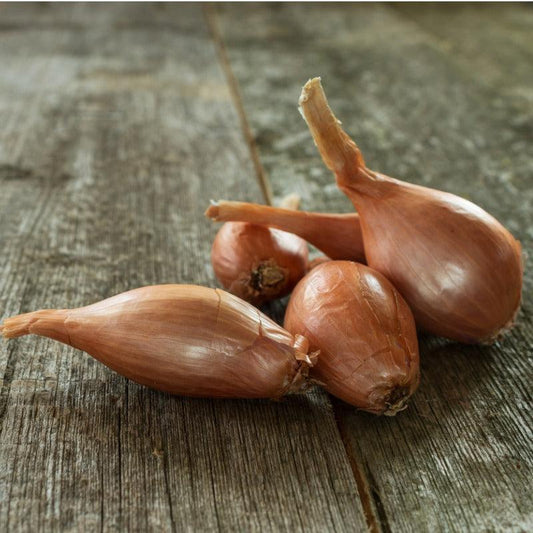
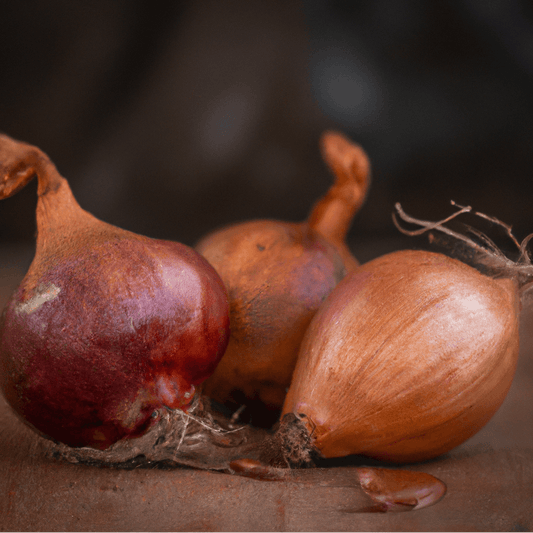
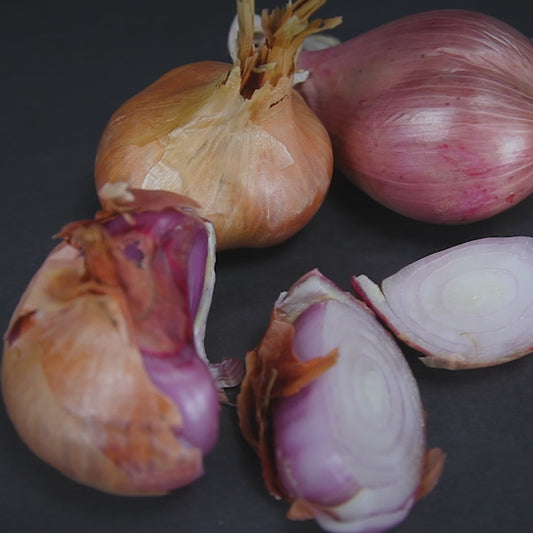
A shallot may look like a small onion with a pointed tip. Shapes range from rounded to long and narrow. Skins can be copper, brown, reddish, or gray, depending on the type.
Inside, the flesh is often pale with purple tones. A bulb may contain more than one section beneath its outer skin.
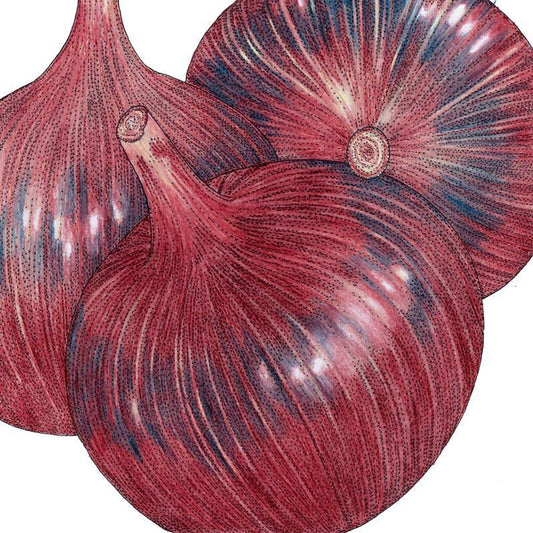
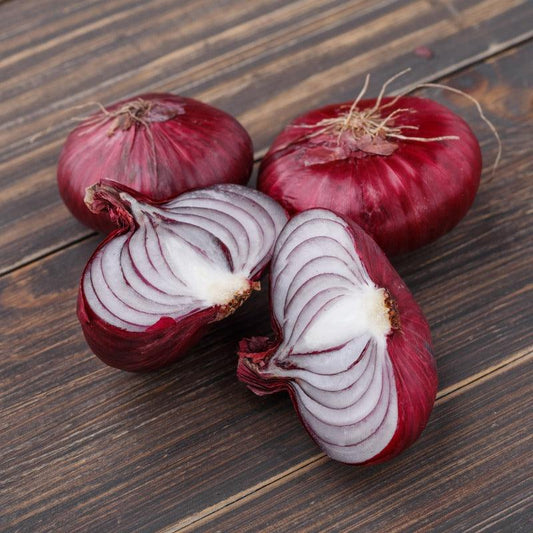
The visible difference between onion and shallot is useful, but color alone is unreliable. A red onion can share similar colors while being much larger and rounder.
Onion vs Shallot Flavor
The flavor of shallots is often described as sweet, slightly garlicky, and less forceful than many storage onions. Raw shallots still have a sharp bite; mild flavor does not mean no pungency.
Cooked shallots become softer and sweeter. Their delicate flavor suits pan sauces and dishes where a strong raw onion taste could dominate.
When comparing shallots versus onions, remember that varieties differ. A sweet onion may taste gentler than a pungent shallot. White onions and yellow types also vary with growing conditions and preparation.
Shallots vs. Onions at a Glance
| Feature | Shallots | Bulb onions |
|---|---|---|
| Growth habit | A planted bulb commonly multiplies into a cluster | Usually grown to form one main bulb |
| Flavor | Often refined, aromatic, and less forceful than many storage onions | Ranges from mild to pungent by type and preparation |
| Kitchen form | Smaller bulbs with onion-like layers, often used minced or whole | Larger bulbs used across raw and cooked preparations |
Choose Shallots or Onions for Cooking
Use finely minced shallot in salad dressing, or cook it gently with butter or oil. Larger pieces can be roasted until tender.
If a recipe calls for shallots, measure the chopped amount when substituting. Whole bulbs vary too much for a fixed one-for-one swap. A yellow onion can work in cooked dishes, though the final taste may change.
Green onions offer another option for fresh garnishes, but their texture and flavor differ. Compare shallots and leeks when choosing among alliums. Leeks, chives, and other relatives each bring distinct qualities.

Growing Shallots at Home
Plant in full sun and well-drained soil. Individual planting bulbs commonly divide into several daughter bulbs. Some varieties can also be grown from true seed.
Spring planting suits many cold regions. Fall planting works where the variety and winter conditions allow it. Keep the root end downward and follow local depth recommendations.
Our shallot planting instructions cover spacing and timing. For watering, feeding, harvest, and curing, use the complete growing guide.
Compare named varieties in our shallot planting stock collection. Check whether each listing offers bulbs or true seeds. Review the garden and storage benefits before choosing your crop.
Buying and Storing Shallots
Choose firm bulbs with dry skins. Avoid soft spots, mold, or wet patches. Store whole, cured bulbs in a cool, dry place with airflow. Keep peeled or cut portions refrigerated.
If shopping notes say “onion shallots” or “shallots vegetable,” check the actual product name. Loose labels do not identify a cultivar or guarantee suitability for planting.
Conclusion
Shallots bring useful flavor and a different growing habit to the onion group. Choose them for dressings, sauces, or a homegrown cluster harvest. Match the variety to your climate, and let the dish guide your kitchen choice.
FAQs About Shallots vs. Onions
What is the difference between an onion and a shallot?
Why do chefs use shallots instead of onions?
What is a substitute for shallots?
What do shallots look like in the grocery store?
Can you eat shallots raw?
Is a shallot an onion?
What’s a shallot grown from seed like?