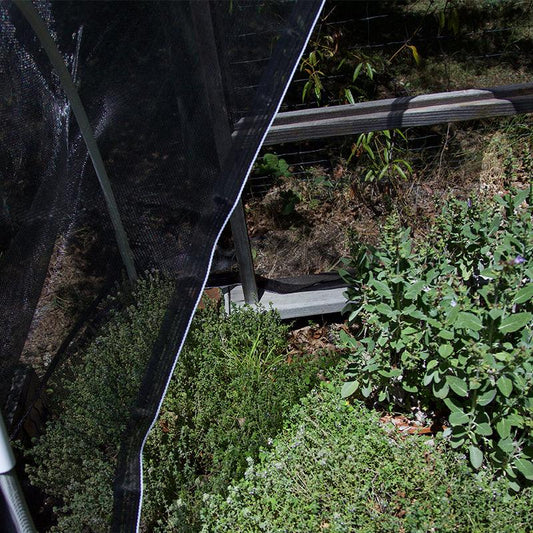
Southwest fall gardens often begin while summer heat is still intense, so starts need a protected environment and a verified receiving bed. Match shade percentage, airflow, anchors, irrigation and hardening steps to the crop and site. Begin with a manageable batch, monitor roots and canopy temperature, and move plants only when the destination can support establishment.
Start with Grow, Rest, or Cover: A Regenerative Plan for Southwest Heat and Monsoon Season when you need the complete summer plan. For closely related decisions, see Spider Mites, Whiteflies, Ants, and Storm-Related Disease in Southwest Gardens.
Separate perennial and infrastructure tracks
| Segment | Seasonal operation | Elevation or exposure effect | Go/no-go gate |
|---|---|---|---|
| Low desert and urban valleys | Low deserts use fall and winter as the main production season | Elevation reverses planting calendars, reduces heat duration, increases frost and snow and changes crop maturity windows; valley bottoms may freeze harder than slopes. | Verify cultivar, structure, forecast and access. |
| High desert and mesas | High deserts require frost-timed short-season plans | Low deserts can produce through winter but still experience freeze events; high deserts have deep freezes and short seasons. Elevation, radiational cooling and exposure make one regional frost calendar unsafe. | Verify cultivar, structure, forecast and access. |
| Mountain-transition towns | Mountain transitions need snow and wind protection | Extreme heat, drought, dust and wind, monsoon downpours, flash flooding, hail, freeze events and wildfire smoke. | Verify cultivar, structure, forecast and access. |
| Monsoon-influenced basins | Monsoon basins need infiltration plus temporary disease vigilance | Irrigation is essential; emitter flow, pulse cycles, water salinity and leaching fraction need observation; caliche and compacted layers impede drainage; rain harvesting must safely route intense flows. | Verify cultivar, structure, forecast and access. |
Low deserts can produce through winter but still experience freeze events; high deserts have deep freezes and short seasons. Elevation, radiational cooling and exposure make one regional frost calendar unsafe. Cultivar-specific hardiness, chill, dormancy and establishment requirements still need direct verification.
Operations checklist
- Check official weather, smoke, fire, flood, wind and access information before work.
- Inspect supports, ties, covers, tools, irrigation and emergency clearances.
- Measure young-perennial root moisture separately from mature plantings.
- Keep mulch and hardware away from trunks and crowns.
- Verify cultivar hardiness, chill, dormancy and shipping requirements.
- Harvest and remove confirmed problem material selectively.
- Leave safe roots or residue protecting open soil.
- Prepare protection or winterization only when the local trigger requires it.
- Clean, repair, reuse or retire infrastructure according to condition.
- Record the operation and the next seasonal task.
Perennial go/no-go decision table
| Operation | Go when... | Wait or limit when... | Verify |
|---|---|---|---|
| Plant or order a perennial | Cultivar, rootstock, chill/hardiness, site and shipping window fit | Destination or establishment window is uncertain | Current cultivar and destination evidence |
| Adjust mulch/root cover | Active roots need protection with trunk/crown clearance | Saturation, rodents, fire placement or bark contact conflicts | Moisture, bark and local rules |
| Install wind/frost/rain protection | Structure, ventilation, load and access are suitable | Material may trap heat, fail in wind/snow or block access | Forecast and structure after installation |
| Prune or sanitize | Objective and diagnosis are clear; plant condition supports the cut | Extreme stress or canopy exposure raises risk | Species-specific guide and plant response |
| Turn over a bed | Harvest, sanitation, cover and next use are coordinated | Work would leave bare unstable soil | Protected surface and labeled handoff |
| Winterize irrigation | Local freeze risk and equipment instructions require it | Active production still needs the zone | System map and post-action test |
Sequence seasonal operations
Protect roots and trunks, manage shade and supports, harvest without overpruning, and begin fall soil/planting work before the seasonal transition arrives.
Cultivar and site decisions must remain specific. A regional label cannot prove hardiness, chill sufficiency, bloom timing or shipping eligibility. Inspect trunks, crowns, roots and attachment points; avoid large stress-inducing changes when the forecast or plant condition argues for waiting.
Extend infrastructure life safely
Clean, dry and service tools according to manufacturer guidance. Inspect fabric, stakes, ties and tubing for ultraviolet damage, abrasion, rot or unsafe load. Reuse sound components and retire those that cannot perform safely. Reuse is not beneficial when material spreads a confirmed problem or fails under wind, snow, crop or water load.
Complete harvest turnover before the next planting
Before removing a crop, decide where usable harvest, seed, healthy residue and confirmed problem material will go. Record the crop family and any pest or disease evidence. Cap or move irrigation only after the next use of the bed is decided. Leave soil protected, paths stable and the destination for starts or dormant material clearly labeled so the next task can begin without reconstructing the season.
Protect young perennials as their own hydrozone
Young trees, berries and vines have limited roots and should not inherit a mature planting schedule. Probe the active root area, move emitters outward as roots expand and keep mulch off bark and crowns. Inspect ties, guards and supports for rubbing or constriction. Avoid major canopy changes during environmental stress when they could expose bark or fruit, unless safety or confirmed damage requires work.
Design wind, frost and storm protection for removal
Define the exposure a structure must modify, then check anchors, ventilation, load, plant clearance and worker access. Windbreaks and covers can redirect wind, trap heat or humidity and collect snow or rain. Inspect them during safe conditions after installation. Label reusable parts, repair them and store them dry; retire degraded material before it fails over people or plants.
Use seasonal field triggers
| Trigger | Diagnostic question | Action gate |
|---|---|---|
| Root-zone moisture and crop stress recovery overnight | What changed in plant stress, cultivar window, structure load and access? | Perform the operation only when the go/no-go record passes. |
| Heat advisory, humidity or monsoon forecast | What changed in plant stress, cultivar window, structure load and access? | Perform the operation only when the go/no-go record passes. |
| Remaining days to first frost versus crop maturity | What changed in plant stress, cultivar window, structure load and access? | Perform the operation only when the go/no-go record passes. |
| Harvest completion and open-bed window | What changed in plant stress, cultivar window, structure load and access? | Perform the operation only when the go/no-go record passes. |
| Smoke, storm or irrigation restriction | What changed in plant stress, cultivar window, structure load and access? | Perform the operation only when the go/no-go record passes. |
| Forecast heat, overnight recovery and measured root-zone moisture | What changed in plant stress, cultivar window, structure load and access? | Perform the operation only when the go/no-go record passes. |
Connect each practice to a measurable outcome
| Practice | Intended outcome | Evidence |
|---|---|---|
| Perennial root-zone cover | Higher perennial survival probability | Inspect plant response, structural service life, covered soil and safe access. |
| Structural maintenance that extends tool and support life | Less infrastructure waste | Inspect plant response, structural service life, covered soil and safe access. |
| Selective pruning and sanitation | Safer seasonal turnover | Inspect plant response, structural service life, covered soil and safe access. |
| Postharvest soil cover | Protected soil between crop cycles | Inspect plant response, structural service life, covered soil and safe access. |
| Keep soil shaded | Higher perennial survival probability | Inspect plant response, structural service life, covered soil and safe access. |
These are intended mechanisms, not guaranteed results. A seasonal operation is not successful when it adds plant stress, shortens infrastructure life, blocks access or ignores cultivar and destination limits. Keep a reference or marked observation point where practical.
Local examples
Raising fall starts under shade: Choose shade percentage from the crop’s light requirement and measured exposure, not a default regional number. Hold cloth above the canopy when practical, ventilate, anchor for wind and monitor temperature, moisture and growth. Shade reduces radiation but does not replace root-zone water.
Hardening into the receiving bed: Increase sun, wind and outdoor duration in steps, then transplant when the bed’s wetting pattern and weather window are suitable. Keep a backup batch when heat or storms make establishment uncertain. Remove or adjust temporary shade as plants adapt so it does not unnecessarily limit light or airflow.
For step-by-step help, see Bare Root Tree Care: Receiving, Planting & First-Year Growth and How to Prune Fruit Trees: Timing, Cuts & Training Systems. Choose a method only after confirming that it fits your soil, water, crop stage, weather and fall preparation window.
Continue the regional cycle
Continue planning for this region with fall guidance, winter guidance, and spring guidance.
Compare this season’s assumptions with SoCal guidance, Rockies guidance, and Sacramento-Sierra guidance. Transfer only reasoning that fits local soil, exposure, forecast, water and crop response.
Choose a collection only after the decision
When observations show that equipment or materials could help, compare Plant Support, Sun Shade Cloths and Pruning & Cutting Tools. Verify the selected item’s live availability, instructions, destination eligibility and fit for the measured site. A product should support a diagnosed need; it cannot replace suitable root-zone moisture, safe conditions, sanitation or waiting when those are the correct response.
Specific option to evaluate: For Southwest dry-climate shade infrastructure, the 47% Black Woven Shade Cloth (72" wide, sold by the foot) is appropriate only after the shade percentage, span, wind exposure, and removal plan are defined. Its function is to reduce incoming solar radiation; it can also reduce photosynthesis or airflow if placed too densely or too close to foliage. Size the order for the 72-inch fabric width and required length, support it above the canopy where practical, tension it on a structure that can carry the wind load, and keep irrigation and harvest access open. Inspect anchors, abrasion, sagging, canopy temperature, root-zone moisture, and crop response after heat or wind events. Shade cloth is not a substitute for adequate water delivery, and it should be removed, cleaned, stored, reused, or retired when conditions or material integrity no longer justify it.
Record results and next steps
Log cultivar/site fit, plant stress, supports, tools, cover, harvest, winterization and the next seasonal operation. Photographs from repeatable positions make delayed injury or improvement easier to judge. Keep cultivar, label, and locally regulated decisions open until the current source and site conditions are confirmed.
Diagnose the soil constraint
Low organic matter, alkalinity, caliche, salinity/sodicity risk, crusting, sand or heavy clay, and poor biological activity in exposed hot soil. Name whether the problem is physical, chemical or biological, then choose the test that can answer it. Avoid using compost, fertilizer, tillage or leaching as a generic repair for a condition they have not diagnosed.
Audit water from source to root
Irrigation is essential; emitter flow, pulse cycles, water salinity and leaching fraction need observation; caliche and compacted layers impede drainage; rain harvesting must safely route intense flows. Inspect source, filter, pressure, emitters, wetting and outlet during a measured event. Correct distribution or drainage before changing total volume, and record any legal restriction or water-quality limitation.