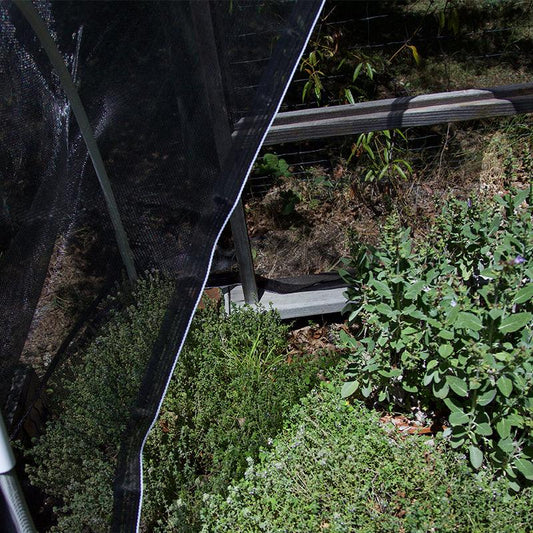
Diagnose Sacramento-Sierra summer damage before treating it: mites, stink bugs and rodents leave different evidence, while heat, drought, smoke, wind, salts and root problems can imitate pests. Inspect plants and the irrigation pattern, confirm the organism or injury, set an acceptable threshold and begin with the least-disruptive response that fits the crop and site.
Use this diagnostic process with the regional summer resilience plan. If symptoms follow an irrigation pattern, use the water guide to find distribution faults. For shade, bed turnover and durable structures, see the operations guide.
Use the pest-versus-stress diagnostic table
| Evidence | Possible cause | Confirm by | First response |
|---|---|---|---|
| Fine stippling, bronzing, webbing | Spider mites | Inspect leaf undersides with magnification for mites/eggs | Correct plant stress, isolate hotspots, preserve predators |
| Pitted or distorted fruit; shield-shaped insects | Stink bugs or similar feeders | Observe live insects and fresh feeding pattern | Hand removal/exclusion where practical; monitor |
| Missing fruit, gnawing, burrows or droppings | Rodents | Map tracks, entry points and timing safely | Sanitation, exclusion and habitat reduction |
| Leaf-edge scorch on exposed side | Heat, wind or salt stress | Compare canopy orientation, roots and irrigation | Correct exposure or water movement |
| Whole-zone wilt despite wet surface | Dry depth, saturated roots or delivery failure | Probe root zone and compare emitters | Repair the water problem |
| Sticky residue with clustered soft insects | Aphids | Inspect new growth and natural enemies | Prune only small hotspots or use a suitable physical control |
| Irregular night chewing near mulch | Earwigs, slugs or other chewers | Scout at the time damage occurs | Reduce shelter at the crop interface; protect seedlings |
| Patchy decline after smoke or outage | Combined environmental stress | Review event and irrigation records | Restore function; delay pesticide decision |
Compare subregional pressure
Sacramento Valley floor: Hot, dusty conditions and stressed plants can favor mite outbreaks. Warm nights can limit recovery. Inspect undersides and compare irrigated zones before blaming one pest.
Delta-influenced gardens: Wind can abrade foliage, dry edges and complicate sprays. Secure exclusion and distinguish windward injury from organisms distributed throughout the canopy.
Lower foothills: Dry vegetation, slopes and nearby habitat can change rodent movement and access. Place exclusion and sanitation within current fire-safe property management.
Higher foothills: Cool nights and shorter runway change tolerance for crop damage. Avoid late broad interventions when harvest timing, frost and label restrictions make another action more appropriate.
Climb the IPM escalation ladder
- Protect people. Follow heat, smoke, fire and pesticide restrictions; postpone nonessential exposure.
- Identify. Inspect live organisms, symptoms, roots and the bed pattern. Photograph and preserve a sample if needed.
- Measure. Count affected plants, new damage and beneficial activity at repeatable points.
- Correct culture. Repair irrigation, reduce dust and heat stress where practical and remove confirmed problem material selectively.
- Exclude or remove. Use barriers, hand removal, traps or sanitation suited to the identified target and crop.
- Support beneficials. Retain flowering and refuge resources that do not create water, pest or fire conflicts.
- Treat only when justified. Select the least-disruptive legal option labeled for the crop and pest; follow every direction.
- Evaluate. Recount new damage and non-target effects; do not assume treatment worked.
Diagnose mites carefully
Spider mites are not insects, and hot dry conditions can coincide with rapid population growth. Stippling alone is insufficient: inspect leaf undersides for mites, eggs, webbing and predators. Compare dusty edge plants with the interior and note irrigation stress.
Do not apply a broad-spectrum product reflexively; it can disrupt natural enemies and may not solve the condition. The established spider-mite guide provides identification and technique depth. Continue scouting after any action.
Separate stink bugs and fruit injury
Look for adults, nymphs, eggs and fresh feeding at times they are active. Fruit distortion can have other causes, so map damage to actual insect presence. Small plantings may support hand removal or exclusion; larger plantings need a threshold based on crop value and damage trend.
Remove nearby weeds only when identification and fire-safe site management support it; sudden habitat disruption can move organisms. Avoid claiming complete prevention.
Manage rodents as a site problem
Reduce fallen fruit, spilled seed, dense shelter at crop edges and easy access to structures. Protect trunks and irrigation without creating a constriction. Traps, baits and exclusion have species, placement, safety and regulatory considerations; verify current local guidance and every label.
Do not describe any control as universally safe for pets, wildlife or people. If identification, legal status or structural entry is uncertain, use qualified local help.
Preserve beneficial organisms
Functional habitat includes seasonally appropriate flowers, water-aware refuge and reduced unnecessary disturbance. It does not require asserting that a plant is native. Check authoritative flora information before any native-status claim.
Purchased beneficial organisms require a correctly identified target, suitable temperature and timing, shipping eligibility and a release environment that supports them. They do not guarantee establishment or control. The established guides explain organic IPM and beneficial-flower planning.
Apply pesticide safeguards
If monitoring justifies a pesticide, confirm the crop, site and target pest are on the current label. Follow rates, protective equipment, reentry and preharvest intervals, temperature and wind restrictions and applicable California registration. Protect blooms, aquatic areas and beneficial exposure as the label directs.
Never use heat-stressed plants as a reason to exceed directions. Test compatibility or sensitivity where the label recommends it. Record product, lot if available, target, weather, treated area and result.
Two local examples
Valley mite suspicion: Eggplant at a dusty edge shows stippling. Magnification finds mites and predators on some leaves; another row is simply dry because end emitters failed. The gardener repairs delivery, reduces dust and treats only if monitored mite damage continues past the chosen threshold.
Foothill rodent pressure: Fruit disappears near a brushy edge and tubing is chewed. The gardener maps entry, removes fallen fruit, protects lines and selects exclusion consistent with fire and wildlife rules rather than applying a garden-wide pesticide.
Choose a pathway after identification
When a verified threshold supports action, compare Organic Pest Control. Where the target and release conditions fit, review Beneficial Insects. If the diagnosis is a disease rather than heat or pests, compare Organic Disease Control only after confirming crop, pathogen and label fit. Recheck live availability and destination eligibility.
Keep a summer scouting record
Use a repeatable scouting route
Walk the same route at a similar time, including hot edges, sheltered interiors, upper and lower slope positions and at least one apparently healthy comparison. Select plants without choosing only the worst symptoms. Inspect new growth, old leaves, both leaf surfaces, stems, fruit and the root-zone pattern.
Count a defined unit: organisms per leaf, damaged plants per row or fresh injuries per fruit sample. Note life stages and natural enemies. Flag hotspots without moving contaminated tools or plant material through clean areas. Revisit soon enough to distinguish old scars from new damage.
Photographs should include a close symptom view and a whole-plant or bed pattern. A leaf image without location and irrigation context can lead to false certainty. When diagnosis remains unclear, seek local Extension or qualified laboratory support before treatment.
Separate common weather patterns
Heat and sun: Damage often concentrates on exposed tissue and follows an extreme event. Previously shaded fruit or bark can scorch after canopy removal. Check orientation and timing.
Wind: Abrasion, torn leaves and edge drying may concentrate on the windward side or where cloth touches plants. Inspect anchors and compare sheltered growth.
Water stress: A whole lateral or slope position can reveal distribution failure. Probe active-root depth. Afternoon wilt with full morning recovery is different from persistent decline, but neither alone sets a watering schedule.
Salts or nutrient imbalance: Marginal burn or stunting can overlap heat and water symptoms. Review soil, water and input history and test appropriately. Do not fertilize from leaf color alone.
Smoke and outage: Direct plant effects may be difficult to isolate, while interrupted irrigation is readily testable. Restore system function safely and document the event before assigning a pest cause.
Set thresholds that match the crop
A threshold describes the point where expected damage, crop value and control cost justify action. It changes with a seedling versus a mature crop, fruit intended for storage versus home use, a young tree versus a disposable annual and the remaining harvest runway. Cosmetic injury need not trigger the same response as growing-point loss.
Write the threshold before applying a product. For example: increasing live mites and new stippling across a defined share of sampled leaves, with inadequate natural-enemy response. Then define the follow-up count. This prevents the mere presence of an organism from becoming a routine spray instruction.
Thresholds should also specify a stop point. If the remaining crop runway is short or plants cannot recover from environmental stress, ending the crop may be less disruptive than repeated treatment.
Keep untreated comparison leaves or plants when practical and safe. They can show whether damage was already slowing, whether weather changed or whether an intervention altered the trend.
Handle sanitation without stripping habitat
Remove badly infested or diseased material when it meaningfully reduces the source and disposal can follow local rules. Clean tools between affected plants when the suspected problem can be mechanically spread. Do not compost material when authoritative guidance says the home process will not manage it.
At the same time, preserve healthy flowering resources and refuge that support beneficials without obstructing access or conflicting with fire-safe placement. IPM requires selective decisions: sanitation is not a command to make the entire site bare.
Record plant and bed, subregion, symptom, organism, counts, new damage, beneficials, root-zone condition, weather, action and follow-up date. Photograph the same leaf position or plot when possible.
The intended outcomes—fewer broad interventions and a more functional predator-prey balance—are not guarantees. An IPM approach is working when decisions follow evidence, exposure is minimized and the next count shows whether the action changed new damage.
Plan for the next season
As crops turn over and pest pressure changes, use the fall guidance, winter guidance, and spring guidance.
If your pest or stress pattern resembles a neighboring climate more closely, compare the Bay-Area guidance, SoCal guidance, and Rockies guidance. Use that information only after confirming the organism, crop, weather, water conditions and local requirements.