Spinach Companion Plants: Good Neighbors, Bad Neighbors, and Why They Matter
Growing spinach is rewarding because it matures quickly and produces nutritious spinach leaves during cool weather. Choosing the right spinach companion plants can help you use space efficiently, support natural pest control, and encourage a healthier vegetable garden.
Companion planting spinach is the practice of growing compatible crops together so they can support one another. A suitable spinach companion plant may help repel pest insects, attract a beneficial insect, or simply thrive under similar growing conditions. Others compete for light, water, or nutrients and may even inhibit the growth of nearby plants.
In this guide, you'll learn about the best companion plants for spinach, the most reliable companions for spinach, and what not to plant with spinach.

Why Companion Planting Matters
Companion planting for spinach takes advantage of the natural relationships between plants. When paired thoughtfully, a companion plant for spinach can:
- Help repel pest insects naturally.
- Improve pest control by supporting populations of beneficial insect species.
- Encourage biodiversity by attracting beneficial insects.
- Make better use of available garden space.
- Contribute to healthier soil over time.
Because spinach has shallow roots and a short growing season, companion planting with spinach works well with many vegetables, herbs, and flowers.
Best Companion Plants for Spinach
There are many excellent choices if you're looking for a reliable spinach companion.
Leafy Greens
Some leafy greens grow well alongside spinach. Lettuce is a great companion because both crops prefer cool temperatures and mature quickly. Swiss chard also grows under similar conditions, although it needs more space due to its larger size. Since the two crops have similar nutrients requirements, proper spacing helps reduce competition.
Root Vegetables
Several root vegetables pair well with spinach because they use different parts of the soil profile. These plants include:
While spinach grows near the surface, these crops develop underground, making efficient use of garden space.
Peas and Beans
Peas are among the best companion plants for spinach. Like other legumes, they fix nitrogen through a partnership with soil bacteria, improving soil fertility over time. Bush beans can also be beneficial, although mature plants should not shade spinach.
Onions, Garlic, and Chives
Members of the onion family make another great companion. Their strong scent may help repel pest insects such as aphids, while chive flowers support attracting beneficial insects that contribute to natural pest control.
Flowers That Support Spinach
Flowering plants can also benefit companion spinach plantings. Calendula, sweet alyssum, and marigolds attract a variety of beneficial insect species, while nasturtiums are commonly used as trap crops because aphids often prefer them over spinach.

Companion Planting With Spinach in Raised Beds
One advantage of companion planting with spinach is making the most of limited space.
In raised beds, try pairing spinach with:
These plants include crops that mature at different rates, helping you harvest continuously while keeping the bed productive.
Because spinach grows quickly, you can often harvest it before larger vegetables need the extra space.
Featured Spinach Seeds from Grow Organic
Starting with quality seed is one of the easiest ways to grow healthy spinach. Grow Organic offers several varieties suited to home gardens and succession planting.
- Beaujolais Spinach Seeds (Organic): A slow-bolting variety that performs well during cool spring and fall weather.
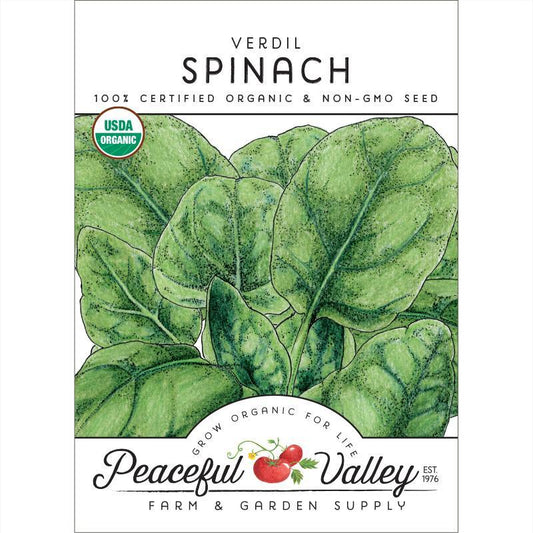
- Verdil Spinach Seeds (Organic): Produces tender, flavorful leaves and is a dependable choice for home gardeners.
- Bloomsdale Spinach Seeds (Organic): A classic heirloom known for its dark green, savoyed leaves.
- Space Spinach Seeds (Organic): Fast growing and ideal for succession planting throughout the cool season.
- Catalina Baby Leaf Spinach Seeds: Perfect for gardeners who enjoy harvesting young, tender leaves.
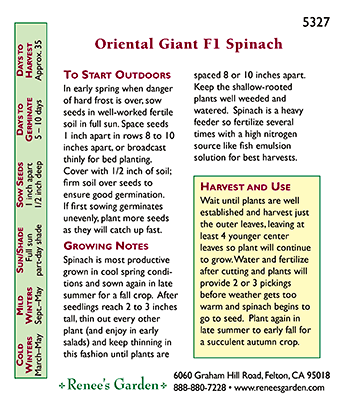
- Oriental Giant Japanese Spinach Seeds: Produces vigorous plants with large, flavorful leaves.
- Malabar Spinach Seeds (Organic): Although not true spinach, Malabar spinach is an excellent choice for summer because it thrives in heat after traditional spinach finishes growing.
Browse the Spinach Seeds Collection to compare varieties for spring and fall planting.
If you're choosing between different leafy greens, Grow Organic's Chard vs. Kale vs. Spinach: Leafy Greens Comparison Guide explains how each crop grows and where it performs best. After harvesting fresh spinach leaves, try Grow Organic's Spinach Sage Pesto recipe for an easy way to enjoy your harvest.

Bad Companion Plants for Spinach
Not every plant grows well beside spinach. Some crops compete for water and nutrients, while others create too much shade or have different growing needs. Knowing what not to plant with spinach can help you avoid smaller harvests and unhealthy plants.
Corn
Corn is one of the bad companion plants for spinach because it grows tall and quickly shades nearby crops. Spinach needs sunlight during its active growing period, and too much shade can slow growth and reduce leaf production.
Potatoes
Potatoes and spinach both need steady moisture and nutrients. Potatoes are also considered heavy feeders, meaning they use large amounts of nutrients from the soil. Growing them together may reduce spinach growth unless the soil is especially fertile.
Fennel
Fennel is a poor choice for many vegetables, including spinach. It releases natural compounds that can inhibit the growth of nearby plants, making it one of the easiest crops to avoid when planning your garden.
Large Brassicas
Cabbage, broccoli, cauliflower, and Brussels sprouts can grow beside spinach when plants are small. However, mature brassicas become heavy feeders and may crowd spinach by blocking sunlight and competing for water.

Can You Plant Spinach with Tomatoes or Peppers?
Many gardeners wonder whether warm-season vegetables can share space with spinach.
Tomatoes
Yes, you can plant tomatoes and spinach together, but timing is important. Spinach grows best in cool weather, while tomatoes need warm temperatures.
A common approach is to plant spinach early in spring. By the time tomato plants become large enough to cast shade, most spinach is ready to harvest. This makes them a practical combination in many home gardens.
Peppers
If you're asking, "Can I plant spinach next to peppers?" the answer is yes, with a little planning.
Peppers grow slowly during early spring, giving spinach plenty of time to mature before the weather becomes hot. As pepper plants grow, they can provide light afternoon shade that may help spinach last a little longer before bolting.
Signs Your Companion Planting Is Working
One of the best parts of companion planting for spinach is seeing healthier plants with less effort.
Your companion planting is likely working if you notice:
- Healthy, dark green spinach leaves.
- Fewer aphids or flea beetles on plants.
- More bees, hoverflies, lady beetles, and other beneficial insect species visiting the garden.
- Better airflow between plants.
- Steady growth with fewer disease problems.
Even though companion planting helps with pest control, it works best as part of good garden care that includes watering, healthy soil, crop rotation, and proper spacing.
Harvesting Spinach Grown with Companion Plants
Healthy companion planting often leads to healthier spinach.
Harvest the oldest outer leaves once they reach about 3 to 6 inches long. Leave the center leaves untouched so the plant continues producing new growth.
Harvest regularly because young leaves have the best flavor and texture. Frequent picking also encourages more leaf production while temperatures remain cool.
If warm weather arrives and spinach begins to flower, harvest the remaining leaves before they become bitter.
Conclusion
Choosing the right spinach companion plants is an easy way to grow a healthier and more productive garden. Good companions help improve pest control, attract helpful insects, make better use of space, and support strong plant growth.
At the same time, avoiding bad companion plants for spinach prevents unnecessary competition for sunlight, water, and nutrients. By pairing spinach with crops such as lettuce, peas, carrots, onions, and beneficial flowers, you can build a thriving vegetable garden that is easier to manage throughout the growing season.
Whether you're growing spinach in a backyard garden or raised beds, thoughtful companion planting can help you enjoy healthier plants and a larger harvest.