How to Grow Spinach at Home: Everything Gardeners Need to Know for Strong, Healthy Plants
Spinach is one of the easiest vegetables to grow at home. It grows fast, takes up little space, and gives you fresh, nutritious leaves for salads, sandwiches, smoothies, and cooked dishes. Whether you have a backyard, raised beds, or a few containers on a patio, you can enjoy a steady harvest with the right care.
If you're wondering how to grow spinach, this guide covers everything from growing spinach from seed to harvesting healthy leaves. You'll also learn the best growing conditions, how long spinach takes to grow, and simple ways to keep your plants producing longer.

Why Grow Spinach?
Many gardeners choose spinach because it is a productive leafy green that grows quickly during the spring and fall growing seasons. It thrives in cool weather, making it a great crop before summer vegetables are planted or after they finish.
Another reason gardeners grow spinach is that it is easy to care for and fits almost any garden size.
When to Grow Spinach
One of the most common questions is when to grow spinach.
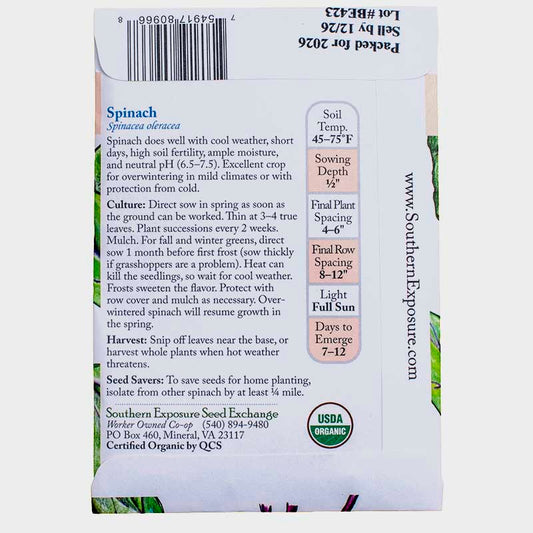
The best spinach growing season is during cool weather. Plant seeds in early spring as soon as the soil can be worked, or sow another crop in late summer for a fall harvest.
Warm temperatures cause spinach to flower, a process called bolting. Once spinach bolts, the leaves become smaller and often develop a bitter taste.
If your area has mild winters, you may even grow spinach throughout winter with simple row protection.
How to Grow Spinach from Seed
The easiest way to start is by growing spinach from seed.
If you want to learn how to grow spinach from seed, sow seeds directly into the garden instead of transplanting seedlings. Spinach develops a taproot and does not always transplant well.
Step 1: Prepare the Soil
Spinach grows best in fertile soil rich in organic matter. Mix compost into the bed before planting to improve drainage and provide nutrients.
Choose a location with draining soil that stays evenly moist but never soggy.
Step 2: Plant the Seeds
For gardeners asking how to grow spinach, sow seeds about inch deep and space them according to the seed packet. Thin young seedlings after they emerge so each plant has enough room.
This simple method works whether you're growing spinach, starting a home garden, or trying a new spinach variety.

How Does Spinach Grow?
Many beginners ask how does spinach grow or how spinach grows.
Spinach forms a rosette of leaves close to the ground. New leaves grow from the center while older outer leaves can be harvested first. As long as the center stays healthy, the plant continues producing fresh leaves.
This "cut-and-come-again" habit allows you to harvest spinach over several weeks.
Growing Spinach in Containers
You do not need a large garden to grow spinach.
Growing spinach in containers is a great option for patios, balconies, and small spaces. If you're wondering how to grow spinach in pots or how to grow spinach in a pot, choose a container at least 6 to 8 inches deep with drainage holes.
Use quality potting mix instead of garden soil. Water regularly because containers dry out faster than garden beds.
Many gardeners also enjoy growing spinach in pots because the containers are easy to move during changing weather.
For larger harvests, containers can be placed beside raised beds to make the most of your growing space.
Can You Grow Spinach Indoors?
Yes. Can you grow spinach indoors? Absolutely.
Growing spinach indoors works well if your plants receive plenty of bright light. A sunny south-facing window or quality grow lights will help plants produce healthy leaves.
If you're learning how to grow spinach indoors, keep the soil moist and avoid placing containers near heating vents that dry the air.
Indoor spinach may grow a little slower, but it can still provide a fresh harvest.

Water, Sun, and Feeding
Healthy spinach needs steady moisture.
Keep the soil moist, especially while seeds germinate and during active growth. Uneven watering can stress plants and encourage bolting.
Spinach grows best in full sun during cool weather. In warmer climates, afternoon shade helps extend the harvest.
If your soil contains plenty of compost, spinach usually needs little fertilizer. For poor soils, a light feeding with a balanced organic fertilizer supports healthy leaf growth without encouraging excessive stem growth.
Featured Spinach Seeds from Grow Organic
Whether you're looking for baby leaves, large mature plants, or heat-tolerant varieties, Grow Organic offers several excellent choices.
- Beaujolais Spinach Seeds (Organic): A productive variety with smooth, dark green leaves and improved resistance to downy mildew.
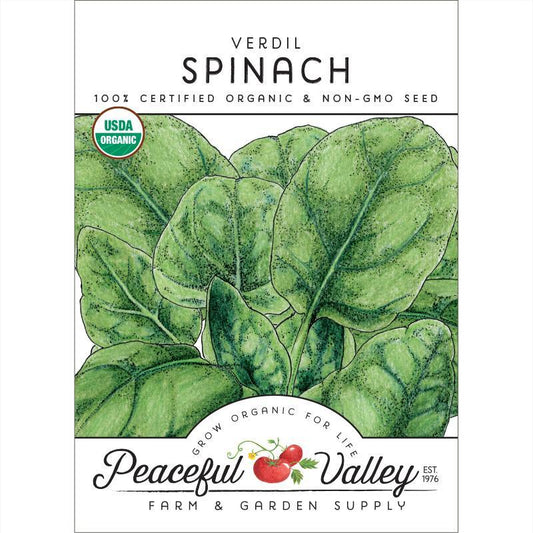
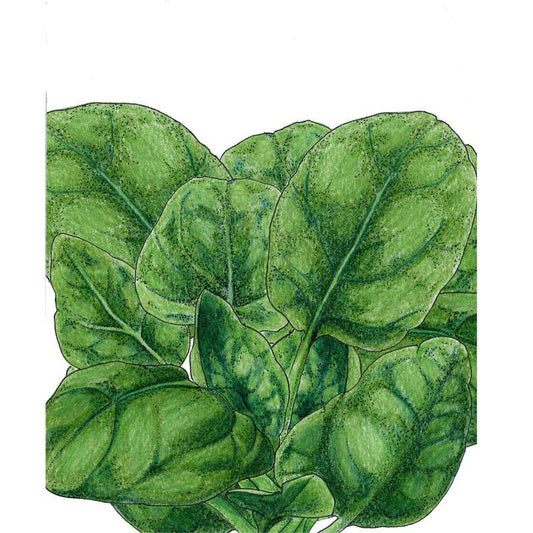
- Verdil Spinach Seeds (Organic): Slow to bolt and ideal for extended spring harvests.
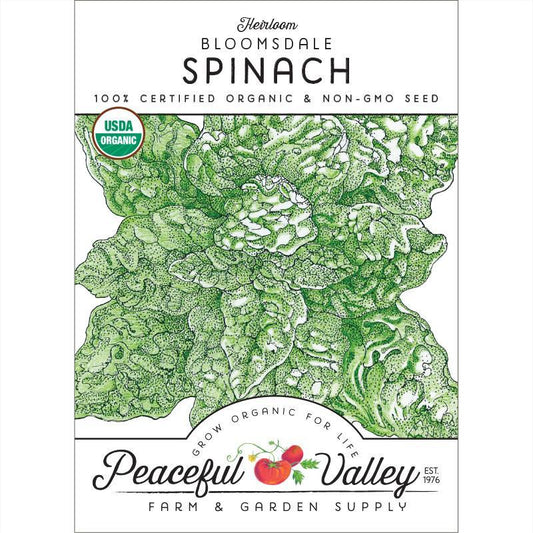
- Bloomsdale Spinach Seeds (Organic): A classic heirloom with crinkled leaves and rich flavor.
- Space Spinach Seeds (Organic): Fast growing and perfect for beginner gardeners.
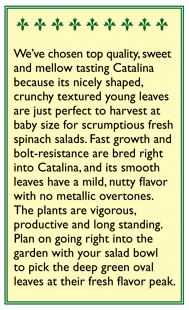
- Catalina Baby Leaf Spinach Seeds: Great for harvesting tender baby greens.
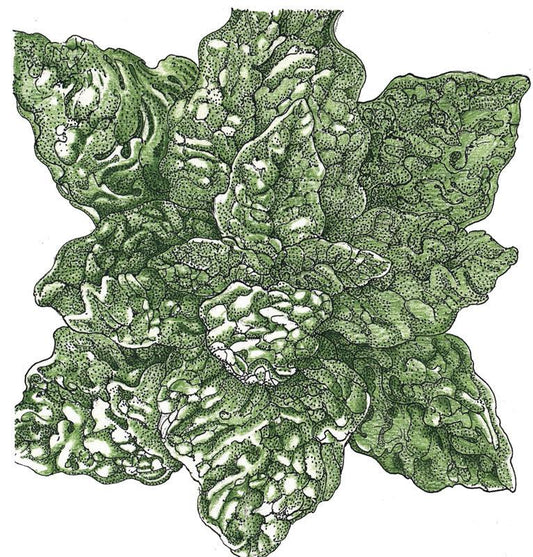
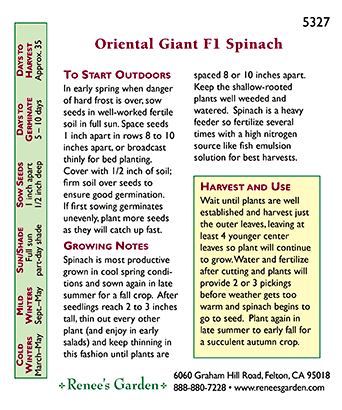
- Oriental Giant Japanese Spinach Seeds: Produces large, flavorful leaves that perform well in cool weather.
- Malabar Spinach Seeds (Organic): Although not true spinach, this warm-season vine is an excellent choice when summer heat makes regular spinach difficult to grow.
You can also browse the complete Spinach Seeds Collection to compare varieties for spring, fall, containers, and home gardens.
Common Spinach Problems and How to Fix Them
Even healthy spinach plants can run into a few problems. The good news is that most are easy to prevent.
Downy Mildew
Downy mildew is one of the most common spinach diseases. It causes yellow spots on the tops of leaves and gray or purple fuzzy growth underneath.
To help prevent it:
- Give plants good air circulation.
- Water at the base instead of wetting the leaves.
- Rotate crops each year.
- Choose resistant varieties when possible, such as Beaujolais or Verdil.
Leaf Miners
Leaf miners are tiny insects that tunnel inside spinach leaves, leaving pale, winding trails.
Remove damaged leaves as soon as you see them. Floating row covers can also protect young plants from egg-laying insects.
Spinach Bolts
When the weather becomes warm, spinach bolts by sending up a flower stalk. Once this happens, leaf quality quickly declines.
To slow bolting:
- Plant early in spring or late summer.
- Keep plants well watered.
- Provide afternoon shade in warm climates.

Harvest Spinach at the Right Time
Many gardeners ask how long does spinach take to grow or how long does it take for spinach to grow.
Most spinach varieties are ready in 30 to 50 days, depending on the weather and the variety. Baby leaves can often be picked in as little as 20 to 30 days.
If you're wondering how long does it take spinach to grow, the answer depends on temperature. Cool weather encourages steady growth, while hot weather speeds up bolting.
To harvest spinach, pick the outer leaves first and leave the center growing point untouched. This allows the plant to continue producing fresh leaves for several weeks.
You can also harvest the entire plant once it reaches full size if you need a larger crop at one time.
Tips for a Better Spinach Harvest
These simple steps can improve your results:
- Plant during the cool growing season in spring and fall.
- Improve soil with compost and organic matter.
- Keep the soil moist, but avoid waterlogged soil.
- Grow spinach in raised beds, containers, or directly in the ground.
- Watch for leaf miners and downy mildew.
- Harvest often to encourage fresh growth.
If you're interested in comparing spinach with other leafy vegetables, Grow Organic's guide to Chard vs. Kale vs. Spinach: Leafy Greens Comparison Guide explains the differences between these nutritious crops. After harvesting, you can also try fresh recipes like Spinach Sage Pesto for a simple way to enjoy your homegrown leaves.
Conclusion
Learning how to grow spinach is one of the easiest ways to enjoy fresh vegetables from your own garden. Whether you're growing spinach in containers, trying growing spinach indoors, or planting directly in garden beds, spinach rewards you with fast growth and repeated harvests.
Choose the right spinach variety, plant during cool weather, keep the soil evenly moist, and harvest the outer leaves often. With a little care, your spinach plants will provide fresh, healthy greens throughout the season.