Where Do Pears Grow? Understanding Pear Tree Growing Zones for Every Variety
Pear trees are reliable, long-lived fruit trees that reward patience with sweet, pear-shaped fruit year after year. But where do pear trees grow best, and how do you know which varieties of pears fit your climate? This guide is written for beginner to intermediate gardeners and breaks down pears Pyrus communis growing zone requirements in plain language, with practical examples you can actually use in your garden.

A Quick Look at Pear Origins and Adaptability
Before choosing a tree, it helps to understand where pears come from. Gardeners often ask where did pears originate, where are pears native to, and where did pears come from.
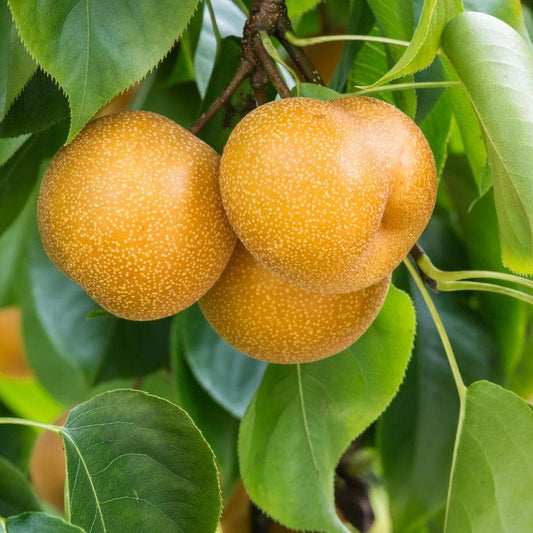
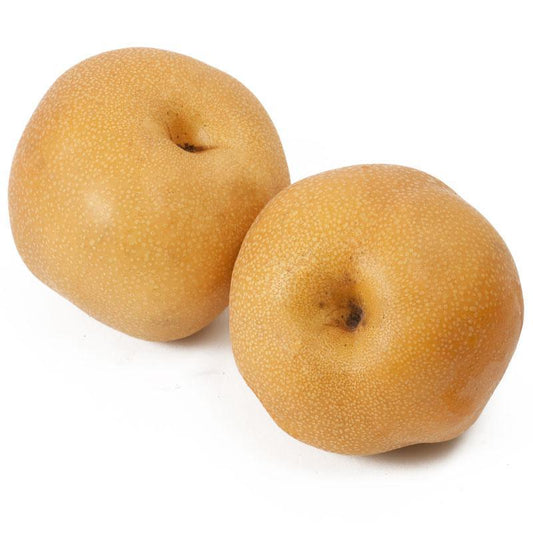
Most European pear cultivars originated in Europe and western Asia. Asian pear trees, sometimes called apple pear because of their crisp texture, come from East Asia. Today, pears are grown worldwide, and the United States is one of the largest producers.
So when people ask where are pears grown, the answer is simple: almost anywhere with winter chill and a moderate growing season.
Understanding Climate Zones and Chill Hours
Pear trees are adaptable, but they still need the right conditions to thrive.
Know Your Growing Zone
Your USDA hardiness zone determines winter lows and affects survival and fruit set. If you are unsure of your zone, this guide on finding your growing zone is a great place to start.
Chill Hours Matter
Pear cultivars need a certain number of winter chill hours to break dormancy and start producing fruit. Too few chill hours means poor flowering. Too many usually are not an issue for pears, especially cold hardy types.

Pear Trees by Climate Zone
Zone 3 and Zone 4 Pear Trees
Yes, pears can grow this cold. Zone 3 pear trees and zone 4 pear trees must be extremely cold hardy.
Good options include:
These are excellent pear trees for zone 4 and are often chosen for northern gardens because they resist disease and handle harsh winters.
Zone 5 to Zone 7
This range supports the widest selection of pear varieties.
Reliable choices include:
- Bartlett Pear Tree and Motherlode Bartlett Pear
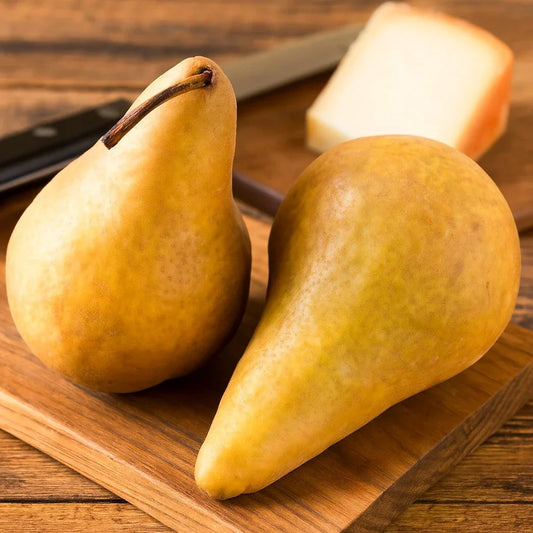
- Bosc Pear Tree
- D’Anjou Pear Tree and Red D’Anjou Pear Tree
- Comice Pear Tree
- Seckel Pear Tree
If you’re wondering about bartlett pear tree growing zone, Bartletts thrive in zones 5 through 7 with consistent winter chill.
Zone 8 and Mild Winter Regions
Gardeners often search for the best pear trees for zone 8, where winters are mild but summers are long.
Strong performers include:
These Asian pear trees tolerate heat better and need fewer chill hours than many European pears.

Asian Pear vs European Pear Growing Zones
Asian pears typically thrive in zones 5 through 9. If you’re researching asian pear growing zone or asian pear tree growing zone, most varieties fall comfortably in that range.
European pears prefer zones 4 through 8, depending on cultivar. This breakdown is explained further in this helpful guide to pear tree varieties.
Planting Basics for Healthy Trees
Pear trees grow best in full sun and draining soil. It also helps to understand how big pear trees get so you can plan proper spacing before planting.
Poor drainage leads to root problems and weak trees.
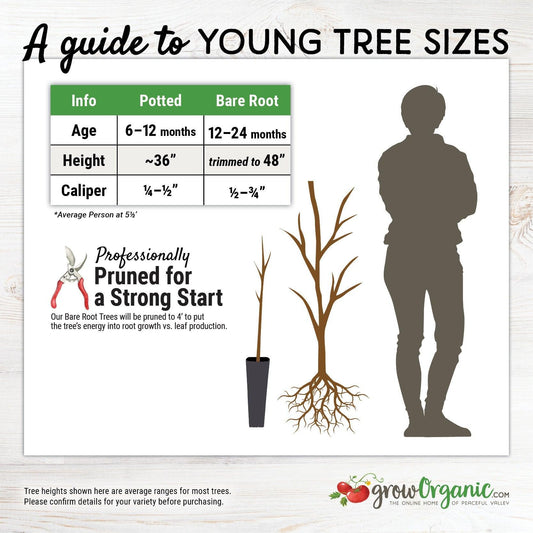
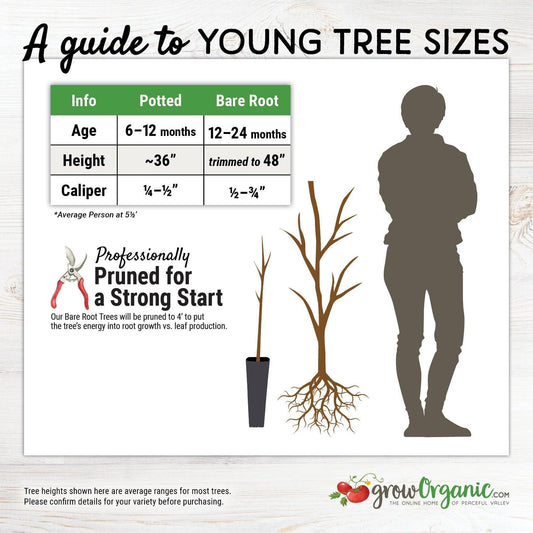
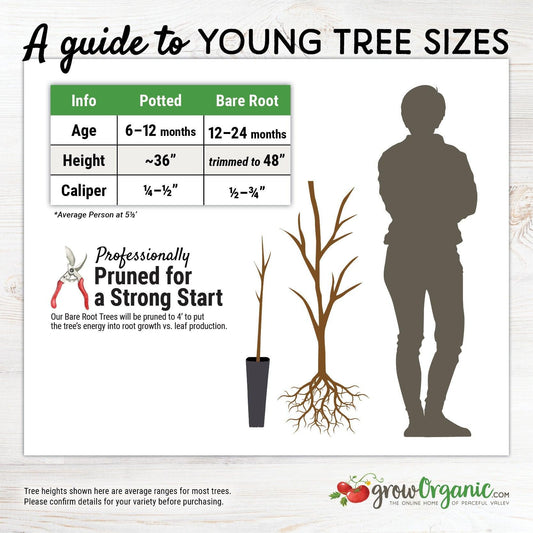
Most pear trees are sold bare rooted and should be planted in early spring while dormant. When you plant the tree, keep the graft union above soil level and water deeply.
Some pear cultivars require cross pollinating with another compatible variety to ensure fruit set. Learn more about do pear trees need a pollinator and how cross pollination works.
Multi-grafted trees, like the Asian Pears 4-in-1 or Disease Resistant Pears 4-in-1, simplify pollination while saving space.
If space is limited, you may also want to explore self-pollinating pear trees and which varieties perform best.
Fruit Production and Ripening
Pear trees take a few years to begin producing fruit, but once established, they are reliable. Unlike apples, pears ripen best off the tree. This step-by-step guide on harvesting pears explains exactly when to pick them.
After harvest, many varieties ripen best indoors—see how to ripen pears using natural ethylene for simple steps.
Asian pears are an exception and are usually tree-ripened for crisp texture. Their seasonal growth stages are covered in this Asian pear tree life cycle guide.
Disease Resistance and Pruning
Many modern pear cultivars are bred for resistance to fire blight, a common issue. This article on pear blight prevention is worth bookmarking. Also, you can learn how to identify pear tree leaf diseases and problems early with our guide.
Proper pruning keeps trees productive and healthy. A clear visual guide is available in this pear and apple pruning video.
Choosing the Right Pear Tree
If you are browsing pear trees for sale, match the variety to your zone, chill hours, and space. With the right fit, pear trees are among the easiest fruit trees for long-term success.