Plant garlic and cool crops between Sacramento heat and foothill frost only when soil temperature, workability, moisture, crop maturity and the local cold runway agree. Lingering Valley heat can make an early transplant fail; a higher-foothill frost can close a late window. Use a small succession, protect soil between plantings, and reserve frost equipment for crops whose value and tolerance justify the work.
Use the Sacramento-Sierra fall plan to place crop work in the larger garden sequence. Check the soil guide before planting into heat-damaged clay or a bare slope, and use the perennial guide for orchard and dormant-season decisions. For annual beds, choose crops, garlic, successions and protection only after the readiness gates below pass.
Pass five gates before planting
- Heat gate: The forecast and overnight recovery allow germination or transplant establishment without chronic stress.
- Soil gate: Soil at planting depth suits the crop and is workable. Valley clay crumbles rather than smears; foothill soil can accept water without shedding it.
- Water gate: Irrigation reaches the intended root zone uniformly, and the crop can be maintained if rain is delayed.
- Runway gate: Estimated time to the desired harvest stage, plus establishment and weather margin, fits local frost, snow and declining light.
- Protection gate: Any low tunnel, fabric or support can be ventilated, anchored, monitored and removed; it is not expected to guarantee survival.
Subregional crop and timing matrix
| Segment | Planting opportunity | Condition trigger | Main caution |
|---|---|---|---|
| Sacramento Valley floor | Garlic, roots, greens, brassicas, peas and other cool crops suited to the site | Lingering heat eases; clay is moist but workable; crop can establish before low-light cold | Do not rush into hot soil or compact wet clay; low spots may frost |
| Delta-influenced gardens | Cool crops and garlic where wind protection and drainage fit | Starts can be hardened to wind; covers can be anchored; moisture demand is measured | Wind injury, cooler exposure and leaf wetness can change the Valley plan |
| Lower Sierra foothills | Garlic and cool crops with slope-safe irrigation and a realistic frost margin | Soil has cooled, water infiltrates, roots have time to establish | Runoff, fire-safe cover placement and faster frost progression |
| Higher foothills/frost-snow zones | Cold-tolerant crops or protected starts only where the runway supports them | Local minimums, soil condition and crop stage support planting | Short season, frozen soil, snow load and access interruption |
Crop names are possibilities, not universal recommendations. Cultivar tolerance, desired harvest stage, day length, soil, pests and site history can change the answer. Catalog maturity is an estimate under particular conditions. Add time for germination, transplant shock, cool growth and a weather delay.
Choose garlic for climate and bed conditions
Garlic type and cultivar should be matched to winter conditions and the grower's goals. The established guide on choosing garlic for climate explains distinctions in more depth; the garlic growing guide covers planting, care and harvest technique. Use current supplier information rather than assuming one type performs across the Valley-to-snow gradient.
Prepare the bed after irrigation and drainage work. Garlic does not benefit from waterlogged clay or a dry slope that cannot establish roots. Rotate away from recent allium beds where practical, use clean planting stock, and avoid excessive nitrogen intended to force fall growth. Fertility should reflect a soil test, crop need, product label and site conditions.
Planting depth and spacing follow the cultivar and growing guide, while timing follows the gates. A first rain can help moisture, but do not wait for an average rain date if irrigation is the verified substitute—or plant into saturated soil simply because rain arrived. In higher foothills, leave enough establishment time before persistent cold without assuming mulch or fabric will prevent freeze injury.
Build cool-crop successions around harvest stage
Define the target before choosing a crop. Baby leaves, mature heads, roots and overwintered plants need different runways. A small direct-sown succession can reveal whether soil temperature and pests support emergence. Protected starts can move ahead while a summer bed finishes, but they need strong light, airflow and temperature control.
On the Valley floor, heat-tolerant establishment may be the first obstacle; use a moderate forecast and measured soil temperature. In the Delta, wind hardening and cover anchoring matter. Lower foothill gardens must link the sowing to runoff-safe irrigation. Higher foothill gardens should favor stages and species that can tolerate the expected cold, with a plan for snow or access loss.
Use the fall-garden guide for crop techniques, then plant a test row or tray, record emergence and damage, and expand only after the limiting condition is understood. Repeating a full sowing without correcting heat, water or pest failure wastes seed and keeps soil disturbed.
Rotate, inoculate and keep beds rooted with qualifications
Rotation can diversify residues and reduce repeated host exposure, but it does not prevent every pest or disease. Track plant families and known problems. Succession can maintain living roots longer, but continuous cropping is not regenerative when every crop requires emergency irrigation or repeated plastic replacement.
Legume inoculation may be appropriate for peas or another legume when the inoculant is compatible with the crop and used according to directions. It does not guarantee nitrogen fixation or replace a fertility plan. Between cash crops, a cover crop can protect soil if it can establish and be terminated without conflicting with garlic or the next succession.
Work through two regional planting examples
Valley garlic after lingering heat: A gardener has planting stock ready, but afternoon soil remains hot, the previous tomato bed has dry zones, and rain is only a possibility. Instead of planting the whole bed, the gardener repairs emitters, checks clay at planting depth and waits for a forecast that supports root establishment.
Healthy tomato roots are left where rotation and sanitation allow, while problem residues leave the bed. Garlic type is checked against the local winter and supplier guidance. A small section is planted after the soil crumbles rather than smears; the rest follows only when the wetting pattern is uniform. This sequence separates readiness from a calendar deadline.
Higher-foothill cool-crop decision: Warm afternoons suggest a late succession, but the local frost pocket has a short history of safe minimums and snow can interrupt access. The gardener calculates time to baby-leaf harvest rather than mature heads, adds germination and cool-growth margin, and starts a small protected batch. The tunnel is inspected for anchoring, ventilation and load, and a no-go temperature is defined. A portion of the bed remains under residue so a failed succession does not leave soil exposed. The crop plan succeeds if it uses the available window responsibly, not if every seed reaches a full harvest.
Diagnose a failed sowing before repeating it
Uneven emergence aligned with drip points suggests placement or wetting should be checked. Uniform failure in warm soil can involve temperature, seed depth, seed condition or moisture. Seedlings clipped at the surface point toward a different investigation than pale, stretched protected starts. Slug feeding, rodent disturbance, crusted clay, wind desiccation and early frost each leave different patterns.
Mark unaffected comparison areas and inspect at a consistent time. If a row fails, avoid immediately adding fertilizer or pesticide. Identify the limiting step, correct it and repeat on a small scale. In Valley clay, the answer may be waiting for workability; in the Delta, better anchoring or hardening; on a slope, a repaired wetting pattern; in a frost pocket, a different crop stage or a decision to rest.
Use frost protection as a risk reduction, not a promise
USDA hardiness zones summarize average annual extreme minimum temperature; they do not give a first-frost date or account for a Valley low spot and a foothill bench. Follow local forecasts and the garden's own temperature record. Cold tolerance changes with species, cultivar, plant stage, duration of cold, wind and moisture.
The guide to low tunnels and frost protection covers technique. A cover must be secured, kept from crushing plants, ventilated when temperatures rise and handled safely. In snow country, structural load matters. Do not work on covers during unsafe wind, smoke, darkness, ice or unstable access.
Prioritize plants by value and realistic benefit. A healthy young perennial, an established garlic bed and a nearly finished tender annual do not justify the same intervention. If the protection plan depends on power, automation or daily access, identify the failure mode before a freeze.
Scout crops as fall weather changes
Heat-weakened plants can carry mites or stink bugs. New growth may attract aphids; earwigs can be present without causing unacceptable injury. Inspect seedlings before moving them, remove confirmed problem residues selectively and preserve natural enemies. Rodents and slugs may become more important as cover and moisture change. Use the regional fall IPM guide before treating.
Do not apply a pesticide preventively or because a symptom looks familiar. Confirm the organism and damage, follow the label, verify California requirements, and consider temperature, crop site, pollinators and harvest interval.
Use a crop go/test/wait/rest decision
- Go: all five gates pass and the crop fits the region and rotation.
- Test: one uncertain factor can be resolved with a tray, short row, soil-temperature check or wetting audit.
- Wait: a heat event, storm, wind episode or brief wet-soil period is the only blocker.
- Rest: the crop runway, water, soil or labor cannot support establishment; protect the bed instead.
Choose seed and protection after the matrix
When the gates support a cool crop, compare All Vegetable Seeds by crop and cultivar characteristics. If the site and climate plan support garlic, review Seed Garlic. Where a monitored structure can reduce cold exposure, compare Frost Protection. Recheck inventory, shipping eligibility, instructions, maturity and local fit before purchase.
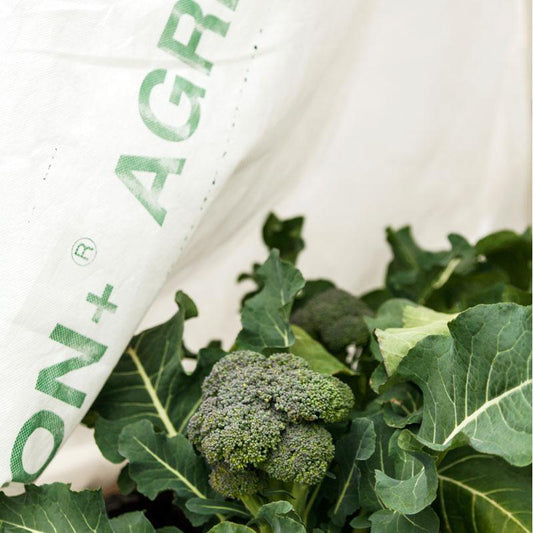
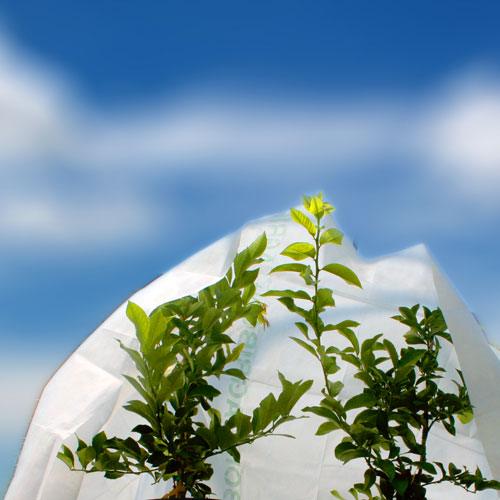
Specific option to evaluate: For Sacramento–Sierra young crops facing a forecast frost, the Agribon AG-50 Frost Blanket – Medium (14' × 14', pack of 2) is a heavyweight, 1.5-ounce-per-square-yard fabric with 50% light transmission. It helps moderate the environment around a covered bed by trapping some heat stored in the soil, but performance depends on the crop's tolerance, the forecast low and duration, complete coverage, and installation.
Confirm that the two 14-by-14-foot pieces provide enough material to cover the canopy and reach the ground; secure the perimeter before temperatures fall and prevent wind abrasion on tender foliage. Monitor temperature and moisture beneath the cover, edge gaps, wind movement, condensation, daytime heat, and crop recovery. Follow the current product instructions and open or remove the cover when light, warmth, or pollination requires it. It cannot guarantee protection from frost or freeze injury and does not replace suitable crop timing or root-zone care.
Record the regional result
For each batch, log subregion, elevation or slope position, soil temperature, moisture, forecast, crop and cultivar, target harvest stage, emergence, pests, frost events and action. The result is not simply “planted on time.” It is a crop that established within the site's real heat-to-frost window without exposing soil or forcing inputs that the bed could not support.
At harvest or failure, add the actual stage reached, protection used, irrigation events and reason the succession ended. Carry that evidence into the next fall. A garden-specific record of heat departure and cold-air behavior is more useful than treating a regional average as a promise.
Include seed-lot and cultivar notes so a weather effect is not confused with a material difference.
Use crop records to plan the next season
Use your planting and frost records when choosing winter vegetables by frost zone, timing spring transplants between frost and heat, and selecting summer crops for heat and short windows.
If your microclimate resembles another region, compare crop windows in the Bay Area fall crop guide, Southern California coast-to-inland guide, or Rockies final-succession guide. Keep only advice that fits your soil, exposure, forecast, water and crop response.