Fall regeneration in Sacramento and the Sierra foothills begins when summer stress is easing but before rain, saturation or frost closes the useful work window. Diagnose four things first: whether plants recover overnight, whether the root zone is moist and workable, where the next meaningful water will move, and how much frost-free runway remains at the site's elevation. Then cover exposed soil, repair irrigation and runoff paths, establish only crops or cover that can succeed, and prepare perennials and infrastructure for the local cold trajectory.
Give each bed, slope and perennial zone a clear next step instead of applying one checklist everywhere. Use the soil-rebuilding decision guide to protect structure, the garlic and cool-crop matrix to test planting readiness, the first-rain and drainage audit to trace water, the fall IPM sequence to diagnose damage, and the orchard and perennial winter checklist to prepare durable plantings. Order the work so one repair does not undo another.
Diagnose the transition before scheduling work
A cooling evening does not prove that summer is over, and the first shower does not prove that the root zone is recharged. Sacramento Valley gardens may still experience strong heat while higher foothill gardens are already counting down to frost. Delta wind can reduce demand on a cool day yet dry exposed foliage and containers. Cold air can pool on a valley floor or in a foothill hollow even when a broad hardiness map suggests a milder condition.
Use this regional condition checklist:
- Plant recovery: Do heat-weakened crops regain turgor after temperatures fall, or do symptoms persist overnight?
- Root-zone moisture: Is soil moist at active-root depth, dry below a damp surface, or saturated in a dense layer?
- Soil workability: Does clay crumble, smear or form a plastic ribbon? Does a foothill soil hold aggregates or fall apart into dry particles?
- Infiltration and drainage: Where does irrigation or rain enter, pond, run off or leave the property?
- Surface cover: Which beds, paths and slopes are bare, and which covers conflict with pests, planting or defensible space?
- Forecast sequence: Is the next event lingering heat, Delta wind, a soaking storm, smoke, frost or snow?
- Cold-air drainage: Which low points cool first, and which walls, slopes or canopies create warmer pockets?
- Crop runway: Does the cultivar's realistic time to the desired harvest stage fit shortening light and local cold risk?
- Irrigation capacity: Are emitters uniform, zones compatible and lines exposed to a freeze or storm failure?
- Pest carryover: Are rodents, slugs, mites, stink bugs, aphids, earwigs or diseased residues likely to persist as the weather changes?
- Labor and access: Can the gardener safely monitor starts, covers, slopes and trees through a storm, smoke event or power interruption?
Record evidence rather than converting it immediately into a date. NOAA climate normals describe typical conditions over a long period; they are useful context, not a forecast for this fall. The USDA Plant Hardiness Zone Map describes average annual extreme minimum temperature, not first frost, snow load, soil temperature or the length of a planting window.
Compare the four regional operating tracks
| Regional segment | Primary fall constraint | First operating priority | Delay when... |
|---|---|---|---|
| Sacramento Valley floor | Heat-weakened plants, heavy clay, fog and frost in low spots | Test root-zone moisture and infiltration; protect workable soil from traffic | Clay smears or puddles, heat persists, or a low spot remains saturated |
| Delta-influenced gardens | Wind, cooler exposure and changing irrigation demand | Secure covers, measure moisture, and separate wind injury from drought | A structure cannot be anchored or leaf wetness and airflow are incompatible |
| Lower Sierra foothills | Slope runoff, decomposed or shallow soil, fire-to-rain transition | Stabilize contours and safe cover before intense rain | Work would expose soil, violate defensible-space needs or send water downslope |
| Higher foothills and frost/snow zones | Short frost runway, freeze, snow load and access interruptions | Finish time-sensitive planting and winterization by the local forecast | The plan relies on guaranteed frost protection or unattended structures |
Elevation alone does not tell the whole story. A high sunny bench may drain cold air while a lower hollow freezes first. Valley urban heat islands can differ from open agricultural edges. Treat every slope position, wind exposure, raised bed and container as a microclimate to verify.
Four local decisions show why the sequence changes
Valley clay after a long hot summer: A Sacramento gardener sees cracks at the surface, several stressed tomato vines and a storm in the forecast. The wrong reflex is to rototill the dry bed, add a broad fertilizer and rely on the storm to settle it. The operating response is to harvest, inspect moisture below the cracks, test irrigation distribution and decide which residues are healthy. Exposed areas receive compatible cover, but cultivation waits until the soil reaches workable moisture. Drainage outlets are cleared before rain. After the storm, the gardener maps ponding and infiltration rather than assuming every crack accepted water uniformly. Garlic or a cool crop follows only after structure, drainage and crop runway support it.
Delta wind exposure: A Delta-influenced garden is cooler than the city forecast but loses water from containers and exposed transplants during persistent wind. The gardener checks media and bed moisture separately, moves containers out of the harshest exposure and anchors any row cover. Irrigation is not increased across the entire garden. The established tree zone, annual beds and containers remain distinct hydrozones. Because cool air and wind can extend leaf drying in one location and drive mechanical injury in another, the gardener uses plant response and moisture evidence instead of copying a Valley controller reduction.
Lower-foothill contour cover: A sloped garden has bare soil between orchard trees, a drip line with more output at the low end, and a downslope path that carried sediment during the last storm. The first job is not planting the steepest area. The gardener flags flow paths, tests emitters, protects the surface with fire-compatible cover and chooses a cover crop only for zones that can be established and terminated. Water is applied in observed pulses where a continuous run sheds water. Any terrace or diversion that would change concentrated flow is evaluated conservatively; the goal is safe infiltration and surface protection, not moving the problem to a neighbor or unstable bank.
Higher-foothill frost pocket: A gardener has warm afternoons, protected lettuce starts and a forecast minimum near the crop's tolerance. The broad regional forecast and hardiness zone are not enough. The gardener checks the low pocket where cold pooled in prior years, compares plant stage and realistic runway, and tests the cover structure before dark. Crops that cannot be protected safely are harvested or left according to their tolerance. Irrigation components exposed to freezing are handled according to system instructions. Snow-load risk determines whether a lightweight structure stays up at all. The plan favors a smaller planting that can be monitored over a full bed that depends on guaranteed protection.
These examples share a method: isolate the limiting condition, complete the repair that unlocks the next step, and leave a clear stop rule. They do not share a planting date, watering duration or product list.
Assign each area a fall state
Recover: A summer crop or perennial remains alive but shows heat, smoke, irrigation or pest stress. Stabilize water delivery, avoid unnecessary fertilizer and postpone heavy pruning while the cause is uncertain.
Continue: A productive crop still has a useful harvest runway and manageable pest load. Maintain it without allowing its irrigation schedule to dictate every new fall planting.
Transition: A bed is ready for garlic, cool crops or protected starts once soil temperature, workability, moisture and the local frost trajectory align.
Cover: A bed or slope will not carry a cash crop but can support a maintainable cover crop, retained residues or compatible mulch. Choose the cover by establishment water, termination capacity, erosion risk, pests and fire setting.
Repair: Irrigation, drainage, terrace, trellis or access must be corrected before planting. A failed physical system is not a fertility problem.
Winterize: A higher foothill zone faces a credible freeze, snow or access interruption. Protect vulnerable infrastructure and young plants according to their specific requirements, without assuming a cover guarantees survival.
Follow a condition-based fall action timeline
| Trigger | Whole-garden action | Regional split | Stop rule |
|---|---|---|---|
| Nights moderate and summer crops recover | Inventory bed states; reduce irrigation only from measured demand | Valley may still need heat response; higher foothills may prioritize frost runway | Do not reduce water on a calendar if the root zone and crop still require it |
| Soil is cool enough for the selected seed but warm enough to establish | Start a small succession or cover trial | Delta wind needs anchoring; foothills need time to root before cold | Do not plant if water, termination or follow-up care is missing |
| First soaking rain is forecast | Clear outlets, inspect contours, pause redundant irrigation and secure cover | Valley clay needs ponding checks; slopes need runoff protection | Do not cultivate wet clay or direct concentrated flow toward an unstable slope |
| After meaningful rain | Map infiltration, drainage, erosion and uncovered soil | Compare valley low spots with uphill and downhill foothill test points | Wait until soil is workable before repair traffic |
| Local frost becomes credible | Finish tender-crop decisions, check covers and exposed lines | Cold pockets and higher elevations act sooner than protected Delta or urban sites | Do not treat USDA zone or an average date as a guarantee |
| Repeated cold or saturation slows growth | Shift from establishment to protection, monitoring and records | Valley fog raises leaf-wetness concern; snow zones add structural load | Do not keep adding inputs to force growth under unsuitable conditions |
1. Stabilize soil before the first hard storm
Keep exposed soil covered and living roots present where temperature, water and termination capacity permit. On the Valley floor, do not break apart wet clay or add coarse material to a planting hole as a quick drainage fix. On foothill slopes, preserve aggregates and slow sheet flow without constructing an unengineered barrier that concentrates water or fails downslope.
Mature compost can contribute organic material, but repeated applications may add salts, phosphorus or other nutrients. Use bed history and a soil test. A heat-baked surface may need protection and rewetting, not fertilizer. For a condition table, a cover-and-compost sequence, and clear stop rules, see how to rebuild soil after extreme summer heat.
Deep summer mulch may still be useful, but rearrange it for fall conditions. Keep it away from trunks and crowns; avoid continuous combustible material near structures; check for rodent or slug shelter; and ensure it does not divert storm water. Local fire and defensible-space requirements control placement.
2. Correct water movement from emitter to outlet
As days shorten and evapotranspiration declines, irrigation demand often changes. Measure soil moisture and plant response before reducing frequency. UC Master Gardeners of Sacramento County advises knowing soil type, prioritizing plants and using cycling where application runs off or puddles; these are starting principles, not a fixed schedule.
On clay, observe how long water remains near the surface and whether beds drain after a storm. On slopes, test pressure differences and where runoff leaves each terrace. Delta gardens should account for wind exposure and cooler conditions. Higher foothill lines may require manufacturer-directed freeze preparation based on the local forecast. Use the first-rain water guide to trace the system from source and emitter to root zone and outlet.
3. Sequence garlic and cool crops by runway
Garlic, leafy greens, roots, brassicas, peas and other cool-season crops can have a place across the region, but crop, cultivar and timing must change with heat departure, soil temperature, day length and frost. Delta wind can stress new transplants. Lingering valley heat can impair establishment. Lower foothills may offer a middle window; higher foothills can move rapidly toward freeze and snow.
Use packet maturity as an estimate and add establishment time. Compare the desired harvest stage with the local forecast and frost observations. Rotation and succession can diversify roots and spread risk; legume inoculation only applies when the legume and inoculant match. Use the garlic growing guide for planting technique, then apply the heat, water and frost checks above to choose a realistic local window.
4. Carry biodiversity forward without carrying every pest
Retain functional habitat that fits water, fire and sanitation needs. Do not clear every residue to bare soil, but do not preserve material confirmed to carry serious pests or disease. Heat-weakened plants can host mites or stink bugs; cooler wet conditions can increase slug activity; rodents may use dense cover; aphids and earwigs require identification and context.
Scout the same plants and locations at repeat intervals. Correct water and stress failures first, conserve natural enemies, use barriers or sanitation when they target the confirmed problem, and consider a pesticide only after monitoring justifies it. Follow the label and applicable California requirements. Recheck the same plants afterward so you can tell whether damage has slowed and whether another step is justified.
5. Finish perennial and infrastructure work in the safe window
Prioritize established trees, young perennials and irrigation systems that cannot tolerate a poor transition into winter. Check root-zone moisture beyond the trunk, support integrity, bark exposure, pest evidence and drainage. Avoid heavy pruning simply because leaves begin to fall; species, disease risk, dormancy and the purpose of the cut matter.
Prepare for dormant-season purchases by verifying site drainage, mature size, rootstock, chill needs, hardiness, local heat and the real shipping/planting window. A zone label does not prove cultivar fit. On slopes, stabilize access and water paths before storms. In snow areas, evaluate whether supports and covers can bear the expected load or should be removed.
Make regenerative claims measurable
| Practice | Intended mechanism | What to monitor | Tradeoff |
|---|---|---|---|
| Living roots | Maintain soil cover and biological inputs | Establishment, root occupancy, water use and termination | Requires irrigation or may conflict with the next crop |
| Surface cover | Moderate exposure and reduce soil impact | Moisture, erosion, pests and fire-safe placement | Can shelter rodents or slugs and redirect flow |
| Reduced disturbance | Preserve aggregates and pores | Workability, infiltration and compaction | May conflict with a specific sanitation or repair need |
| Hydrozoning | Match water to root depth and exposure | Emitter output, wetting pattern and crop response | Adds components and maintenance |
| Beneficial habitat | Support predators and parasitoids | Bloom, natural enemies, pests, water and access | Can shelter pests or conflict with defensible space |
| Soil-test-based inputs | Target a measured constraint | Laboratory values, crop response and input history | Sampling and interpretation require care |
None of these practices guarantees aggregation, pest control, water savings or survival. Record a baseline, apply the smallest reasonable change, and repeat the same observation after weather events. More continuous cover, lower avoidable water loss and better nutrient cycling are outcomes to evaluate over seasons.
Choose supplies only after the bed decision
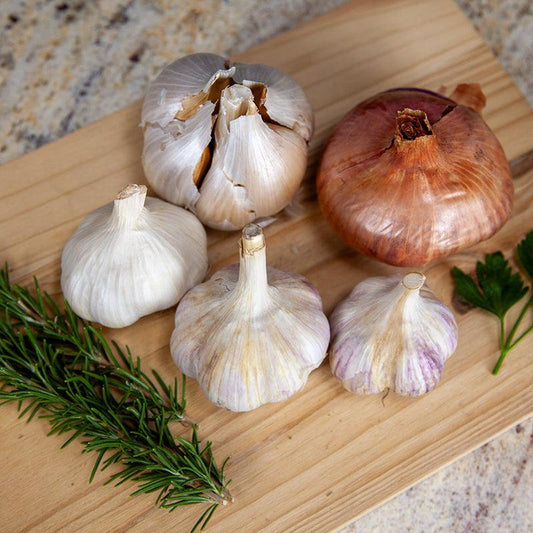
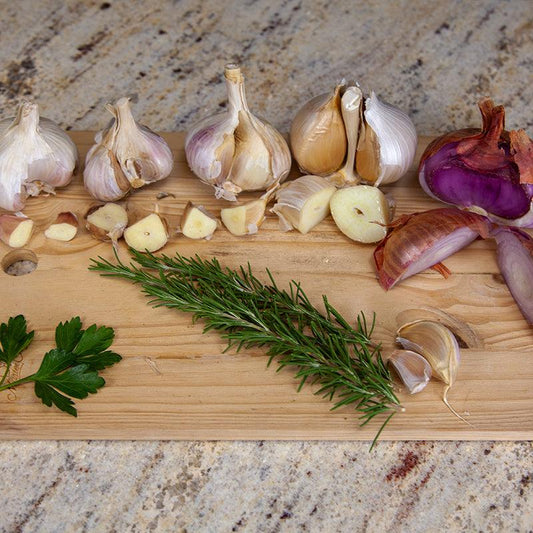
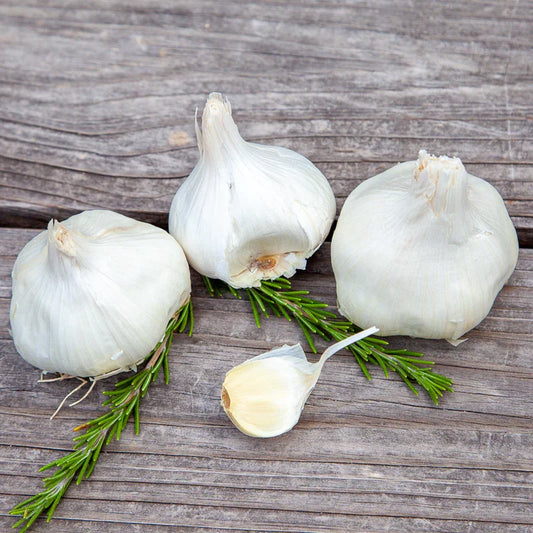
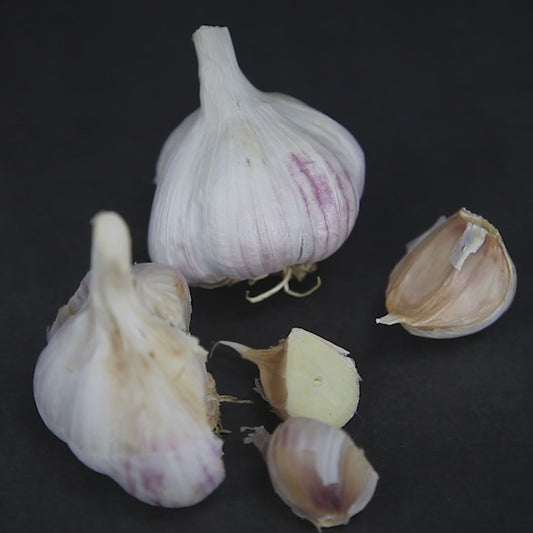
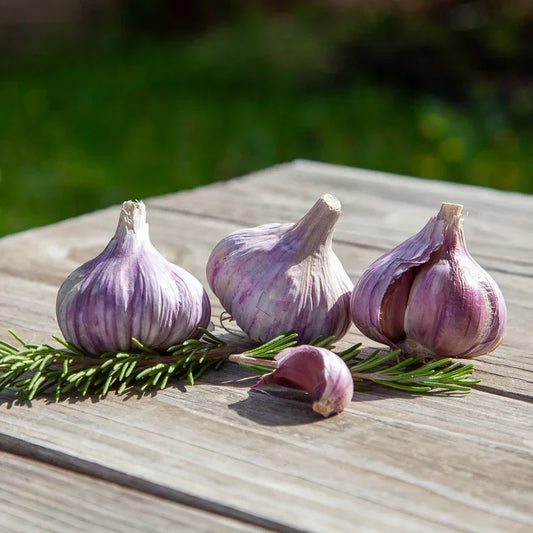
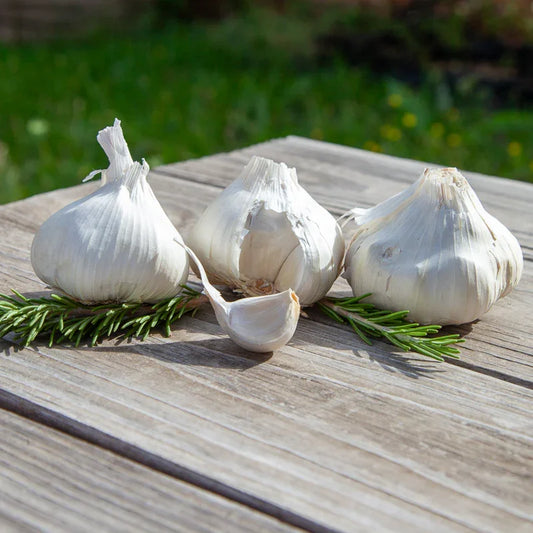
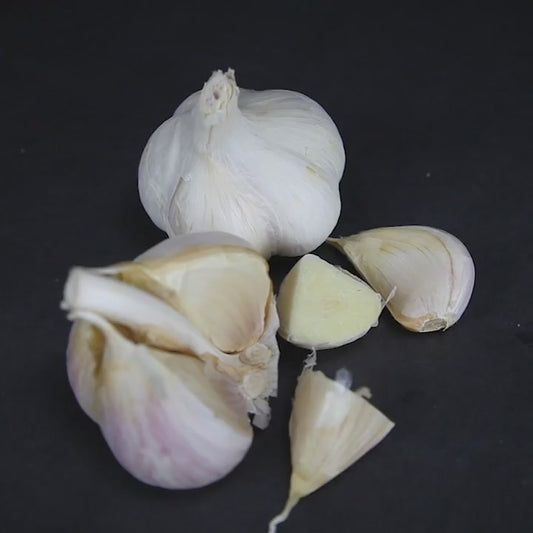
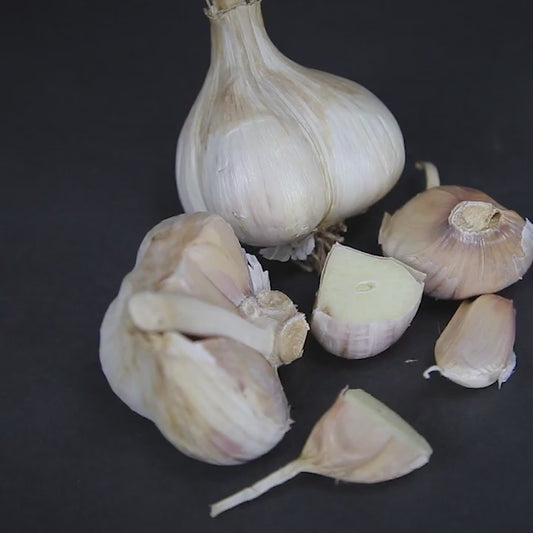
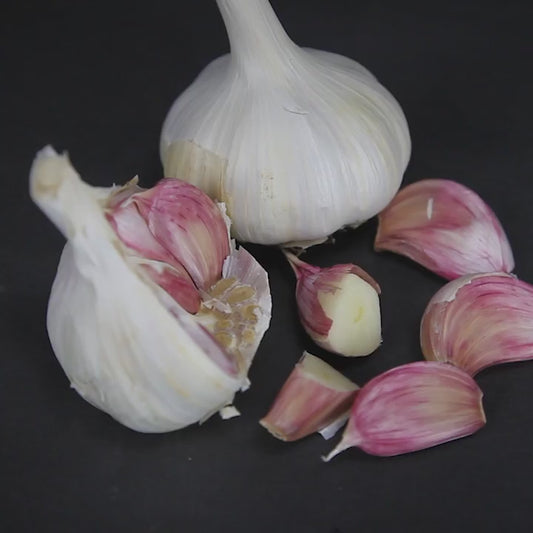
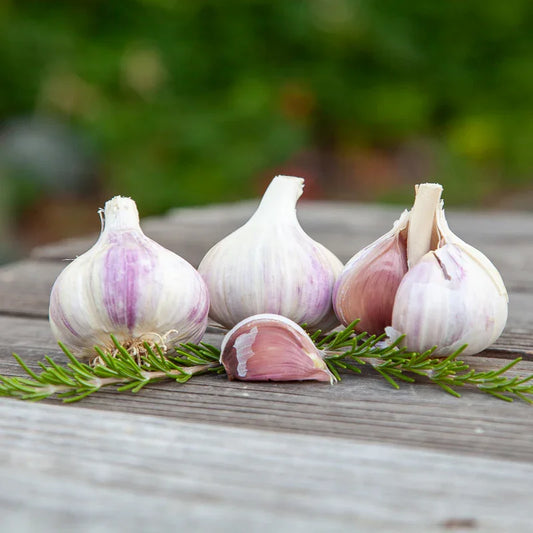
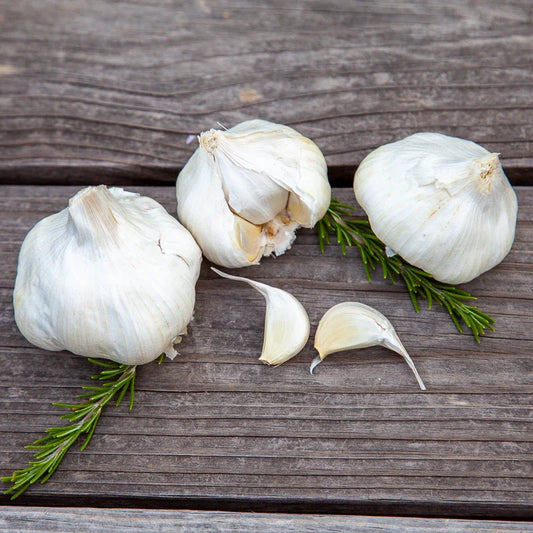
If a bed can establish and later terminate a cover crop, compare Year Round Cover Crop Mixes. If the crop matrix supports garlic, review Seed Garlic for characteristics suited to the site. For other successions, browse All Vegetable Seeds. Recheck current inventory, shipping eligibility, seed or product instructions, maturity and regional fit before purchase. These are optional resources, not requirements.
Use stop rules during uncertain weather
- Stop cultivation when clay smears, soil compacts underfoot or slope soil is saturated.
- Stop adding irrigation when the active root zone is already adequately wet.
- Stop a planting plan that depends on rain arriving by an average date.
- Stop a foothill cover plan that cannot meet defensible-space or termination needs.
- Stop frost work during unsafe wind, darkness, smoke or icy access.
- Stop a pesticide choice until the organism, site, crop and label fit are confirmed.
- Stop fertilizer use that lacks a crop need, test or label-grounded rationale.
- Stop preserving residue when authoritative diagnosis makes sanitation the priority.
Plan for interruptions, not just average conditions
Fall work can be interrupted by smoke, a public-safety power shutoff, a fast storm, an early freeze or access problems on foothill roads. Design the garden so one interruption does not turn into a cascading failure. Test gravity-sensitive irrigation zones, secure loose fabric, keep drains visible, label shutoffs and avoid starting more seedlings than can be cared for in the available protected space. Automation can reduce routine labor, but it introduces valve, power, programming and communication failure modes; it does not guarantee plant survival.
Before leaving a site, decide which plants receive priority if water or labor becomes limited. Established trees and young perennials may justify a different priority than replaceable annuals. Remove standing dead material where fire guidance requires it, but retain soil protection that is safe and functional. Store tools and inputs above likely runoff or flood paths and keep pesticide and fertilizer containers secured according to their labels.
After an interruption, diagnose again. Do not resume the old controller program or replant automatically. Check root-zone moisture, line pressure, erosion, frost injury, pests and worker access. A post-event observation is a new starting condition, not a reason to catch up on a calendar.
Keep one field record for every garden zone
For each bed or zone, record segment, slope position, exposure, bed state, soil condition, root-zone moisture, irrigation status, runoff path, crop runway, pest evidence, cover choice and next trigger. Add photographs after the first meaningful storm and first frost. This shared record prevents the soil, water, crop, IPM and perennial decisions from contradicting each other.
The Growing a Fall Garden guide explains useful seasonal techniques, but local conditions determine when and where to use them. On the Sacramento Valley floor, success may mean protecting clay until it is workable and routing storm water. In the Delta, it may mean anchoring protection and reducing irrigation from measured demand. In lower foothills, it may mean contour-safe cover. In higher foothills, it may mean finishing the right tasks before freeze or snow.
The fall regeneration standard is evidence followed by sequence: recover from heat, protect soil, correct water movement, establish only what the window supports, retain useful habitat, and ready perennials and infrastructure for the site's actual winter. That plan can adapt when rain is delayed, frost comes early or elevation changes the season within a short drive.
Use fall observations to plan the year ahead
Carry the same site observations into the winter garden plan, spring garden plan, and summer heat and fire-resilience plan as conditions change.
If your garden shares conditions with another region, compare the Bay Area fall plan, Southern California fall reset, or Rockies first-freeze plan. Apply only advice that matches your soil, exposure, forecast, water and crop response.