This video provides a visual introduction to growing almond trees, including site and variety selection, bare-root planting, irrigation, pruning, pest monitoring, and harvest. Use it as an overview. The written almond guide and current product information provide the detailed, cultivar-specific framework.
What the Almond-Growing Video Covers
- Choosing a sunny, well-drained planting site
- Understanding variety and pollination needs
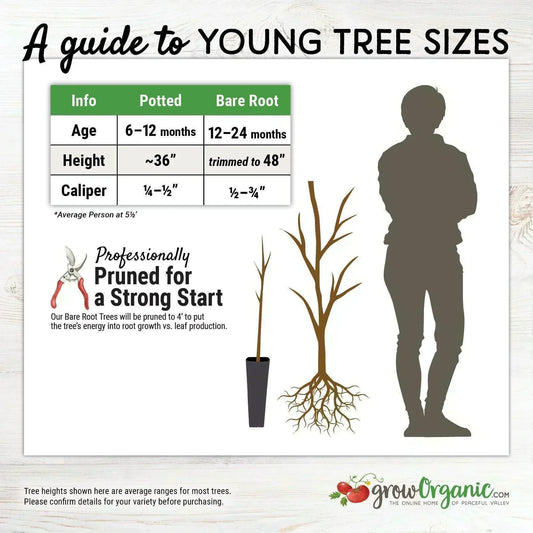
- Planting a dormant bare-root almond tree
- Supporting establishment with irrigation, mulch, and trunk protection
- Developing a useful branch framework through pruning
- Monitoring pests and diseases before choosing a treatment
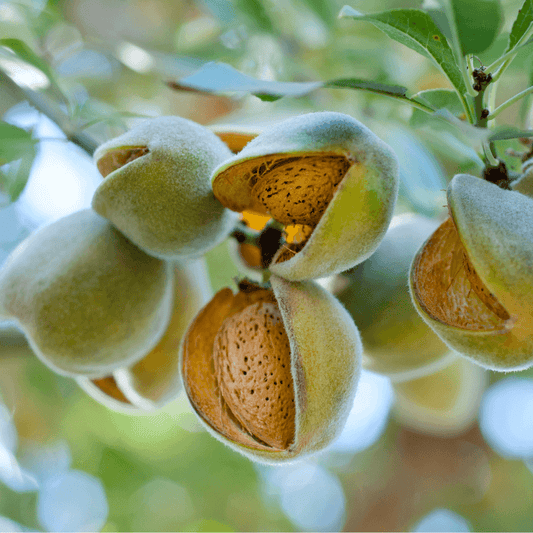
- Recognizing hull split and preparing almonds for drying
Important Planning Notes
- Climate: USDA zone alone does not capture winter chill, early bloom, spring frost, summer heat, or season length.
- Pollination: Some cultivars are self-fertile; others require a compatible pollen partner. Confirm the specific tree.
- Spacing: Use the mature size of the cultivar and rootstock rather than one universal almond-tree distance.
- Watering: Adjust irrigation to soil, weather, tree age, and root-zone moisture instead of following a fixed schedule.
- Pest control: Diagnose the problem first and use only products labeled for the crop and target pest, following all directions and bloom-time precautions.
- Harvest: Hull split is an important maturity signal, but timing varies across cultivars, sites, and canopy positions.
Almond Learning Path
- How to Grow Almond Trees — the primary guide from selection through harvest.
- Harvesting Almonds — hulling, drying, storage, and kitchen uses.
- Tree Characteristics — product-specific zone, chill, mature size, harvest, rootstock, and pollination details.
- Shop Almond Trees — compare the cultivars currently available.
Video Takeaway
Successful almond growing starts with cultivar and site fit. Plan for early bloom and pollination, plant the dormant tree at the correct depth, develop an expanding irrigated root zone, and harvest and dry the nuts promptly when they mature.