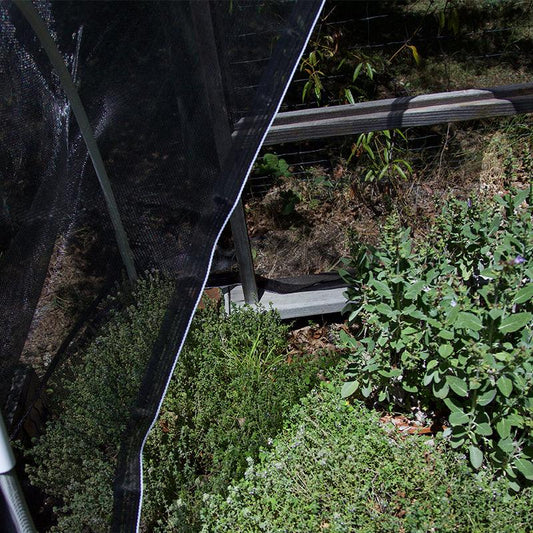
A Southern California summer bed should stay productive only when its crop, root-zone moisture, heat exposure and remaining seasonal runway line up. Keep a proven warm-season crop where it is recovering overnight and water reaches the full root zone. Start fall crops in a protected propagation space when the bed is still too hot. Rest a bed deliberately when heat, water limits, pests or a short mountain frost runway make another crop more likely to fail than contribute.
Use the Southern California summer grow-rest-recover plan to assess the whole garden. The guide to protecting soil biology helps keep an inactive bed covered, while the fall-garden transition guide helps coordinate propagation, supports, and turnover. Decide which crops and beds merit scarce summer water and attention from their recovery, maturity runway, and harvest value.
Use conditions, not a planting-date list
Before sowing or transplanting, record soil temperature at planting depth, forecast daytime heat and overnight recovery, water reliability, pest pressure, available shade and the days the cultivar normally needs to reach a useful stage. Then compare that interval with the likely first cold constraint in your particular site. A seed packet's maturity estimate is a planning reference, not a promise; heat, transplant shock, root restriction and cool mountain nights can all change it.
Soil that is warm enough for germination may still be too hot or too dry for establishment. Use the guide to soil temperature for starts and seedlings to measure the root zone and compare crop response. Pair the reading with a forecast and a small test sowing rather than treating one reading as permission to plant a whole bed.
| Garden track | Bed can keep producing when... | Propagation can move ahead when... | Rest is the stronger choice when... |
|---|---|---|---|
| Immediate coast and marine layer | Warm-season crop receives enough sun, foliage can dry, and roots are not staying saturated | A protected spot provides light and airflow without persistent leaf wetness | Low heat stalls the crop, disease pressure rises, or waterlogged soil needs recovery |
| Coastal mesa | Wind protection does not trap heat and the wetting pattern reaches roots | Seedlings can be shielded from wind while gradually exposed | Salt or wind injury persists and a reliable repair is not ready |
| Inland valley | Heat-adapted crop recovers overnight and irrigation remains uniform | Seed trays can stay below damaging heat in bright, ventilated protection | Warm nights, mites, water limits or repeated blossom loss erase the crop's value |
| Foothill or canyon | Cycle-and-soak prevents runoff and wind exposure is manageable | A smoke, wind and evacuation-aware care plan exists | Slope erosion, fire restrictions or unreliable access make daily care unsafe |
| Mountain or frost pocket | Crop maturity fits the observed local frost runway with a margin for delay | Starts can be held or transplanted without forcing tender growth into early cold | The remaining runway is shorter than the crop's realistic time to harvest |
Choose crop functions before crop names
Continue a bearing crop when it is healthy, its harvest justifies the water and labor, and the root zone is functioning. Peppers, eggplants, okra, beans, squash, cucumbers, melons, tomatoes and sweet potatoes can all be summer possibilities somewhere in Southern California, but none is universal. A foggy coastal site may not provide the sustained warmth a heat-lover needs; an inland site may expose flowers or fruit to temperatures that interrupt production. Cultivar, day length, pest load and water quality matter.
Use a short succession only when its establishment needs and maturity fit the actual window. Fast beans or summer squash can be reasonable where pests and heat are manageable. Do not count backward from an average frost date alone. Add time for germination, transplant adjustment and slower growth under shortening days, and leave a margin for a heat wave, smoke event or early cold.
Keep the bed rooted without demanding a cash crop when a maintainable cover can establish and be terminated on time. Match the species or mix to season, irrigation, rotation and termination capacity. Legume inoculation may be useful when the crop and inoculant match; it does not replace soil testing or guarantee nitrogen for the next crop.
Rest under managed cover when the water budget, labor, salinity, pest history or forecast makes establishment unwise. Intentional rest means weeds are prevented from setting seed, soil is protected, irrigation hardware is serviced and the fall transition is timed by conditions. It is not abandonment.
Sequence the summer-to-fall crop decision
- Map productive and weak zones. Flag strong plants, chronic dry spots, wet pockets, pest clusters and heat-reflecting edges. Do not average away a local failure.
- Calculate the crop runway. Compare days to the desired stage with the site's observed first-cold pattern and current forecast. USDA hardiness zones describe average extreme winter minimums, not planting dates or first frost.
- Confirm water capacity. Check emitter output and root-zone wetting. A new planting should not be used to test an unverified system.
- Select one use for the bed. Continue, succession-plant, cover-crop, prepare for fall, or rest. Record why.
- Rotate plant families where space permits. Rotation can diversify residues and interrupt some host cycles, but it is not complete pest prevention.
- Stage fall propagation separately. Start small batches where light, temperature, airflow and moisture can be observed. The bed does not need to be empty on sowing day.
- Review after each trigger. Reassess after heat, smoke, storm, harvest completion, irrigation restrictions or a failure to recover overnight.
Immediate coast and inland valleys need opposite cautions
Along the immediate coast, gardeners may have a long cool-season growing year, but the summer problem can be insufficient warmth plus extended moisture on leaves. Give warm-season crops the sunniest suitable site, space them for airflow and irrigate the root zone. A coastal brassica succession may be possible earlier than it is inland, yet caterpillars, aphids and disease still require scouting.
In inland valleys, the question is often not whether the soil is warm, but whether a seedling can establish without overheating. Use morning planting only when root-zone moisture, a moderate forecast and follow-up care align. Temporary shade can reduce radiant load, but it must be ventilated and removed or adjusted as the plant establishes. Shade cannot compensate for a dry emitter or a crop poorly suited to heat.
Foothills add slope and wind. Short pulses may reduce runoff if observation proves a longer set is shedding water. Mountain gardens reverse the timeline: a hot day can coexist with a rapidly shortening frost-free period. Choose quick, cool-tolerant fall crops for the protected start, and avoid investing in a late warm-season crop whose payoff requires an improbable extension.
Protect diversity without importing new problems
Succession and rotation can keep roots present longer and spread harvest risk. They also require seed, water and attention. More diversity is not automatically regenerative if every succession fails in heat or keeps a bed continuously disturbed. Use small sowings, retain healthy residues where sanitation allows, and compare results across microclimates.
Evaluate continuation by useful output, not by how large a plant has become. A sprawling tomato that has stopped setting fruit, hosts a growing whitefly population and consumes a high-share irrigation zone may be a weaker summer investment than a smaller pepper that continues to recover and produce. Conversely, do not remove a healthy perennial or long-season crop merely because a single hot afternoon causes temporary wilt. Check it again after temperatures fall and verify moisture at root depth.
When a trial sowing fails, name the failure before repeating it. Seed that never imbibed water points toward placement or wetting; emerged seedlings that collapsed may indicate heat, disease, pests or an abrupt moisture swing; leggy protected starts suggest inadequate light; scorched transplants suggest a hardening or exposure problem. Changing the crop name without changing the failed condition is not a succession plan.
Whiteflies, spider mites, aphids and ants can turn a marginal continuation into a poor decision. Separate insect evidence from heat or water stress before acting: examine both leaf surfaces, note stippling, cast skins, honeydew, webbing and distribution, and inspect the irrigation pattern. Use the Southern California summer IPM guide for the escalation sequence. Never treat on suspicion alone, and follow every pesticide label and applicable California requirement.
Manage shade and bed rest as temporary systems
Shade cloth should intercept harsh exposure without blocking ventilation, collapsing onto plants or becoming a wind hazard. Check fasteners before Santa Ana conditions and plan to reuse or responsibly retire the material. When a crop no longer benefits, reduce shade gradually if sudden exposure would scorch it.
For a resting bed, remove seed heads and confirmed diseased tissue, cut healthy annuals at the surface when appropriate, repair drip, and apply compatible cover. Keep mulch away from trunks and crowns and use fire-appropriate materials and spacing near structures. Do not add fertilizer to an empty bed unless a soil test and the next crop justify it.
Check planting readiness before committing the bed
- Proceed: soil temperature fits the crop; forecast allows establishment; water reaches the full root zone; maturity fits the runway; pest pressure is manageable; follow-up labor is available.
- Test first: one factor is uncertain but can be measured with a small sowing, emitter audit or protected batch.
- Wait: a short heat event, smoke episode or storm makes temporary delay safer.
- Rest: multiple constraints remain, crop value does not justify resources, or the bed needs soil and irrigation repair.
Choose seed or shade only after deciding how the bed will be used
After the matrix supports planting, browse All Vegetable Seeds by crop characteristics and confirm the current packet, maturity guidance, and destination eligibility. If radiant heat is the limiting factor, compare Sun Shade Cloths only after deciding how the structure will be ventilated, anchored, and transitioned. Before ordering, confirm current availability and item suitability.
Specific option to evaluate: For Southern California crops receiving excessive summer solar exposure, the 47% Black Woven Shade Cloth (72" wide, sold by the foot) addresses excessive solar exposure during establishment; 47% is the designed share of light blocked, not a promised temperature reduction. Use it only when crop light needs, measured exposure, root-zone moisture, and airflow indicate that moderate shade is appropriate. Order enough 72-inch-wide material for the canopy plus secure attachment to a suitable frame, allow air space above foliage, and plan access for watering and harvest. Check canopy recovery, leaf color and elongation, root-zone moisture, wind movement, fasteners, and disease conditions beneath the cloth. It cannot correct inadequate irrigation, salinity, root disease, or a crop planted outside its workable season, and excessive shade can reduce photosynthesis. Remove or reduce it when the heat episode or propagation stage ends.
Move into the fall garden when the conditions align
Use the fall-garden guide to plan crops and propagation. Move protected starts into an open bed only when the plants, a stable forecast, and verified irrigation align—not on one Southern California date. Record which summer crop ended, what remained in the soil, any pest or salt evidence, and the next family planned. That turns strategic rest into a productive rotation decision grounded in what the bed actually experienced.
Keep a reserve plan. If heat persists, hold only seedlings that can remain healthy in their containers and postpone the rest. If cold arrives early in a mountain pocket, favor crops and stages that can tolerate the forecast rather than assuming a cover will guarantee protection. A smaller successful transition is more regenerative than repeated full-bed replacement.
Plan crop transitions through the year
Use the fall crop guide for garlic and transplants, the winter crop guide for coast-to-frost-pocket production, and the spring succession guide to build roots before summer heat.
Gardeners near a regional transition can also compare Bay Area summer crops, Southwest grow-cover-rest guidance, or Sacramento–Sierra heat-tolerant and short-season crops. Use only choices that fit your soil, exposure, forecast, water, and harvest goal.