Washington’s summer garden plan should separate a drying west side from a hotter, windier, irrigation-dependent east side. Around Puget Sound and much of the Olympic Peninsula, spring moisture can give way to weeks with little rain even though soils, shade, and coastal wind still vary sharply. Across the Columbia Basin and other east-side sites, heat, low humidity, wind, water availability, and a shortening frost-free window can control every operation. Diagnose root-zone moisture, overnight crop recovery, forecast hazards, irrigation performance, harvest timing, and the next season before acting.
Washington summer work is easier to manage when soil protection, succession planting, irrigation zoning, organic IPM, and harvest turnover follow a clear order. Start by identifying what each bed needs now, then use the linked Washington guides for detailed help with soil cover, crop timing, water delivery, pest diagnosis, and fall preparation.
Run the Washington summer condition checklist
- Root-zone moisture: What is happening at the crop’s active rooting depth, not just at the dry or mulched surface?
- Overnight recovery: Does wilt or leaf angle improve by morning, or does stress persist after the coolest period?
- Forecast hazard: Is a heat advisory, dry wind, smoke episode, thunderstorm, hail risk, or unusual humidity expected?
- Water system: Are source availability, restrictions, pressure, filters, lines, emitters, and distribution verified for each zone?
- Soil cover: Is the surface protected without wet material against crowns, pest refuges around seedlings, or competition for scarce water?
- Crop stage: Is the plant establishing, flowering, fruiting, finishing, declining, or ready for harvest and removal?
- Season remaining: Does the likely window before cold, low light, or rain fit the crop’s maturity range and harvest goal?
- Biological evidence: Are mites, aphids, slugs, rodents, foliar symptoms, predators, or pollinators present—and is damage increasing?
- Air quality and worker safety: Do current public-health guidance, smoke, heat, or storms make garden work unsafe?
- Next-season use: Will the bed remain productive, rest under cover, receive a succession, or be prepared for fall?
Check several places: a shaded west-side bed, an exposed bed, a container, a protected structure, a young perennial, and the beginning and end of an irrigation line. One property can be wet, dry, heat-stressed, and ready for turnover at the same time.
Compare four Washington summer paths
| Segment | Dominant summer constraint | First diagnostic move | First priority |
|---|---|---|---|
| Olympic Peninsula and coast | Wind, uneven dry-down, pockets of persistent moisture, and occasional cool low light | Compare exposed and sheltered root zones; inspect leaf wetness, drainage, and wind abrasion | Water only measured deficits, keep soil protected, preserve airflow, and time turnover before wet weather narrows access |
| Puget Sound lowlands and islands | Increasingly dry summer conditions over glacial till, compacted urban soil, and strong microclimate variation | Measure moisture under mulch and in adjacent unmulched soil; test every hydrozone | Prioritize root-zone watering, succession choices that fit light and remaining season, and timely fall preparation |
| Cascade and high-elevation sites | Cool nights, short season, storms, hail, smoke, and an early frost countdown | Compare crop maturity estimates with current stage, local forecast, and site history | Finish valuable crops, protect soil, choose only realistic successions, and avoid late inputs that cannot produce a useful outcome |
| Columbia Basin and eastern Washington | Heat, wind, low humidity, irrigation dependence, drought or allocation limits, mites, and occasional smoke | Verify source and delivery, inspect root-zone moisture and overnight recovery, and look for wind or salt patterns | Zone irrigation, reduce avoidable evaporation and runoff, protect beneficials, and plan turnover before frost or water constraints |
These are regional patterns, not rules. A marine garden can have a droughty sand bed, while an irrigated east-side low spot can remain saturated or accumulate salts. Elevation, slope, shade, windbreaks, containers, soil texture, and water quality can move a site away from its broad segment.
Choose the right summer action for each bed
Maintain: The crop is productive, roots have suitable moisture, stress resolves overnight, and pests or disease remain below a meaningful action threshold. Continue observation and harvest.
Protect: A defined heat, wind, hail, smoke-related work hazard, or short moisture deficit calls for a managed response such as corrected irrigation, temporary shade, staking, or postponing work. Protection must be installed, ventilated, secured, and removed according to conditions.
Finish: A crop has a realistic harvest path but no longer justifies expansion. Direct water and attention to the existing root zone, harvest promptly, and avoid encouraging vulnerable late growth with unnecessary fertilizer.
Turn over: Harvest is complete, disease or pest diagnosis supports removal, or the remaining season does not justify continued inputs. Remove the crop appropriately, protect the soil, and open the next decision.
Rest under cover: Heat, water, labor, or season limits make another cash crop impractical. Use residue, mulch, or a suitable cover crop only when establishment and termination can be supported.
Follow a condition-based summer timeline
When the west side begins to dry
Do not wait for widespread wilt before inspecting irrigation. Test filters, pressure, leaks, and representative emitters; then check soil below the surface. Containers, raised beds, south-facing slopes, and newly planted perennials may need attention before shaded in-ground beds. Irrigate by root depth, crop stage, soil, recent rain, and local rules rather than a fixed weekday.
Retain soil cover where it reduces evaporation and protects structure, but adjust material that shelters slugs, competes for limited water, or holds moisture against crowns. Puget Sound’s summer dryness does not erase its compacted or poorly drained soils. Water slowly enough to infiltrate and stop if runoff or ponding appears.
When eastern heat and wind intensify
Inspect crops early enough to compare overnight recovery. Midday leaf angle or temporary wilt can be a protective response; persistent morning stress, dry root zones, failed emitters, or expanding leaf injury require diagnosis. Wind increases demand and can distort overhead application. A longer timer setting is not a repair for an uneven zone.
Prioritize establishment, flowering and fruiting crops, young perennials, and other high-value stages according to measured need and available water. Group crops with similar root depth, stage, soil, and exposure. If restrictions or allocations change, follow current local authority guidance and revise the crop plan rather than promising that a product or mulch depth will overcome the shortage.
When a heat, smoke, hail, or storm event approaches
Put personal safety first. Follow current public-health and emergency guidance for heat and smoke; avoid strenuous outdoor work when conditions are hazardous. Smoke effects on plants vary with duration, particles, light reduction, heat, and water stress. Do not apply a pesticide or fertilizer simply because foliage looks dull after smoke.
Secure shade, row cover, stakes, trellises, tools, and loose materials before wind or hail. Shade cloth must have a known density, adequate support, airflow, and a removal plan; too much shade can reduce growth or trap heat. After the event, inspect structures, roots, stems, irrigation, and injury distribution before pruning or treating.
When harvest opens a bed
Decide immediately whether the remaining window and water supply support a succession, a cover crop, mulch, or managed residue. Use current crop stage, maturity range, likely first frost, declining light, soil temperature, and harvest goal. Do not convert a maturity estimate into a guaranteed harvest date.
Remove confirmed diseased material as recommended, manage pests and seed-bearing weeds, and retain clean organic matter where it serves a purpose. Avoid working soil when it is powder-dry and wind-erodible or saturated after a rare storm. A prompt transition keeps soil protected without unnecessary disturbance.
Coordinate the five Washington summer jobs
1. Protect soil during dry-down
Use the Washington summer soil guide to choose surface cover, maintain living roots where conditions allow, protect harvested beds, interpret tested amendment needs, and avoid damaging disturbance. It distinguishes maritime beds that may still hold wet pockets from eastern soils exposed to heat, wind, low organic matter, alkalinity, or salinity concerns.
2. Choose realistic succession crops
The Washington succession-crop guide uses current crop stage, heat units, cool nights, first-frost outlook, water, and site exposure. It compares Puget Sound, the coast, high-elevation sites, and the Columbia Basin without issuing universal sowing dates.
3. Zone irrigation for a dry west and hot east
Use the Washington summer irrigation guide to group hydrozones, check root depth, test pressure and distribution, use pulse or cycle-and-soak logic where runoff occurs, adjust for rain, recognize salinity concerns, and follow current water limitations.
4. Separate mites and disease from weather stress
The Washington summer IPM guide distinguishes mites, aphids, foliar disease, slugs, and rodents from heat, smoke, drought, wet roots, wind, hail, and nutrient or salt symptoms. It uses correct identification, thresholds, beneficial habitat, and label-compliant escalation.
5. Turn harvest into early fall preparation
For help planning cover crops, preparing garlic beds, caring for perennials, maintaining supports and tools, managing sanitation, and timing work before western rain or eastern frost, see the Washington harvest-turnover guide.
Connect regenerative practices to measurable outcomes
| Practice | Intended mechanism | Condition gate | Recheck |
|---|---|---|---|
| Maintain soil cover | Reduce erosion, crusting, and avoidable evaporation | Material is clean, does not bury crowns, and fits pest, fire, and water constraints | Moisture below cover, crown condition, slug or rodent activity, and runoff |
| Maintain living roots where feasible | Extend root occupancy and nutrient capture | Water, temperature, rotation, and termination capacity support the stand | Competition, establishment, water use, and planned termination |
| Use soil-test-based nutrient cycling | Match inputs to measured need and crop demand | Representative test, crop stage, soil properties, input analysis, and label agree | Plant response and future test trend; watch salinity or excess phosphorus where relevant |
| Hydrozone irrigation | Improve delivery to similar crops and reduce avoidable loss | Zone reflects roots, stage, soil, sun, wind, and pressure | Distribution, root-zone response, runoff, leakage, and crop recovery |
| Retain functional beneficial habitat | Provide resources for pollinators and natural enemies | No conflict with water limits, fire safety, access, confirmed disease, or regulated pests | Beneficial activity, pest trends, flowering continuity, and competition |
These are expected mechanisms, not guaranteed outcomes. Living cover can use scarce water. Imported mulch or compost can carry weeds, salts, phosphorus, contaminants, cost, and transport impacts. Shade and cover materials require durable support, reuse, and end-of-life planning. Habitat can shelter pests. Record whether the intended soil, water, or biodiversity result actually appears.
Use water without a fixed schedule
Begin with the plant and root zone. Check moisture at several depths and positions, including the edge of the wetted pattern. Consider soil texture, mulch, crop stage, canopy, wind, temperature, recent rain, and water quality. A field meter can add information only when it is suitable and interpreted against a hand check or known reference.
Apply a test, then inspect how far and how evenly water moved. If runoff begins before the target depth is reached, shorter applications separated by infiltration time may help. If one end of a line remains dry, repair pressure, clogging, layout, or line-length problems instead of overwatering the rest. Deep percolation beyond active roots is also a loss and can move nutrients.
Western rain events should pause or change irrigation only after the root zone is checked. A brief shower may wet mulch but not roots; a concentrated storm may saturate compacted till. East-side irrigation must also account for allocation, source salinity, wind, and heat. Consult current local water providers and Extension guidance for site-specific restrictions and water-quality questions.
Choose crops from remaining opportunity
Use a simple sequence: identify when the bed will open, estimate the likely environmental window, define the desired harvest stage, select a crop and maturity range that fit with contingency, and confirm establishment water. Puget Sound may offer a useful period for cool-season succession as temperatures moderate, but declining light and wet weather can slow growth. The Columbia Basin may retain heat while approaching an abrupt frost or water constraint. High-elevation sites can have cool nights and a short countdown even when afternoons are warm.
Seed packet maturity is a planning estimate under particular conditions, often counted from sowing or transplanting depending on the crop. Germination, heat stress, smoke, cool nights, water, soil, pests, and harvest stage can change the result. Choose a conservative path and maintain backup seed rather than promising a calendar outcome.
Succession planting can extend productive root occupancy and spread risk. It can also waste seed and water if every batch is sown automatically. Let emergence, crop growth, forecast, and remaining season trigger the next small sowing. Rotate plant families where feasible, recognizing that small gardens and broad-host problems limit perfect rotation.
Diagnose heat, smoke, mites, and foliar symptoms
Heat or water stress often affects exposed areas or whole plants in a pattern related to irrigation, soil, or wind. Mite injury may include stippling, bronzing, webbing, and organisms on leaf undersides, but other injuries can look similar. Foliar disease may follow humidity, prolonged leaf wetness, susceptible hosts, and inoculum, yet spotting alone does not identify a pathogen. Smoke deposits can dull leaves while accompanying heat and low light complicate the picture.
Photograph distribution, examine upper and lower leaf surfaces, inspect roots and emitters, and compare a healthy reference. Record weather and inputs. Use WSU Extension or a diagnostic service when symptoms are important or uncertain. Do not wash foliage during hazardous smoke or extreme heat simply to improve appearance, and do not apply a pesticide without an identified target and labeled use.
Preserve predators, parasitoids, and pollinators by acting from thresholds. A few mites or aphids do not always justify disruption; a rapidly expanding population on a stressed crop may. Follow the entire pesticide label and Washington requirements, including crop, site, rate, timing, protective equipment, weather, reentry, harvest, and pollinator precautions.
Plan for smoke and worker safety
Wildfire smoke is first a human-health and emergency issue. Use current air-quality, public-health, fire, and evacuation information. Postpone strenuous work and nonessential spraying when conditions are unsafe. Garden advice should not override official directions.
After smoke improves, assess plants for heat, water, wind, particulate deposits, and actual pest or disease evidence. If produce is visibly contaminated by ash or debris, follow current food-safety guidance from authoritative local or institutional sources. Do not make universal claims about safety, washing, or harvest because fire materials and exposure differ.
Turn over beds without exposing soil
Harvest promptly, remove supports carefully, and separate clean residues from confirmed diseased, pest-infested, or seed-bearing material. Do not assume all residues belong in home compost. Follow local guidance for problematic material and regulated pests. Keep traffic off saturated soil after summer storms and avoid pulverizing very dry soil before wind.
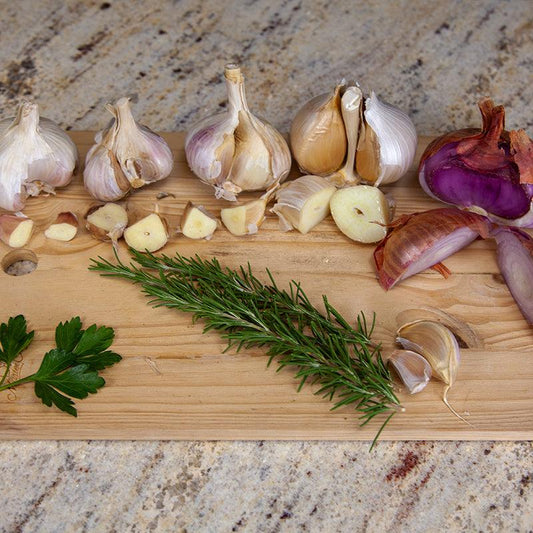
If a cover crop fits, choose species or a mix by establishment temperature, remaining growing window, water, winter behavior, rotation, seed-production risk, and termination method. If it cannot establish reliably, use suitable mulch or retained clean residue. Garlic and fall beds should be prepared from soil condition and crop needs, not an inflexible summer date.
Inspect perennial supports, guards, irrigation, and root-zone cover while access is clear. Prune only when the species, crop stage, disease context, and intended outcome support it. Late pruning or feeding can stimulate vulnerable growth in some plants, so use crop-specific guidance rather than a blanket rule.
Use collection-first pathways only after the decision
When a measured water or delivery problem is the limiting factor, browse Irrigation & Watering by compatibility, pressure, layout, durability, and instructions. When a bed will open and a cover crop has a realistic establishment and termination plan, compare Year Round Cover Crop Mixes by species, season, water, rotation, and management needs. For a correctly identified pest that exceeds a practical threshold, review Organic Pest Control by crop, pest, site, active ingredient, and current label.
Before ordering, confirm current availability, shipping eligibility, regional restrictions, product status, and instructions. Do not infer that “organic” means non-toxic or universally safe. No product substitutes for correct identification, measured moisture, a workable soil plan, or current legal requirements.
Keep a Washington summer field record
Record the bed or zone, crop and stage, morning and afternoon symptoms, rooting-depth moisture, recent irrigation or rain, current forecast, water-system result, pest or disease evidence, harvest estimate, and next trigger. Use photographs from the same position to compare canopy, soil cover, emitter patterns, storm injury, and recovery. A short record is more useful than false precision.
Review the record by subregion and exposure. If several Puget Sound beds dry at different rates, separate their zones. If Columbia Basin crops fail to recover overnight despite apparently adequate irrigation, inspect distribution, roots, salinity risk, disease, and heat exposure before increasing water. If a high-elevation succession repeatedly misses its harvest window, revise the crop choice or desired harvest stage. These notes turn seasonal surprises into site-specific garden knowledge without treating one year as a guarantee.
Finish with a summer action timeline
- Today: Map root-zone moisture, overnight recovery, irrigation faults, crop stage, current hazards, biological evidence, and open-bed dates.
- Before the next heat or wind event: Repair water delivery, prioritize vulnerable roots, secure structures, and define a safe work window.
- At each harvest: Decide maintain, finish, turn over, succession, or rest under cover.
- After rain, smoke, hail, or irrigation changes: Diagnose the new pattern before watering, feeding, pruning, or treating.
- As the frost or rain window approaches: shift resources toward realistic crops, soil cover, perennial care, and infrastructure maintenance.
- At the weekly garden review: use observations—not the weekday itself—to open the next action.
The summer gardening guide offers additional seasonal tasks. In Washington, keep the regional split in view: increasingly dry western gardens need measured irrigation without forgetting drainage, while hotter and windier eastern gardens need tested hydrozones, water-aware crop choices, and an early view of frost and turnover. Keep every action conditional and every next step measurable.
Prepare for the seasons ahead
Use the Washington fall guide to prepare beds and irrigation for rain or frost, the winter guide to protect soil and infrastructure, and the spring guide to reopen beds safely.
Gardens near a regional transition may also benefit from Oregon summer guidance, cold-climate summer guidance, or Rockies summer guidance. Apply only the advice that matches your soil, exposure, forecast, water, and crop response.